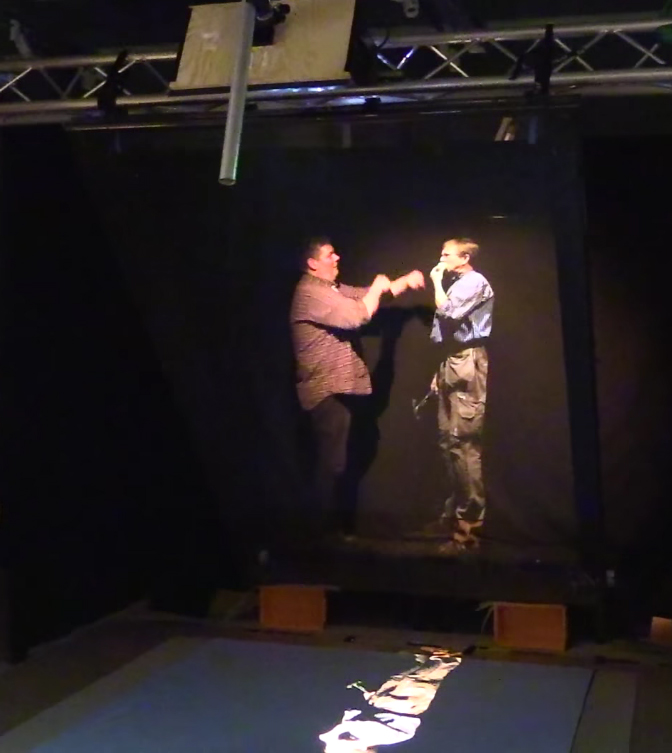
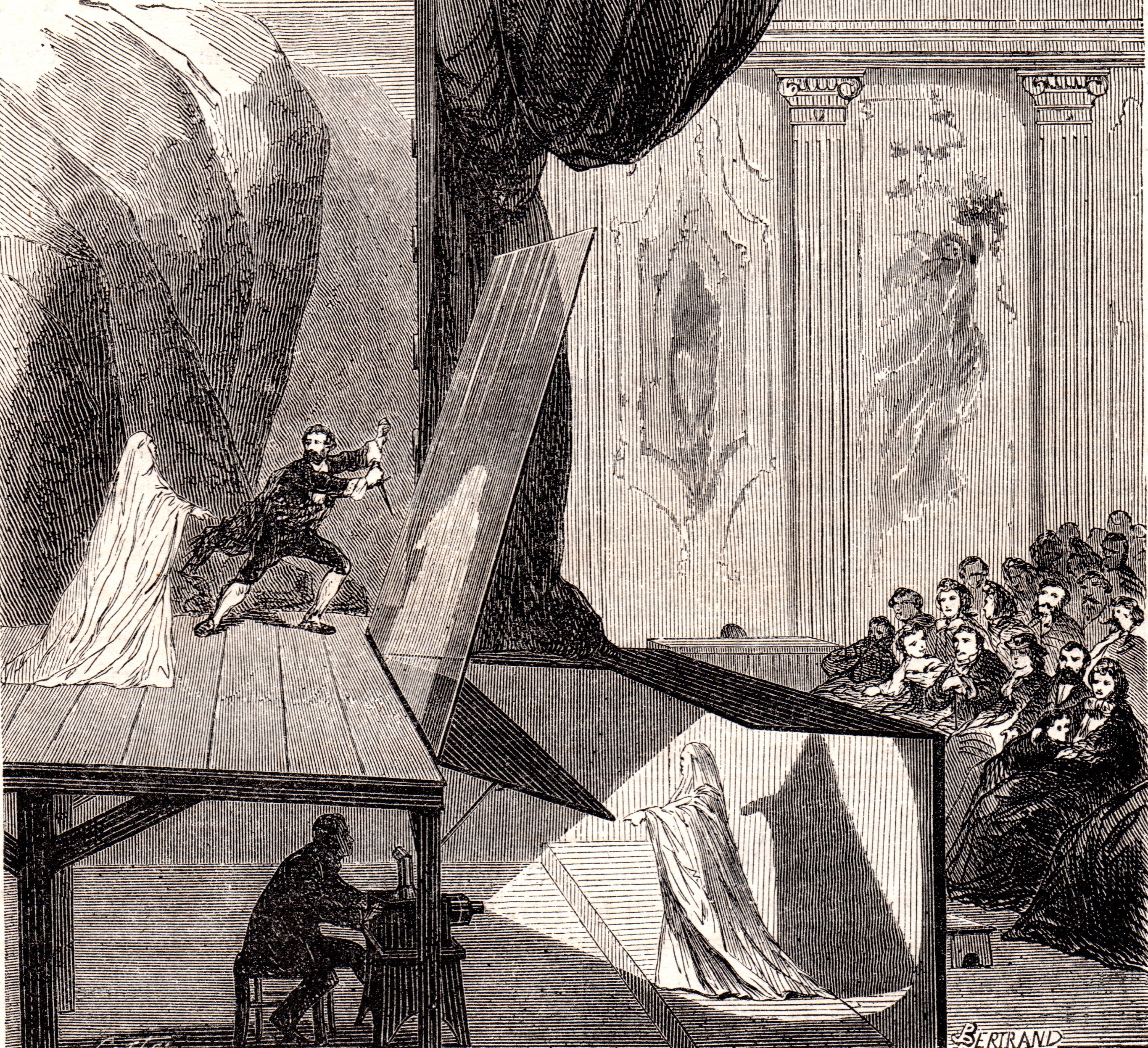
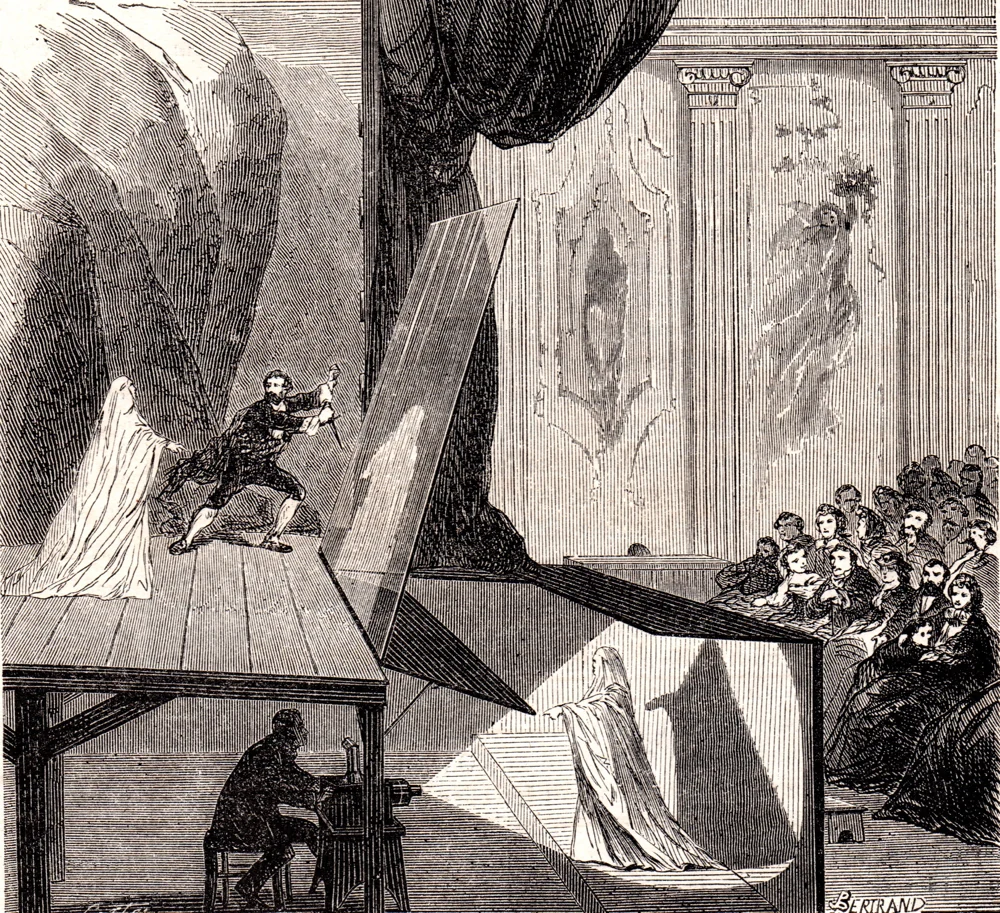
See a real display and a historical stage arrangementA modern workshop demonstration by the Swedish Exhibition Agency: a video screen supplies the reflected image. Image: Riksutställningar / Swedish Exhibition Agency · Source · CC BY-SA 3.0. Photograph of a Pepper’s Ghost workshop display using a video screen.; viewing previews may be resized.Bertrand, Pepper’s Ghost stage arrangement, Le Monde Illustré, 21 January 1865. A historical engraving rather than a performance photograph. Image: Bertrand (no first name given) · Source · Public domain. Bertrand’s 1865 engraving of a Pepper’s Ghost stage arrangement; a historical illustration.; viewing previews may be resized.
Holography & tricky projections / 1862 · Royal Polytechnic Institution, London
Pepper’s Ghost
A figure appears on an empty stage, transparent enough for the scenery to show through. Its real source is hidden elsewhere.
TRY THIS
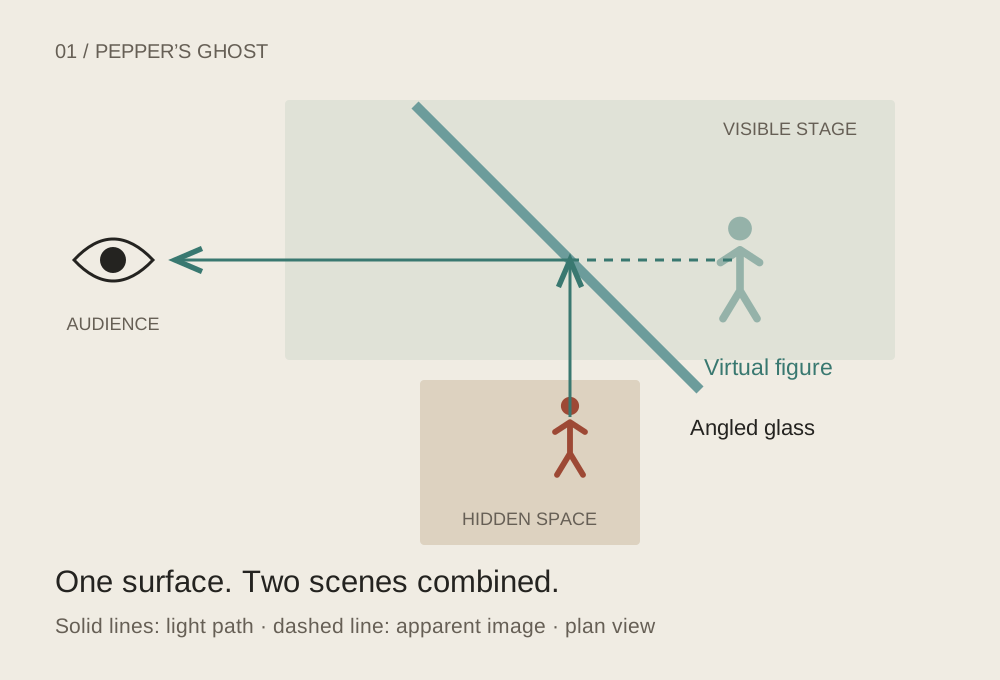
Trace the light from the hidden figure to the glass and then towards the audience. Imagine dimming the hidden figure: its reflection fades while the visible stage stays in view.
Original explanatory diagram created for Through Mirror. It illustrates the optical principle and is not a photograph of a performance or installation. Gallery previews may be resized or converted to WebP; animated previews show the first frame.
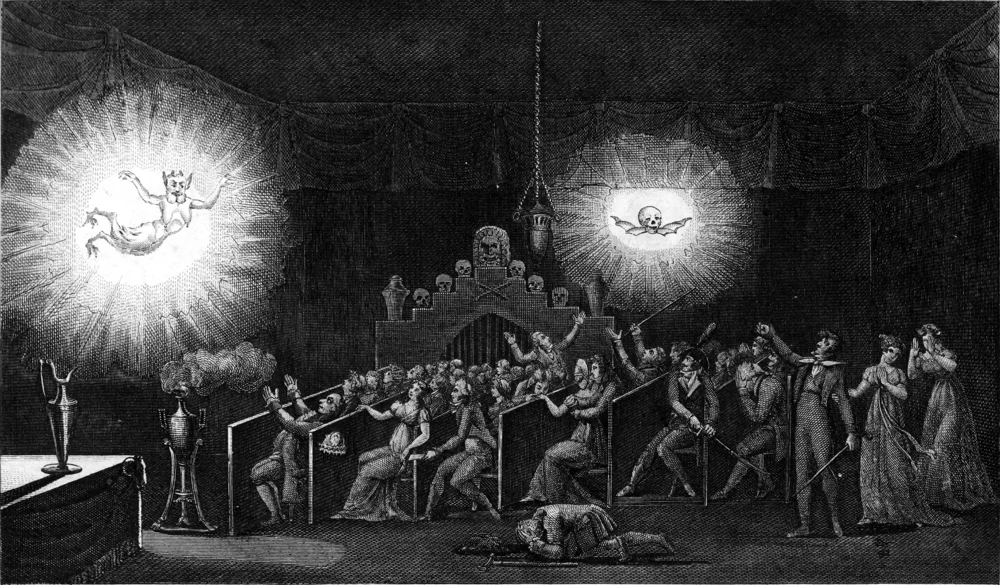
Étienne-Gaspard Robertson and other lantern showmen
Ghosts and skeletons appear in darkness, grow larger and seem to approach the audience. Hidden magic lanterns turn painted slides into an unsettling moving spectacle.
John Henry Pepper; optical arrangement developed with Henry Dircks
A ghost shares the stage with a living actor, then fades away. Victorian ghost shows turned hidden performers and sheets of glass into public spectacles of apparent presence.
Frequently asked questions
What is Pepper’s Ghost?
A figure appears on an empty stage, transparent enough for the scenery to show through. Its real source is hidden elsewhere.
What should I look for in Pepper’s Ghost?
Trace the light from the hidden figure to the glass and then towards the audience. Imagine dimming the hidden figure: its reflection fades while the visible stage stays in view.
What explains Pepper’s Ghost?
An angled sheet of clear glass transmits the view of the stage while reflecting a brightly lit figure concealed beside or below it. The audience combines the transmitted scene with the reflected image and sees an apparent figure behind the glass. Carefully controlled lighting hides the glass and the source, and makes the figure appear or disappear.
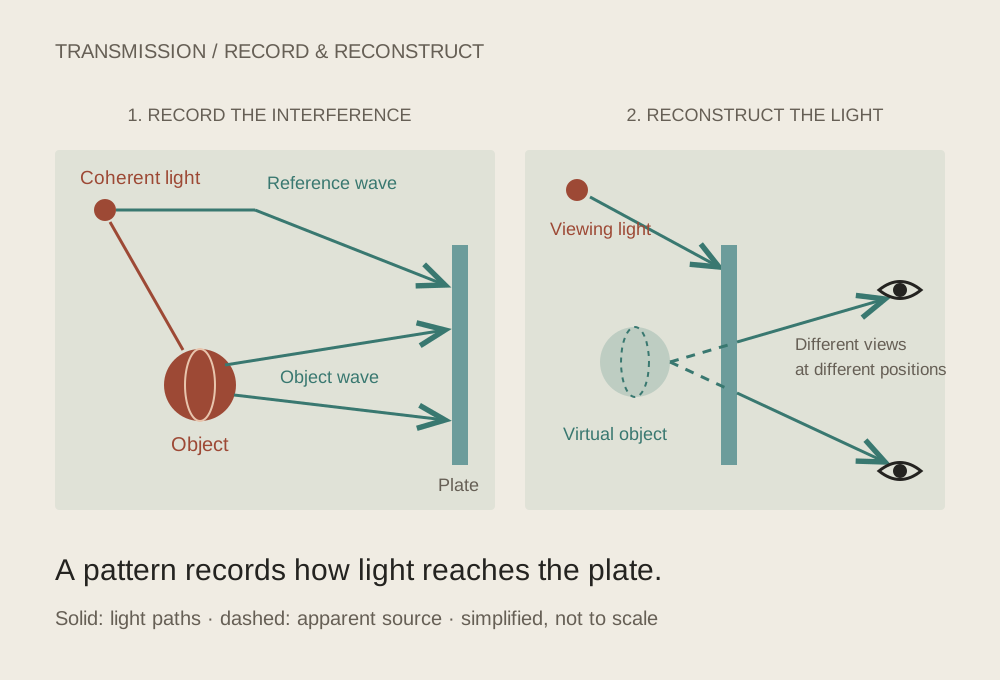
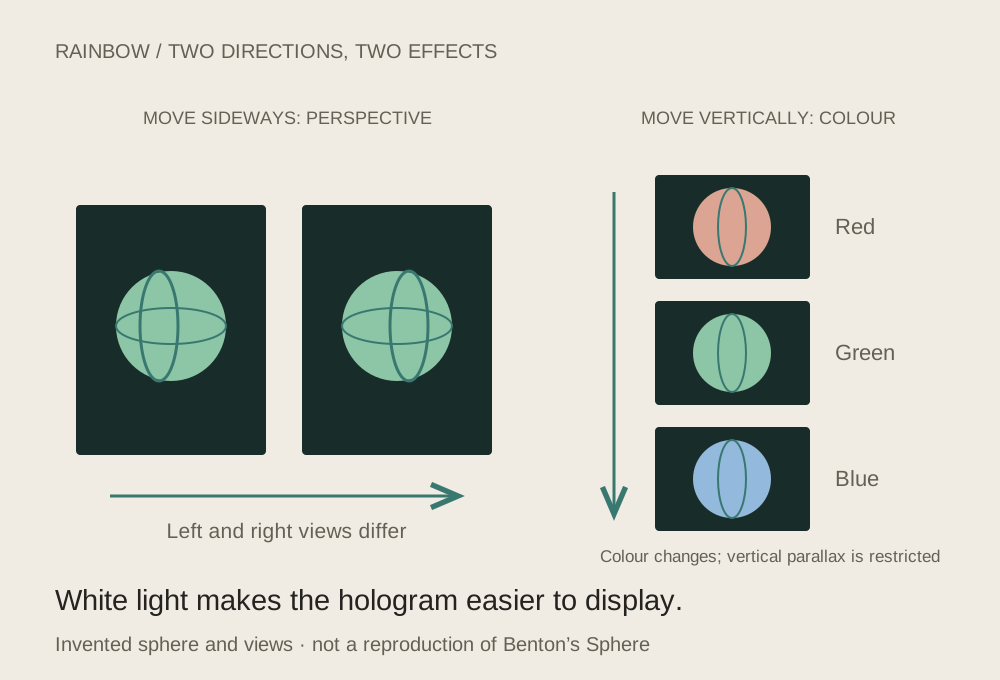
A flat glass plate reconstructs light from a still life. Move sideways and the objects reveal a different view, as though you were looking through a window.
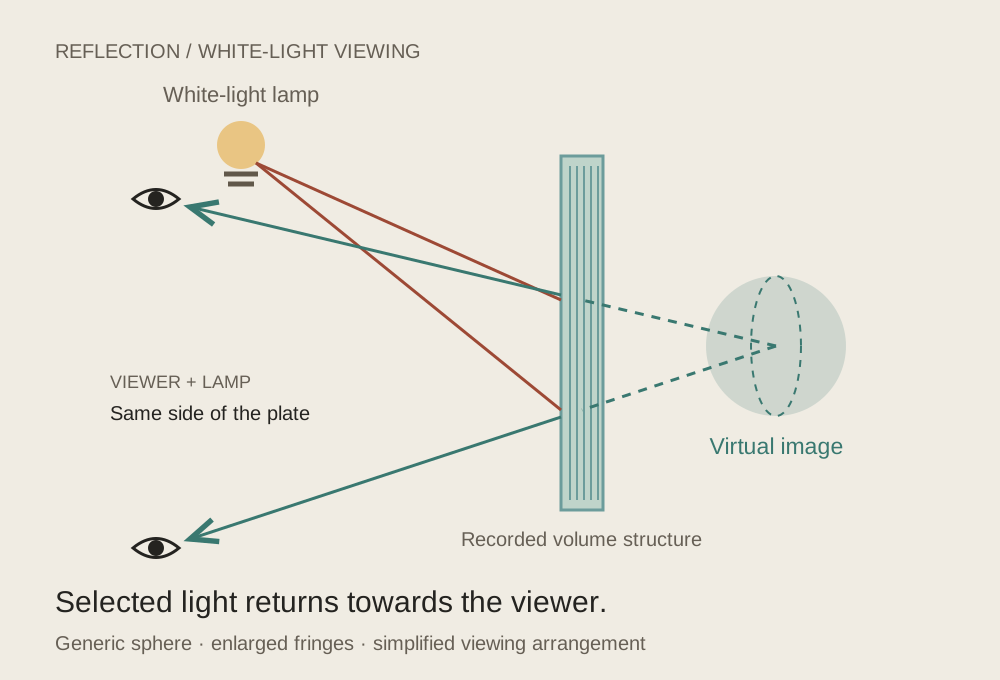
A lamp illuminates a flat plate and an image appears to occupy depth. The light returns towards the viewer from a recorded structure inside the holographic material.