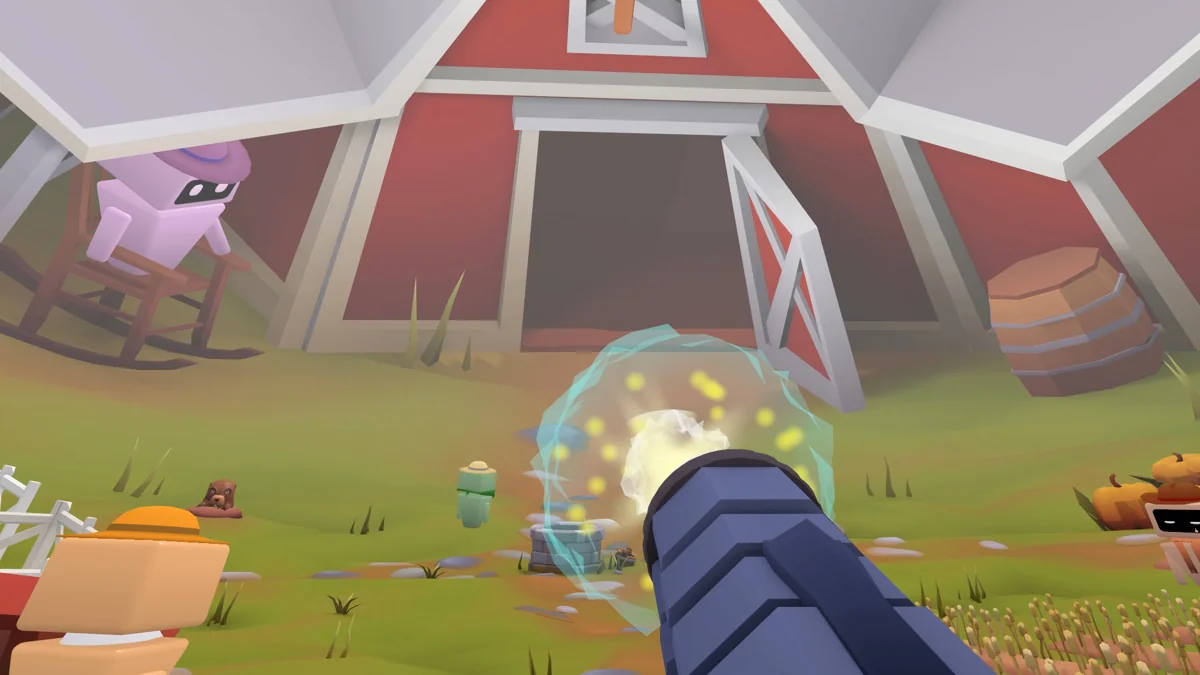
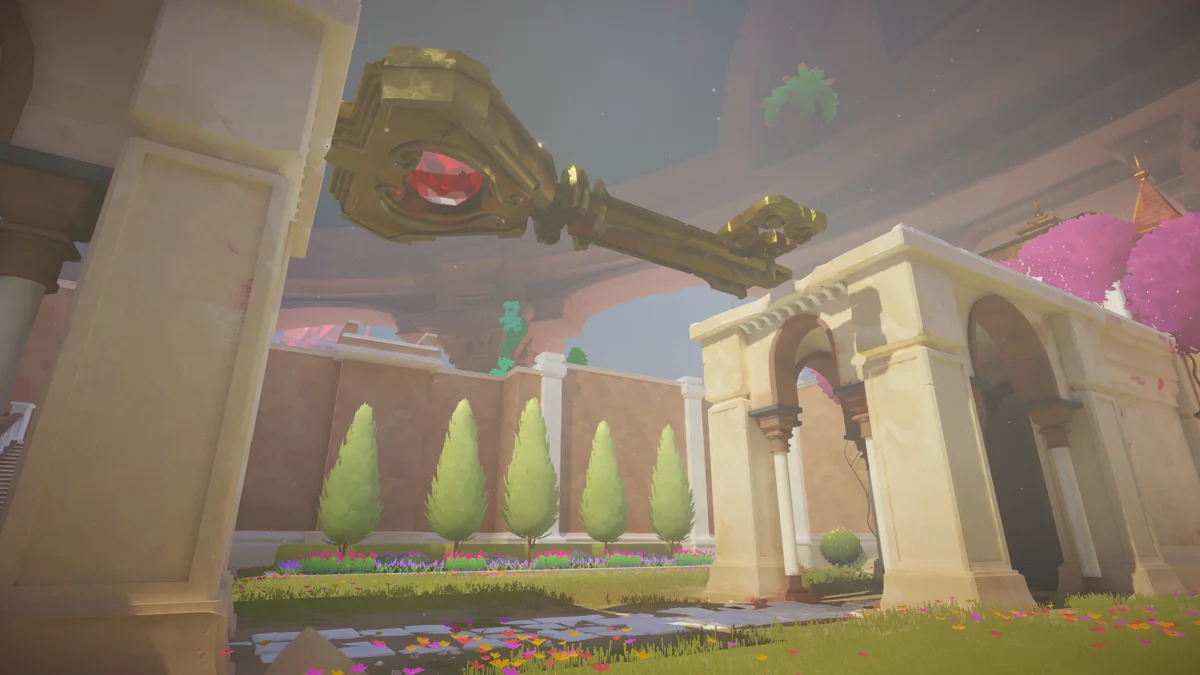
A drawing can bend your perception. A game can let you walk through it.
ONE DISTINCTION WORTH MAKING
A fourth spatial dimension adds another direction beside left/right, up/down, and forward/back. An impossible drawing combines depth cues that cannot all belong to one ordinary solid. Games explore both ideas, alongside perspective tricks and unusual spatial connections.
EXPLORE / FOUR DIMENSIONS
A fourth spatial dimension
An extra direction of space, with three-dimensional views into a mathematically consistent 4D world.
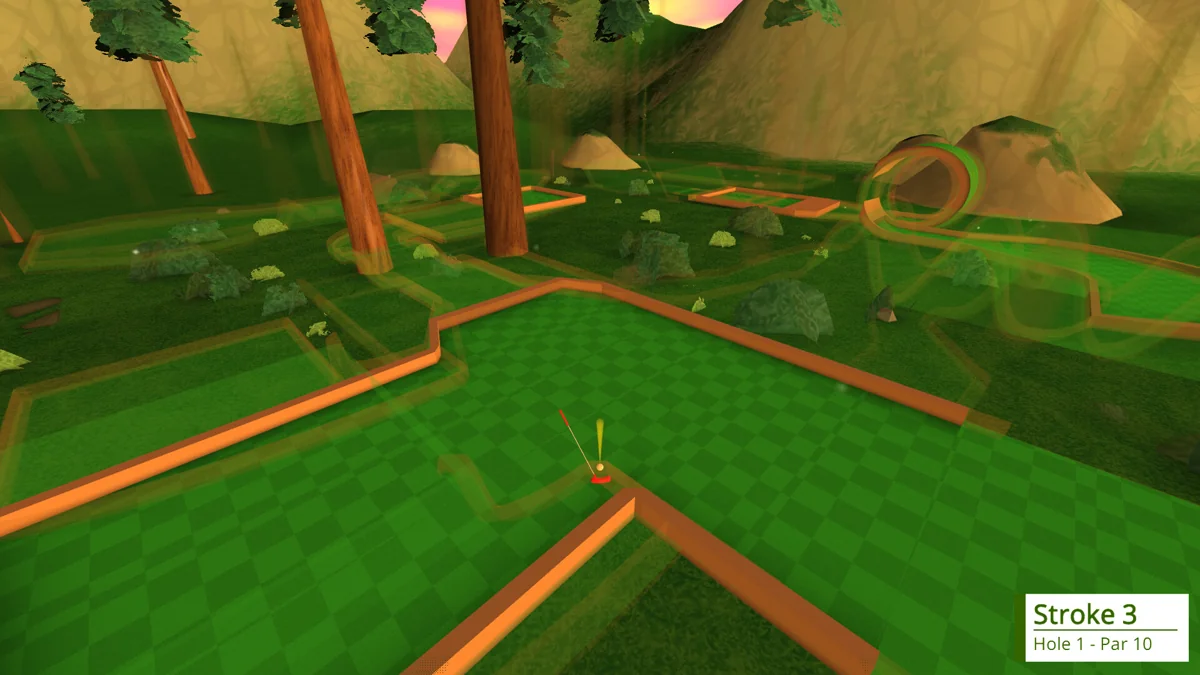
Courses exist in four spatial dimensions. Rotating the view and changing how the geometry is displayed reveals routes that a normal 3D view conceals. The unfamiliar shapes come from higher-dimensional geometry, rather than deliberately contradictory edges.
LOOK FOR
Think about moving a ball around an obstacle in a direction that ordinary 3D golf does not offer.
You see a three-dimensional cross-section of a four-dimensional environment. Turning that slice changes which objects and paths are visible. The design explores feats such as going around a wall along an extra spatial direction.
LOOK FOR
An object can appear to deform or disappear as the visible cross-section moves, while its full 4D shape stays the same.
In development. The official FAQ currently lists no announced release date and no public demo; checked October 2026.
A physics sandbox for shapes from another dimension.
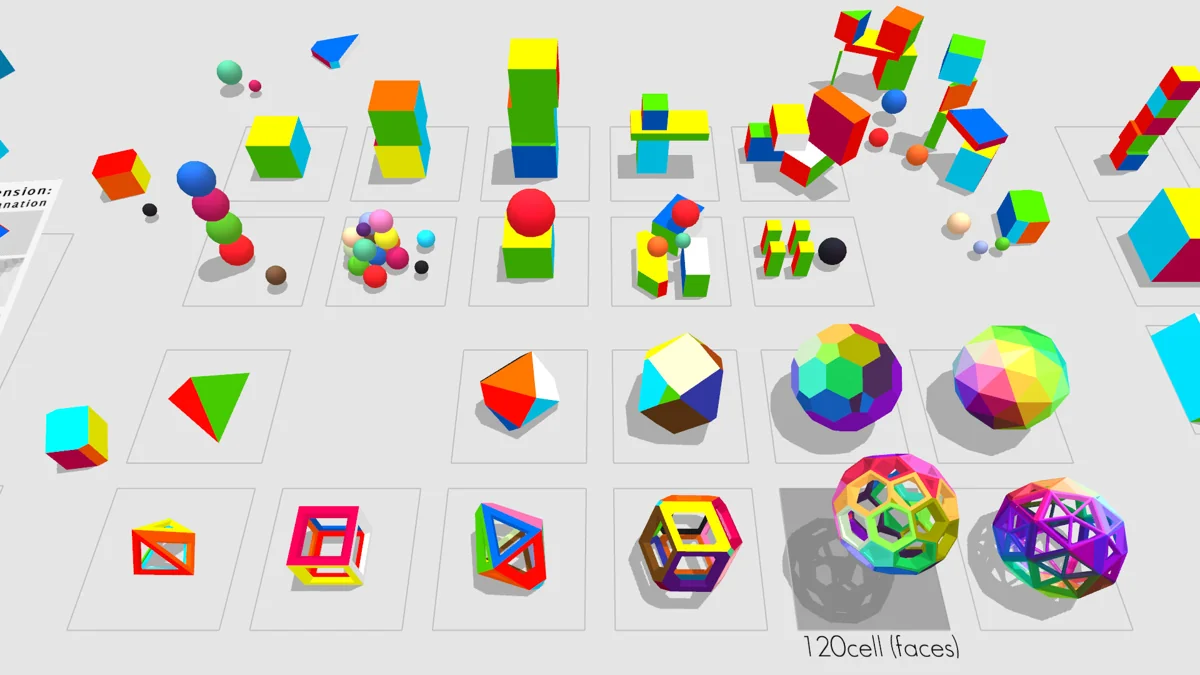
A fourth-dimensional physics simulation lets you push, stack, and roll objects while seeing a 3D slice. Moving the slice reveals different cross-sections of the same shape. This is an open-ended toy rather than a sequence of puzzle levels.
LOOK FOR
A tesseract is a consistent four-dimensional object. It can look strange in a 3D slice without being an impossible figure.
The puzzles turn optical connections into traversable architecture. Rotating a section of the scene can make separated walkways appear to meet; the game then treats the apparent connection as a route. Its impossible stairs and isometric buildings bring the logic of impossible drawings into play.
LOOK FOR
Follow how a path changes when a platform is rotated into a new viewpoint.
Forced perspective is the central mechanic: objects held in view retain their apparent size, then become larger or smaller when placed at different distances. Other puzzles turn carefully aligned painted fragments into apparently solid objects.
LOOK FOR
Compare apparent size on the screen with the object’s actual scale after you set it down.
Pictures can be placed into the environment and become physical spaces. A flat image changes the scene around it, making the boundary between representation and world part of the puzzle. This is a rule for transforming 2D images into 3D spaces, rather than a fourth spatial dimension.
LOOK FOR
Watch which parts of the existing world are replaced when an image is placed.
A two-dimensional character explores a world with a third dimension. Rotating the viewpoint changes which platforms line up in the visible projection. The perspective mechanic makes disconnected structures usable from a different view.
LOOK FOR
Compare the platforms before and after a quarter-turn: apparent alignment becomes a route.
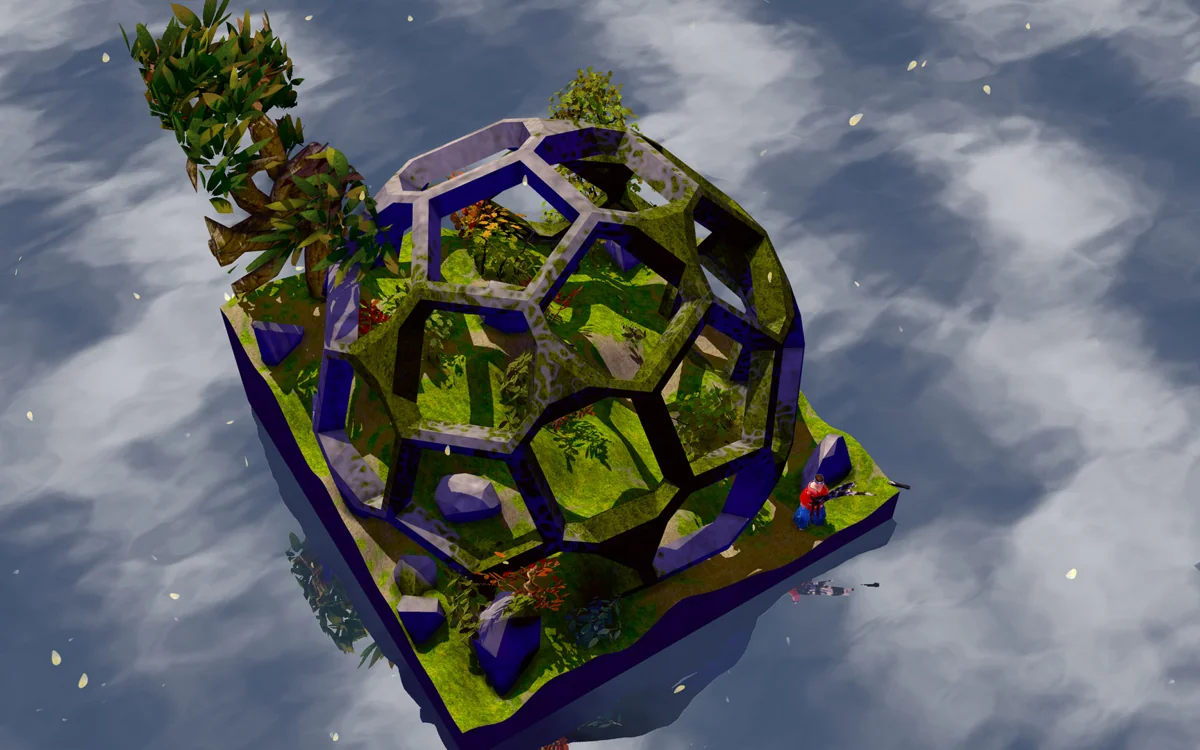
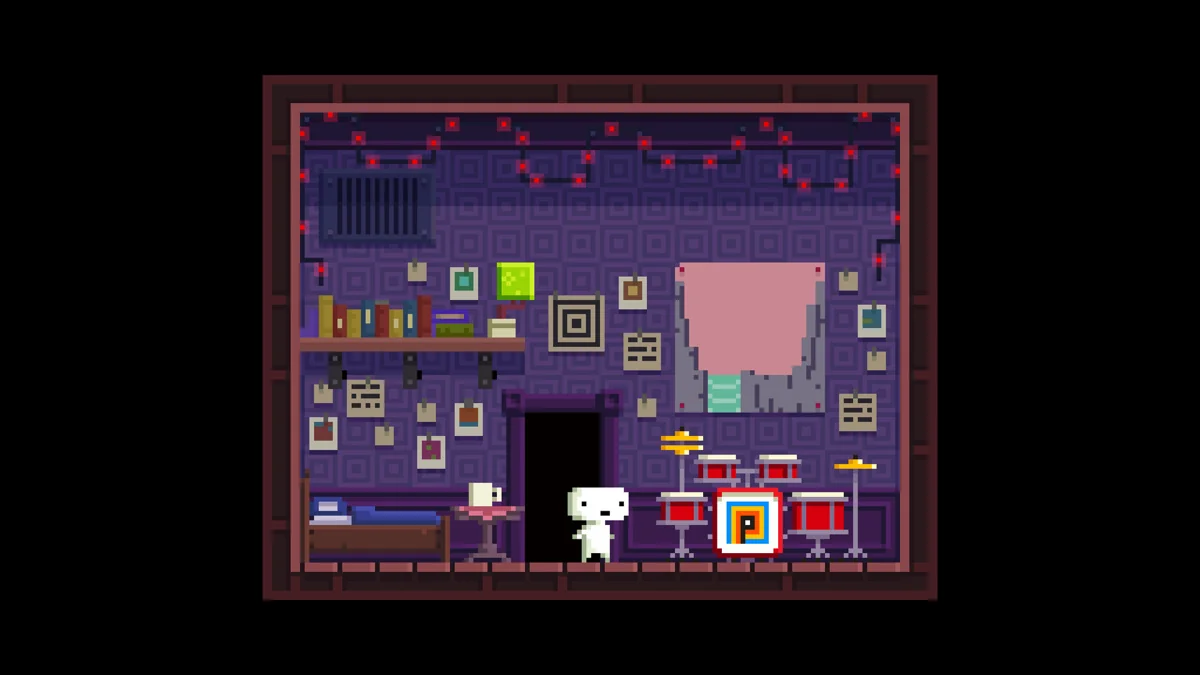
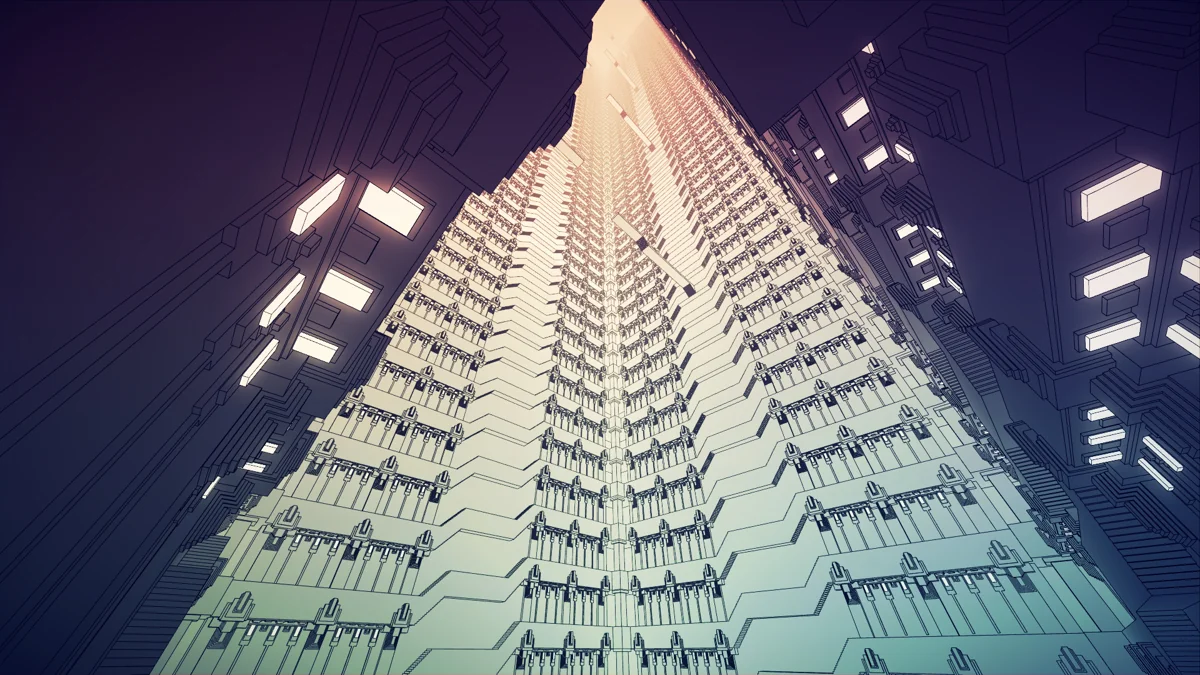
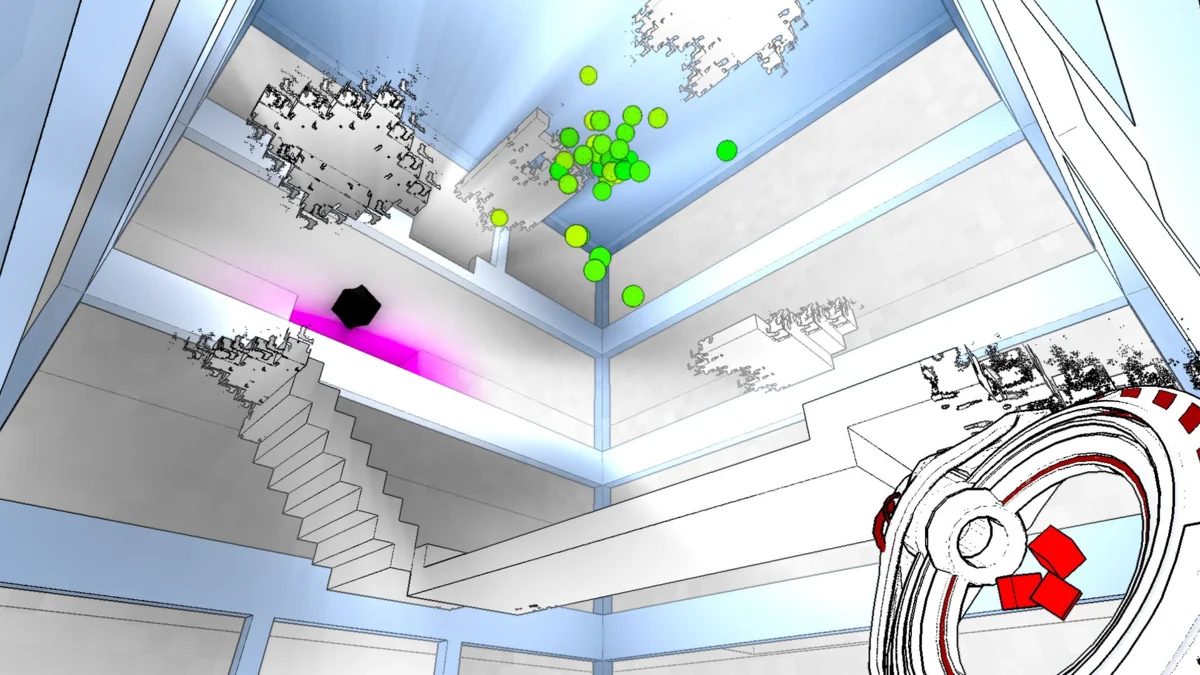
Changing gravity lets walls become floors. The world wraps and repeats in three dimensions, so falling can bring you back toward another instance of the structure. Chyr describes this geometry in terms of 3D world wrapping; its infinity is a spatial design rule.
LOOK FOR
Trace a fall through the repeating buildings and notice the relationship between one instance and the next.
A labyrinth that challenges familiar spatial rules.
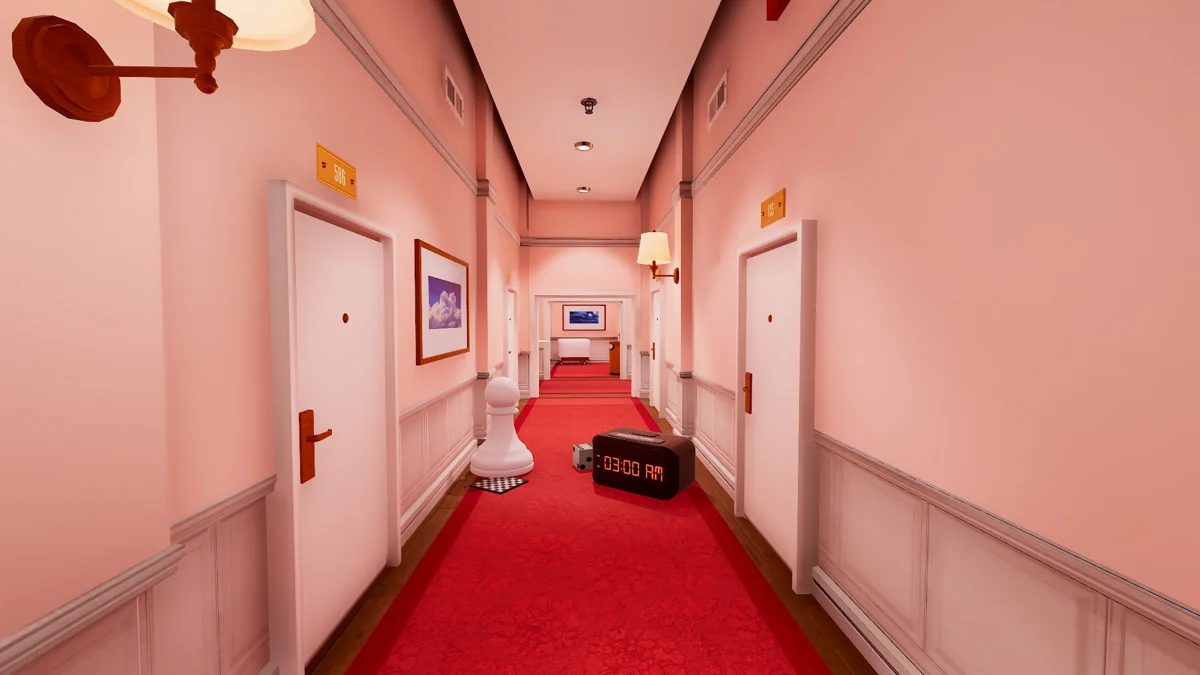
This first-person puzzle game uses an Escher-inspired world with unexpected connections, changing spaces, and routes that challenge ordinary navigation. Looking, moving, and reconsidering an assumption matter as much as finding a conventional doorway.
LOOK FOR
Revisit a route and question whether the connection is the one you expected.
Its environments use hyperbolic and spherical geometry. These are mathematically coherent spaces with different geometric rules from ordinary flat space. They can feel impossible to navigate, but they do not rely on a contradictory Penrose-style object or a fourth spatial dimension.
LOOK FOR
Notice how distances, parallel-looking directions, and the amount of space around you behave.
The same environment exists at multiple linked scales. A small model sits inside the world it represents, and moving an object in one scale affects its counterpart elsewhere. Recursive architecture turns a model and its surroundings into a single puzzle system.
LOOK FOR
Follow the same object across the model and the larger environment.
Which games use optical illusions or impossible spaces?
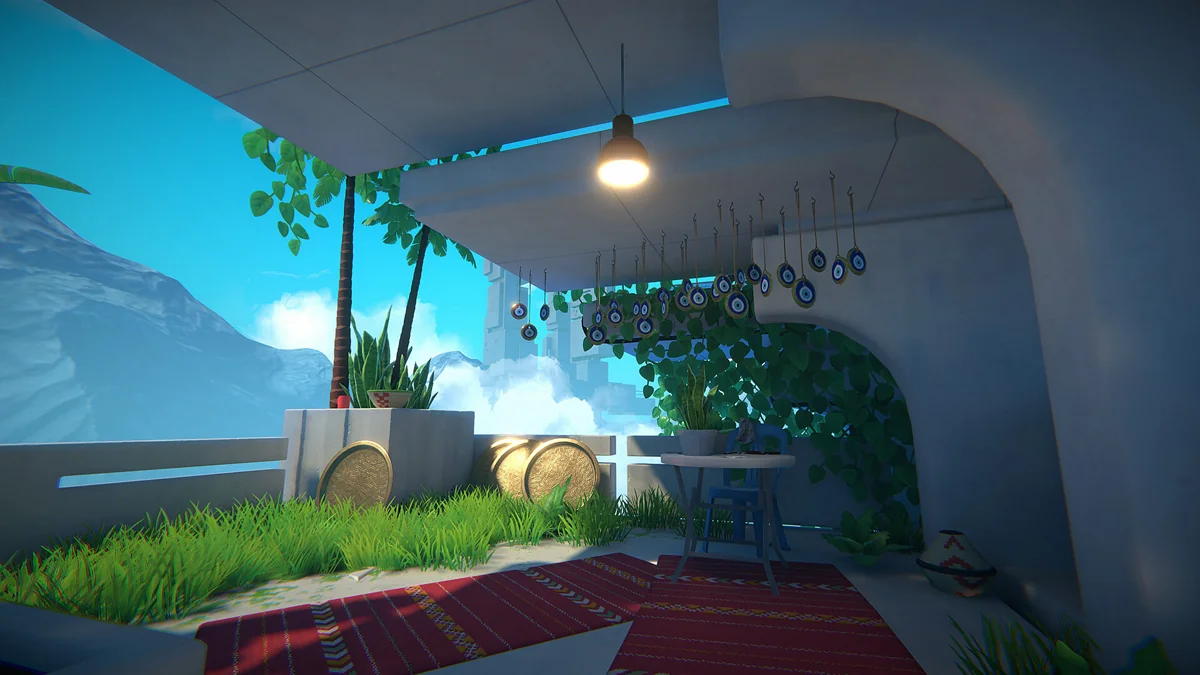
This guide includes perspective games such as Superliminal, Viewfinder and Monument Valley, unusual spaces in Antichamber and Manifold Garden, recursive worlds in Maquette, and higher-dimensional experiences such as 4D Golf and Miegakure.
Is four-dimensional geometry the same as an impossible object?
No. A fourth spatial dimension adds a mathematically consistent direction beyond ordinary three-dimensional space. An impossible drawing combines depth cues that cannot all describe one ordinary solid.
Can I see gameplay before choosing a game?
Each game in this guide has official gameplay screenshots, source links and a trailer. Select a screenshot or load the trailer to explore its visual ideas.