A leaf with legs. A fox that fades into snow. A cuttlefish that changes its skin. Colour, shape, texture and transparency can make an animal harder to detect—or harder to recognise.
7 examples of visual camouflage. These are real biological adaptations. A photograph lets us explore their appearance; how well they work depends on the habitat, lighting and the eyes of the observer.
Match the surroundings
Bark, snow and water each create a different visual background. Colour and pattern can reduce contrast, but their success depends on the setting and the direction of view.
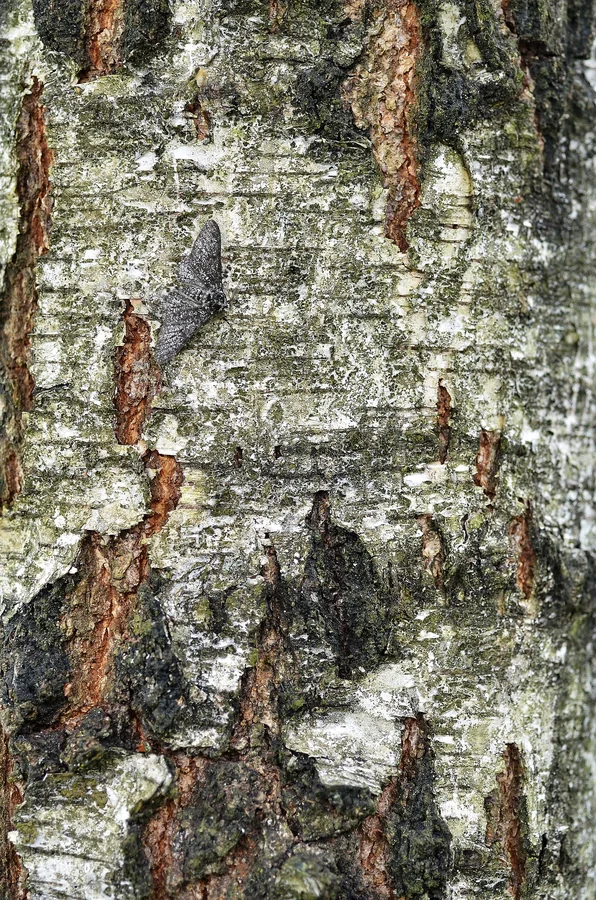
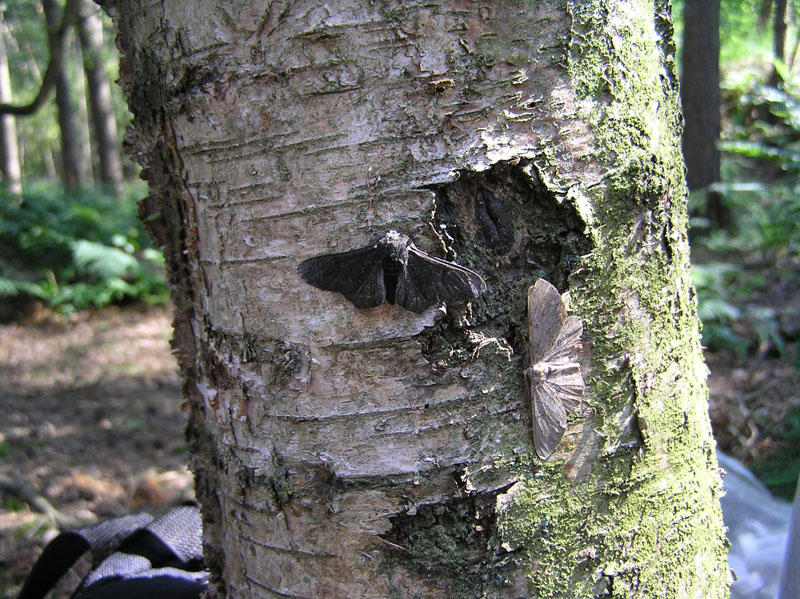
A peppered moth on birch bark in Jalhay, Belgium. Image: Gilles San Martin · Source · CC BY-SA 3.0. Commons size rendition; viewing previews may be resized.Compare pale and dark formsA comparison photograph of the two colour forms. This illustrates their appearance; it is not a predation experiment. Image: Martinowksy at Dutch Wikipedia (Original text: Maarten Sanne) · Source · CC BY-SA 3.0. Unchanged Commons original; viewing previews may be resized.
01 / Background matching
Peppered Moth — Disappearing into Bark
Biston betularia · Woodland trees
Speckled wings repeat the tones and texture of tree bark.
The peppered moth became a classic example of natural selection when dark forms grew more common in polluted British woodland. A 2018 study used models of bird vision and field experiments to connect background matching with survival.
Pale and dark forms suit different backgrounds. The pale form blends better with lichen-covered bark; dark forms can match darker bark. Camouflage depends on the surroundings and the observer’s vision. An adult moth does not switch its wing colour to match each tree.
LOOK FOR THE DISGUISE
Find the moth near the upper part of the trunk. Follow the wing edges, then step back and see how the speckles merge with the bark.
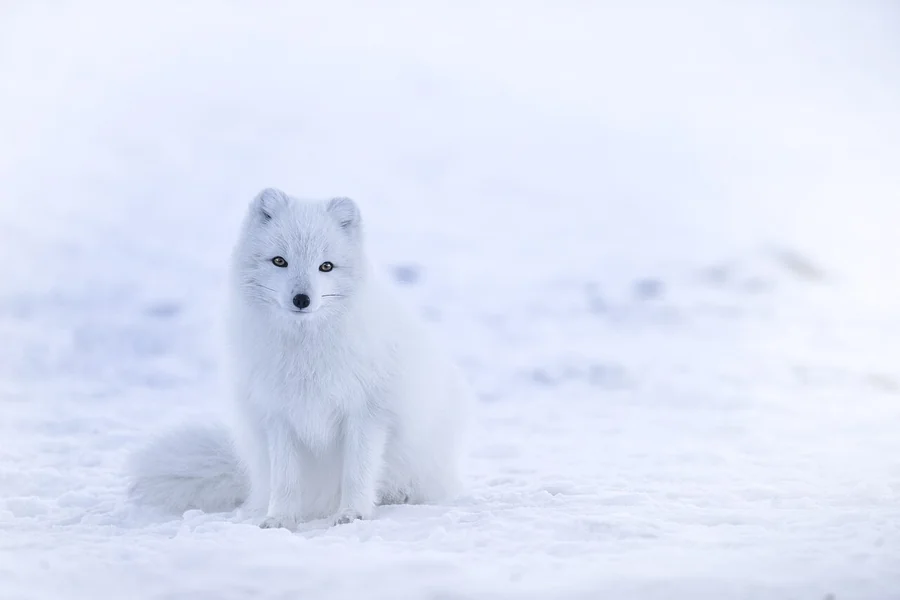
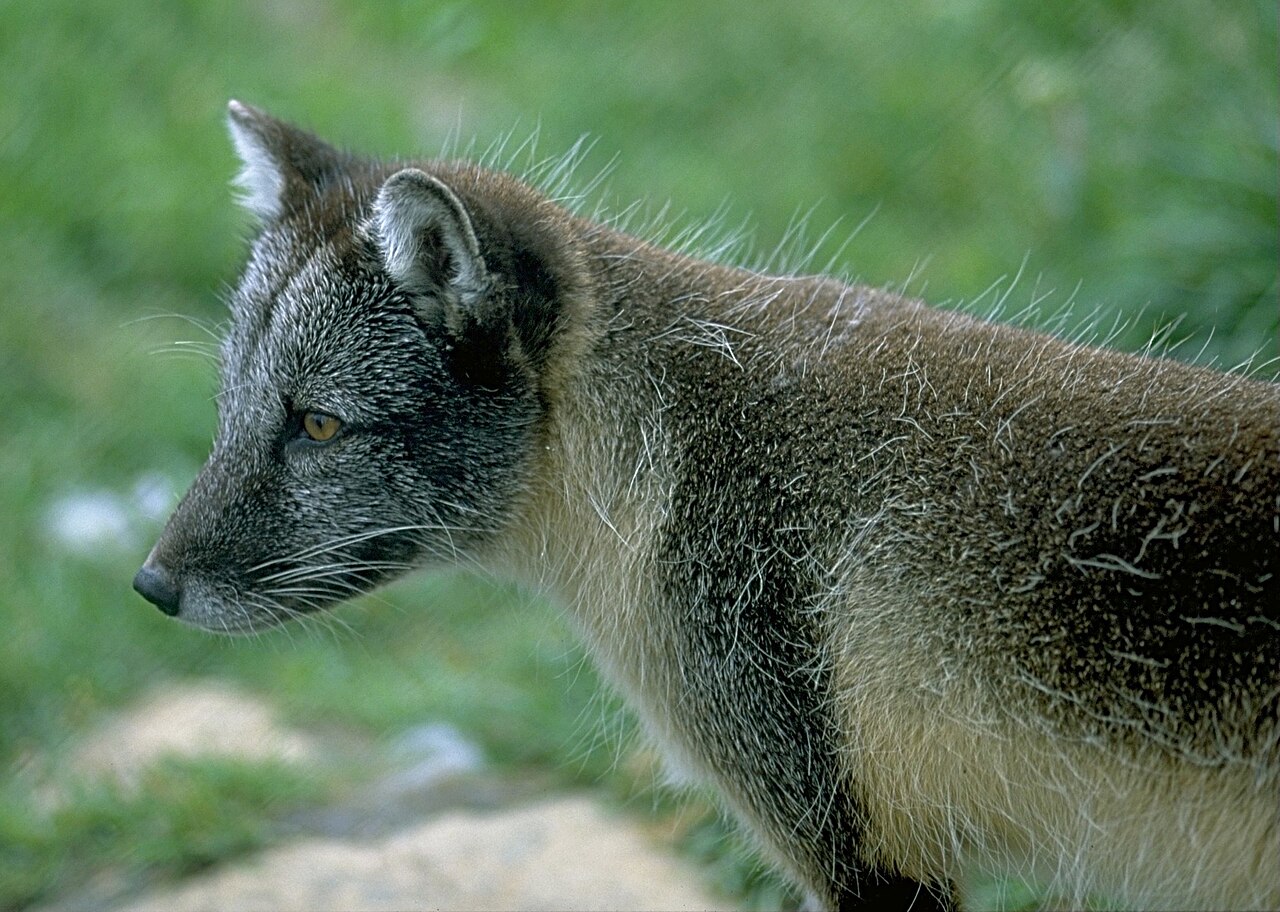
An Arctic fox in winter coat in Iceland. Image: Jonatan Pie (unsplash.com/@r3dmax) · Source · CC0. Commons size rendition; viewing previews may be resized.Compare a summer coatA summer coat, photographed at Numedal Zoo. A different individual and setting from the winter photograph. Image: Andreas Tille · Source · CC BY-SA 4.0. Commons size rendition; viewing previews may be resized.
02 / Seasonal background matching
Arctic Fox — A Coat for the Season
Vulpes lagopus · Arctic tundra
A winter coat makes a white fox difficult to separate from snow.
Arctic foxes have white and blue colour morphs. The Norwegian Polar Institute records two annual moults: the white morph develops a white winter coat and a brown-grey summer coat. Blue-morph foxes remain darker throughout the year.
Replacing the coat changes the fox’s contrast against seasonal surroundings. White fur can merge with snow; darker summer fur suits exposed ground. This happens through moulting over time, rather than an instant response to whatever is behind the animal.
LOOK FOR THE DISGUISE
Compare the white body with the snow, then notice the dark eyes and nose. Open the summer photograph to see how much the coat can change.
The winter and summer photographs show different individuals in different settings; they are not a time sequence of one fox.
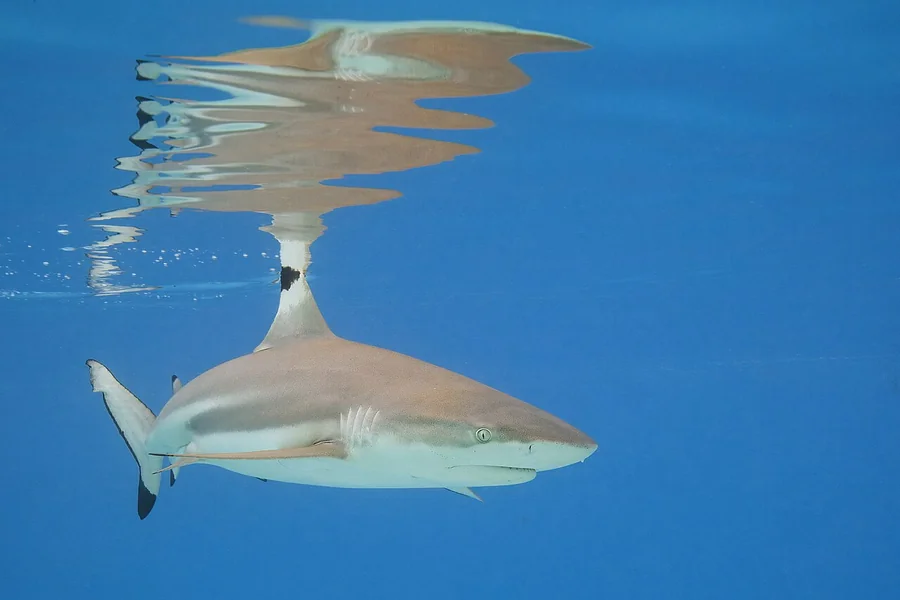
A blacktip reef shark near the surface at Moorea, French Polynesia. Image: Charles J. Sharp · Source · CC BY-SA 4.0. Commons size rendition; viewing previews may be resized.
The same shark presents a dark back from above and a pale belly from below.
The Florida Museum describes the blacktip reef shark’s brown-tan upper surface and white underside. This contrast is an example of countershading, a common colour arrangement in sharks.
A dark back can reduce contrast against darker water when seen from above. A pale underside can reduce contrast against the brighter water surface when seen from below. The effect depends on lighting, water and viewing direction; the shark remains visible in this side view.
LOOK FOR THE DISGUISE
Trace the change from the darker back to the white belly. Imagine looking down through the water, then looking up towards the surface.
A familiar silhouette can give an animal away. Leaf-like bodies can be mistaken for foliage; fringed edges can make the boundary between an animal and its resting surface harder to follow.
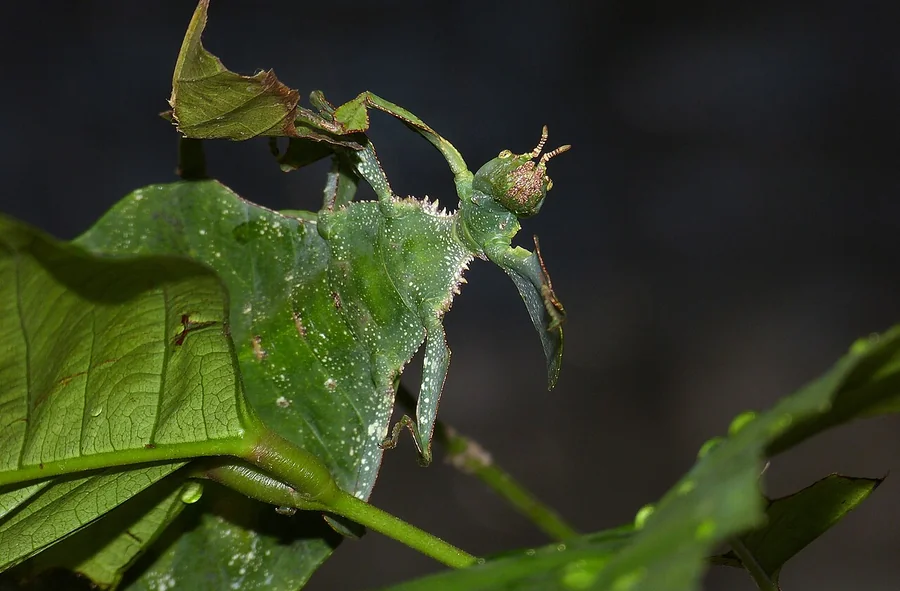
A giant leaf insect photographed at a butterfly farm in the Cameron Highlands, Malaysia. The source file uses the name Phyllium giganteum. Image: Bernard DUPONT from FRANCE · Source · CC BY-SA 2.0. Commons size rendition; viewing previews may be resized.
04 / Leaf masquerade
Leaf Insect — A Leaf with Legs
Leaf insects · family Phylliidae · Tropical foliage
A flattened body and leaf-like legs make an insect resemble part of a plant.
Leaf insects are herbivores whose appearance conceals them among foliage. The American Museum of Natural History describes their leaf-like bodies, vein-like markings and swaying movement.
This disguise combines green background matching with resemblance to an ordinary leaf. Broad body and leg surfaces, irregular margins and markings make the animal harder to recognise as prey. Stillness helps; swaying movement can resemble a leaf moving in the wind.
LOOK FOR THE DISGUISE
Find the head at the upper right, then follow the legs. Look for the boundary where an apparent leaf becomes the insect’s body.
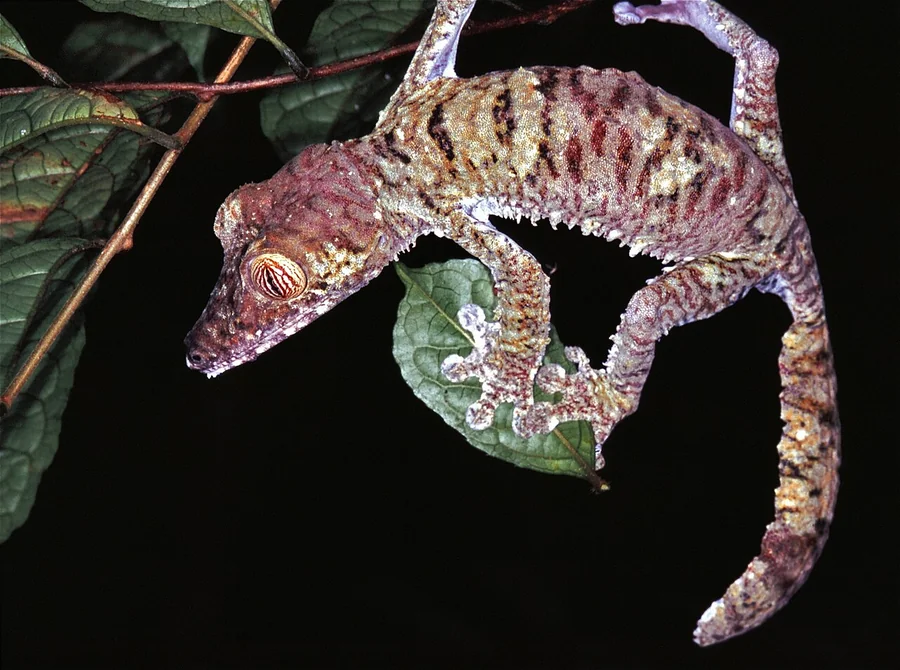
A giant leaf-tailed gecko on Nosy Mangabe, Madagascar. A scanned slide from 2004. Image: Bernard DUPONT from FRANCE · Source · CC BY-SA 2.0. Commons size rendition; viewing previews may be resized.
05 / Outline concealment
Leaf-tailed Gecko — Softening the Outline
Uroplatus fimbriatus · Madagascar’s forests
Mottled skin and a fringe around the body help a gecko merge with its resting surface.
Giant leaf-tailed geckos are nocturnal forest lizards from Madagascar. They rest by day on branches, trunks and other forest surfaces, where their appearance can conceal them.
Colour matching alone would leave a recognisable silhouette. Fringed skin along the jaw and body can flatten against a surface and soften the boundary between animal and background. The broad tail adds a leaf-like shape. Several features work together to hide the outline.
LOOK FOR THE DISGUISE
Look along the lower jaw and belly for the fringed edge. Notice how different that edge is from the clear outlines of the toes and eyes.
This photograph’s dark background reveals the body fringe clearly; it does not show the gecko concealed against a matching trunk.
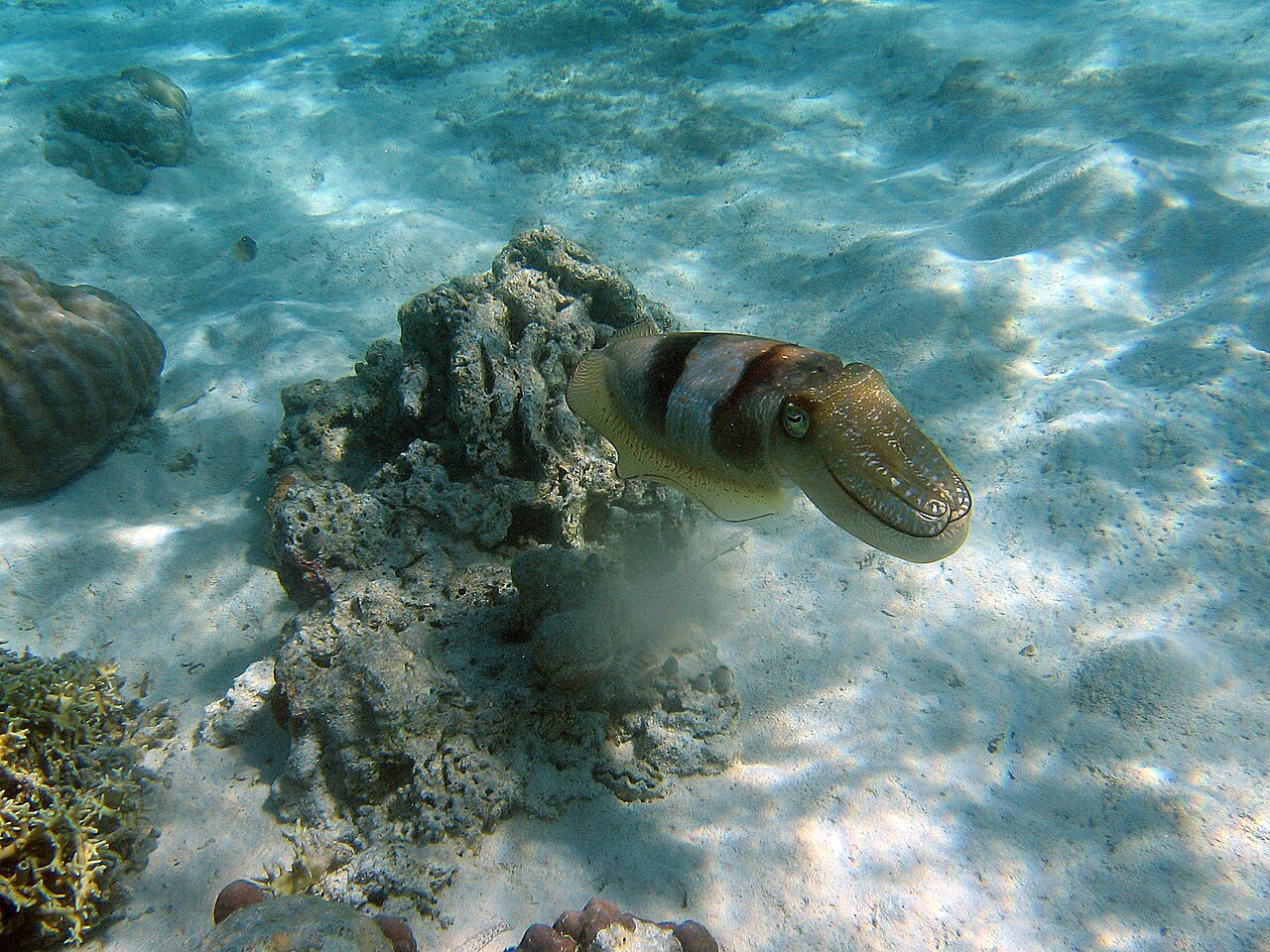
Camouflage can be dynamic. Cuttlefish alter their patterns and texture; resting glassfrogs become more transparent through a different physiological mechanism.
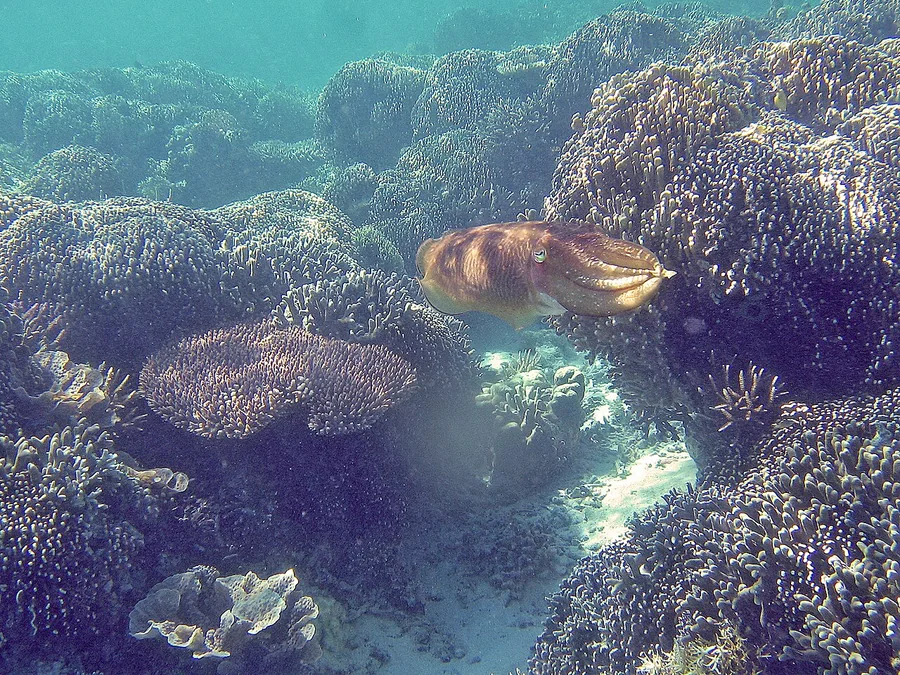
Cuttlefish over a rocky seabed. The file does not identify the species. Image: Konyali43 · Source · CC BY-SA 4.0. Commons size rendition; viewing previews may be resized.Compare a sandy backgroundA cuttlefish over white sand in Komodo, Indonesia. The photographer describes a colour change on arrival; this still image cannot show its timing. Image: Konyali43 · Source · CC BY-SA 4.0. Commons size rendition; viewing previews may be resized.
06 / Adaptive colour, pattern & texture
Cuttlefish — Skin That Changes the Scene
Cuttlefish · order Sepiida · Seabed habitats
A cuttlefish can change both its skin pattern and its surface texture.
Marine Biological Laboratory researchers study the rapid camouflage of cuttlefish and other cephalopods. Work on the common cuttlefish has also explained how muscles and nerves control raised skin structures called papillae.
Muscles expand or relax pigment organs called chromatophores, changing the visible pattern. Reflective structures also affect appearance. Papillae can raise the skin into bumps, altering its texture and outline. These coordinated changes help an animal resemble sand, algae or rock.
LOOK FOR THE DISGUISE
Find the mottled cuttlefish below the more conspicuous one. Compare its back with the surrounding rocks, then open the sandy-background view.
These still photographs illustrate different appearances. They do not measure the speed of change or establish that both views show the same individual.
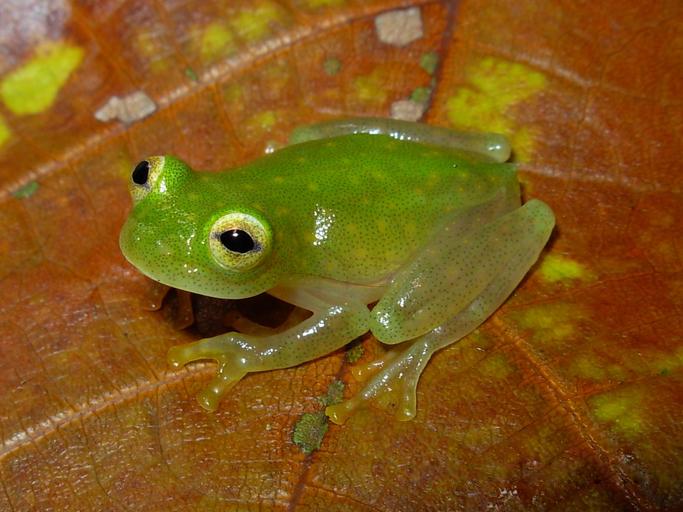
Fleischmann’s glassfrog. Translucent limbs are visible against the leaf. Image: Mauricio Rivera Correa · Source · CC BY-SA 2.5. Unchanged Commons original; viewing previews may be resized.
07 / Partial transparency
Glassfrog — Letting the Background Through
Hyalinobatrachium fleischmanni · Central American vegetation
Translucent tissues reduce the visual barrier between a small frog and its surroundings.
A 2022 study of Fleischmann’s glassfrogs used photoacoustic imaging to track red blood cells. Resting frogs packed most of those cells into the liver and became more transparent.
Blood absorbs light and can make otherwise transparent tissue visible. Moving red blood cells out of circulation reduces that obstacle while the frog rests. The animal is not entirely invisible: eyes, bones and organs remain visible, and its appearance changes with activity and lighting.
LOOK FOR THE DISGUISE
Compare the translucent limbs with the more strongly coloured body and eyes. Follow the research link for photographs comparing sleeping and active frogs.
This photograph is not a controlled sleep-versus-activity comparison and does not reveal where its red blood cells are stored.
Animal camouflage includes colour, pattern, shape and other features that make an animal harder to detect or recognise. Its effectiveness depends on the background, lighting and the observer’s vision.
What is the difference between camouflage and mimicry?
Camouflage reduces detection or recognition. Resembling another object, such as a leaf, can help an animal be mistaken for part of its surroundings; resemblance can serve other biological functions too.
How do cuttlefish change their appearance?
Cuttlefish can change visible skin patterns and texture. Their colour changes involve pigment-containing structures and light-reflecting components, helping them alter their appearance against different backgrounds.