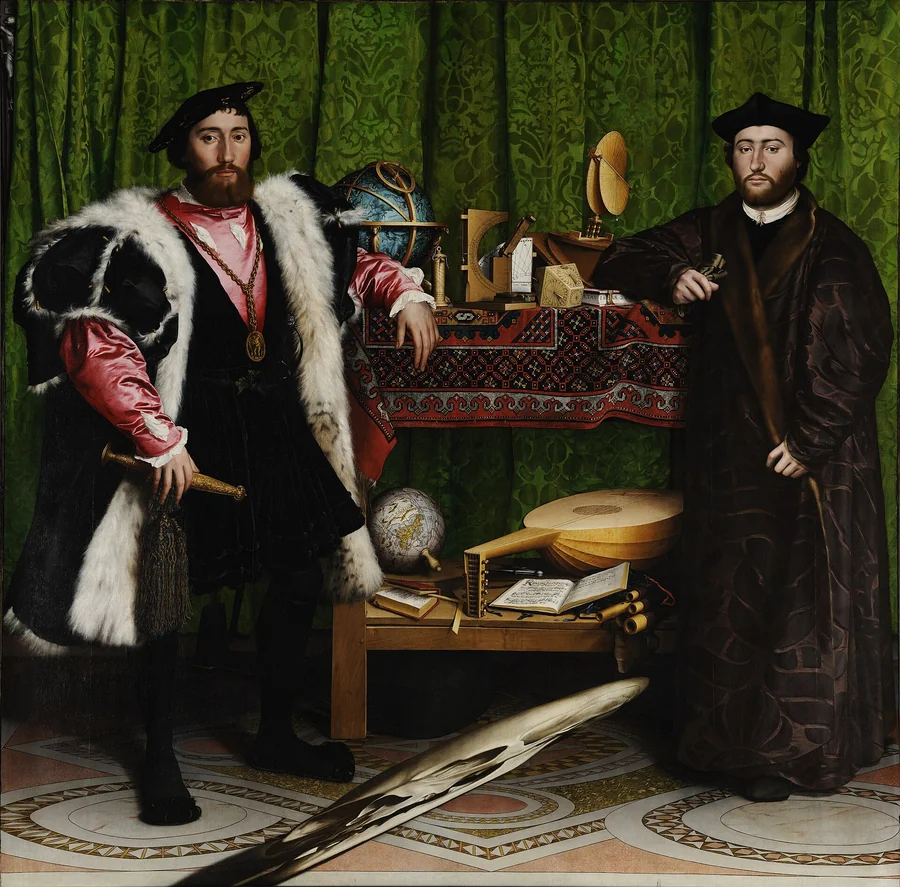
The Ambassadors
Hans Holbein the Younger
A double portrait with a skull that emerges from an oblique view.
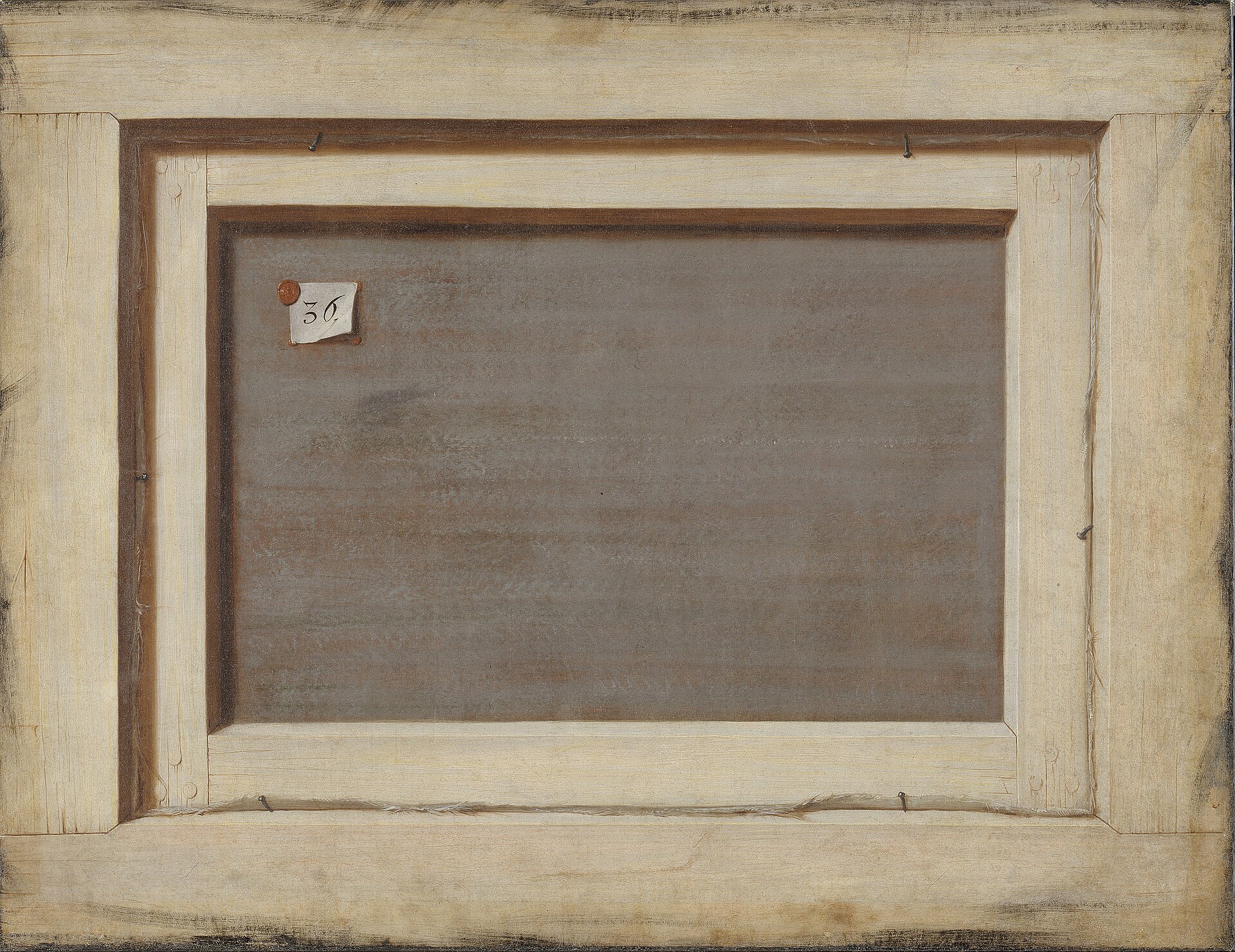
The front of a painting pretends to be its back.
Study the wooden supports and canvas edges. You are looking at a painted representation of a painting’s reverse.
Cornelis Norbertus Gijsbrechts
Original file & attribution · Public domain
This locally stored image is a Wikimedia Commons rendition (resized or rendered from the source file). The full original is linked from the source record. Gallery previews may be resized or converted to WebP; animated previews show the first frame.
Download imageThe front of a painting pretends to be its back.
Study the wooden supports and canvas edges. You are looking at a painted representation of a painting’s reverse.
A familiar surface is represented at shallow depth. The expected boundary between a painting and its physical support becomes the subject of the illusion.
A double portrait with a skull that emerges from an oblique view.
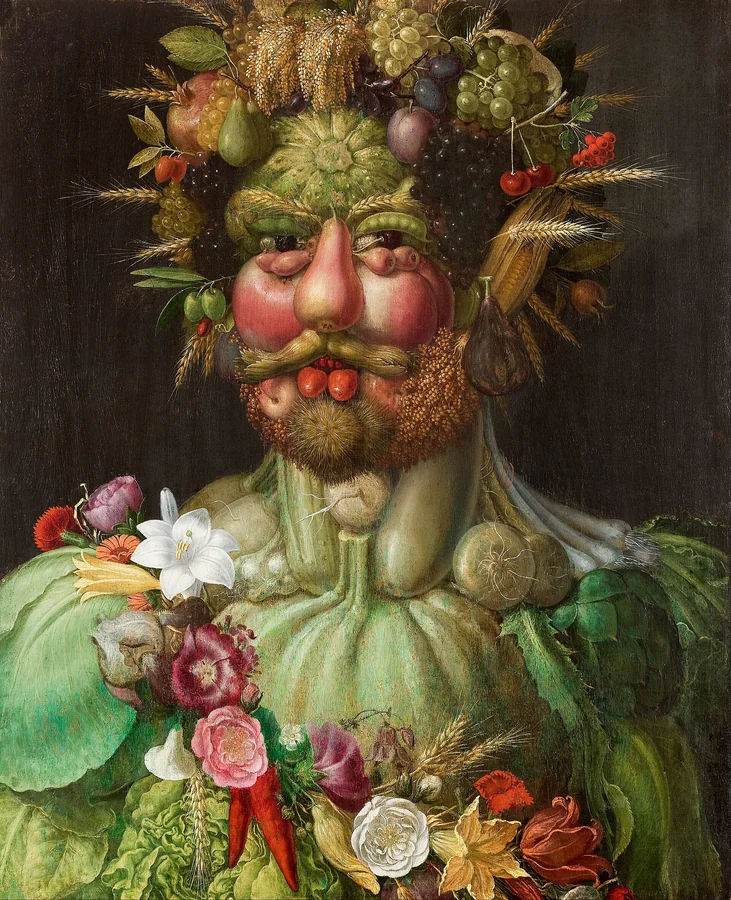
Rudolf II appears as a face assembled from fruit, flowers, and vegetables.
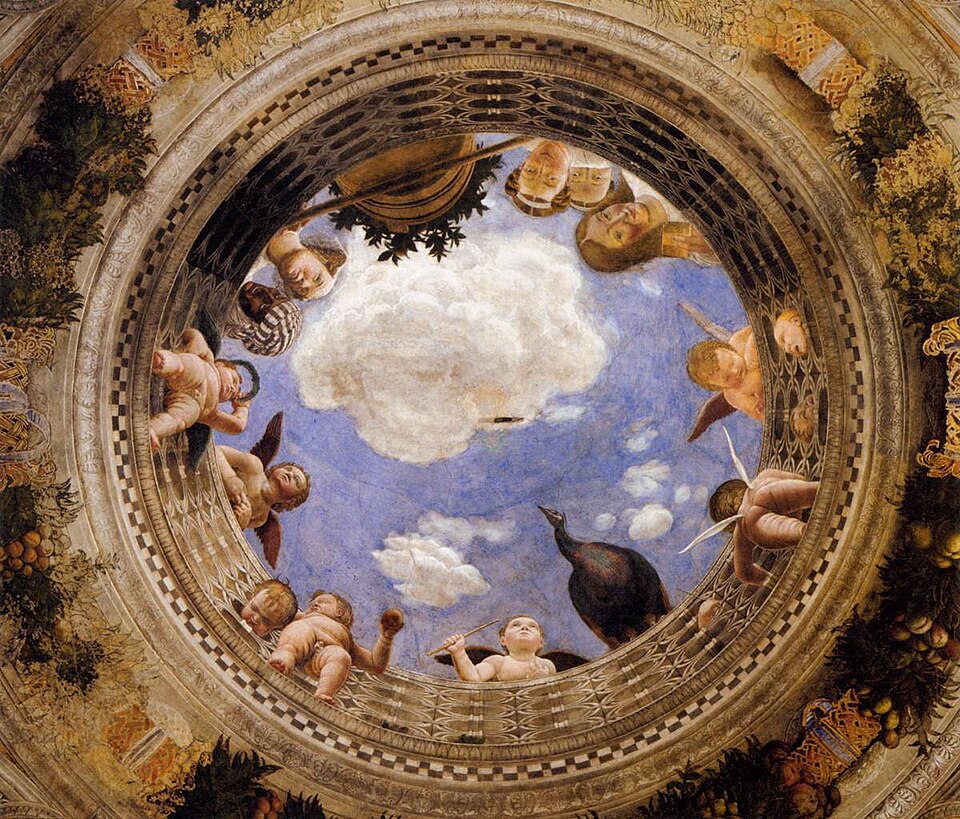
A ceiling seems to open onto the sky, with figures peering down.