 Moving image

Color & afterimages / Historical color research
Helmholtz–Kohlrausch Effect
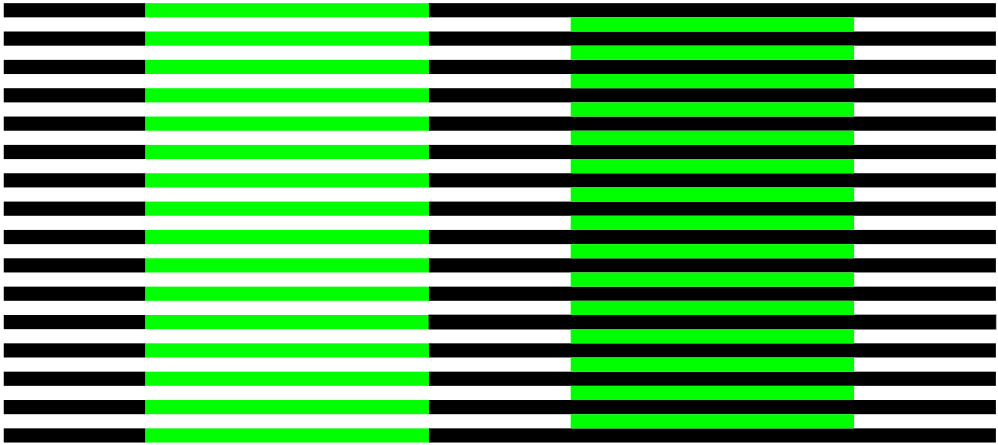
Saturated colors can appear brighter than equal-luminance gray.
TRY THIS
Compare the colored and gray patches. Screen calibration can affect the strength of this demonstration.
THE IMAGE IN THIS ARCHIVE
Parcly Taxel
Original file & attribution · Public domain
This locally stored image is a Wikimedia Commons rendition (resized or rendered from the source file). The full original is linked from the source record. Gallery previews may be resized or converted to WebP; animated previews show the first frame.
Download imageFrequently asked questions
What is Helmholtz–Kohlrausch Effect?
Saturated colors can appear brighter than equal-luminance gray.
What should I look for in Helmholtz–Kohlrausch Effect?
Compare the colored and gray patches. Screen calibration can affect the strength of this demonstration.
What explains Helmholtz–Kohlrausch Effect?
Equal luminance does not guarantee equal perceived brightness. Strongly saturated colors often seem brighter than less saturated colors.