Motion & perception / 1999
Peripheral drift
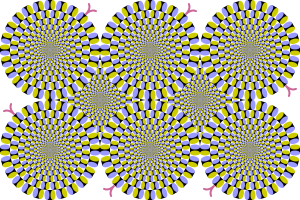
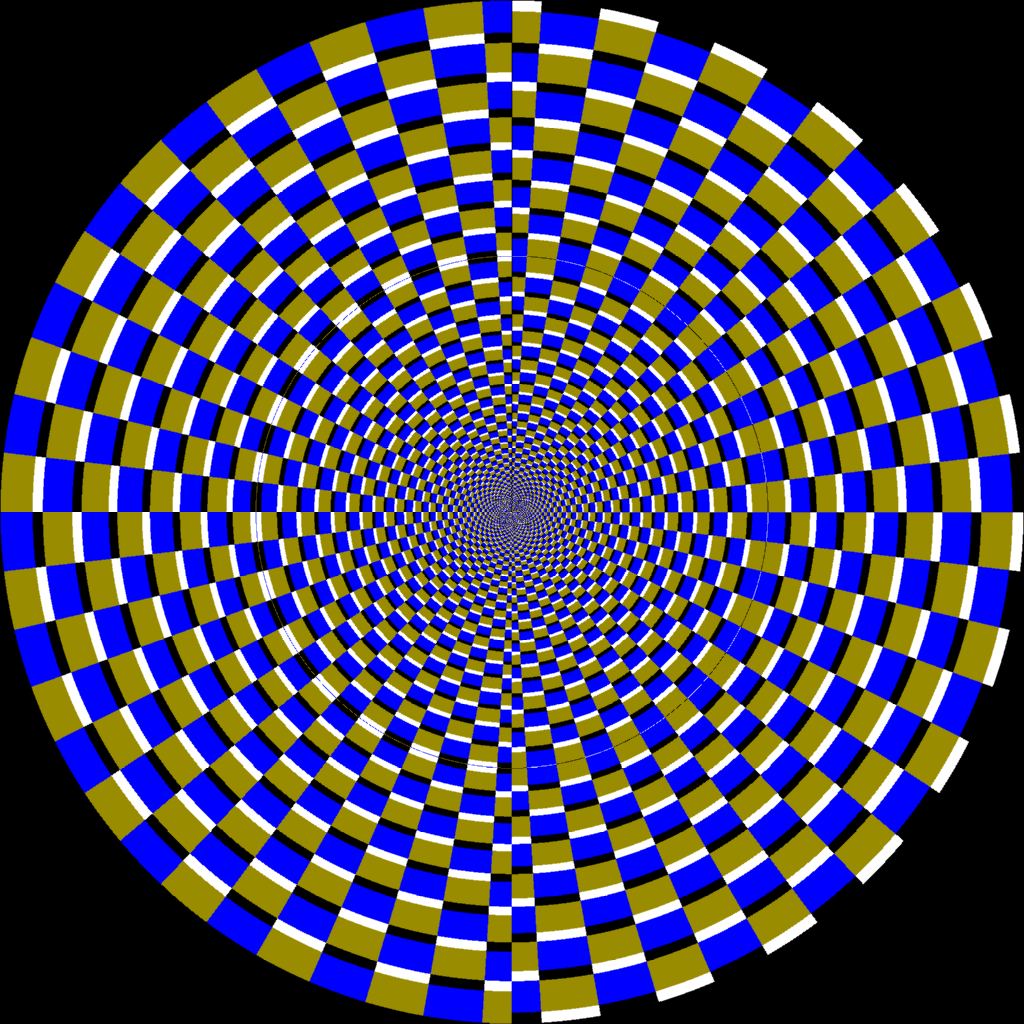
Still gradients seem to drift at the edge of vision.
TRY THIS
Look just to one side of the pattern, then blink or shift your gaze. The circular pattern may seem to move despite being static.
FOLLOW THE SOURCES
History, evidence & image credit
THE IMAGE IN THIS ARCHIVE
Paulnasca (talk)
Original file & attribution · Public domain
Original image downloaded from Wikimedia Commons; the downloaded file is unchanged. Gallery previews may be resized or converted to WebP; animated previews show the first frame.
Download imageFrequently asked questions
What is Peripheral drift?
Still gradients seem to drift at the edge of vision.
What should I look for in Peripheral drift?
Look just to one side of the pattern, then blink or shift your gaze. The circular pattern may seem to move despite being static.
What explains Peripheral drift?
Different luminance levels can produce signals with different response timing. When a blink or eye movement introduces a change, a stationary asymmetric pattern can stimulate motion processing.
Another way to see it
Explore this category
 Moving image
Barber pole
J. P. Guilford; investigated by Hans Wallach
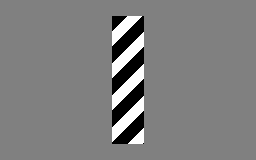
Diagonal stripes move sideways but seem to travel upward.
 Moving image