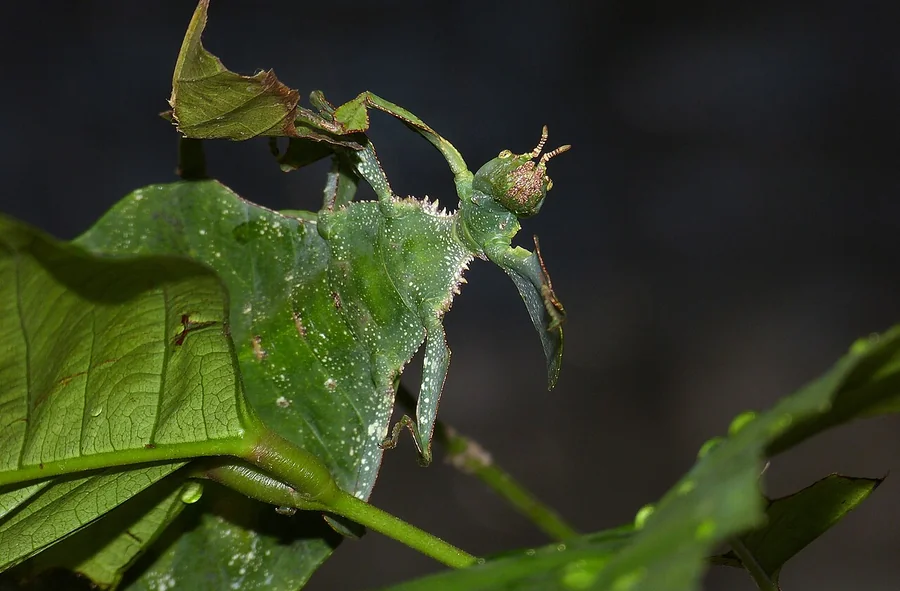
Leaf Insect — A Leaf with Legs
Leaf insects · family Phylliidae
A flattened body and leaf-like legs make an insect resemble part of a plant.
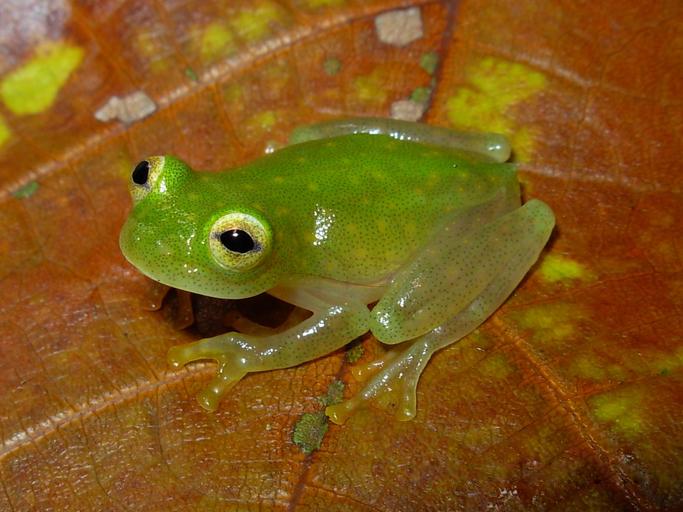
Translucent tissues reduce the visual barrier between a small frog and its surroundings.
Compare the translucent limbs with the more strongly coloured body and eyes. Follow the research link for photographs comparing sleeping and active frogs.
Mauricio Rivera Correa
Original file & attribution · CC BY-SA 2.5
Original image downloaded from Wikimedia Commons; the downloaded file is unchanged. Gallery previews may be resized or converted to WebP; animated previews show the first frame.
Download imageTranslucent tissues reduce the visual barrier between a small frog and its surroundings.
Compare the translucent limbs with the more strongly coloured body and eyes. Follow the research link for photographs comparing sleeping and active frogs.
Blood absorbs light and can make otherwise transparent tissue visible. Moving red blood cells out of circulation reduces that obstacle while the frog rests. The animal is not entirely invisible: eyes, bones and organs remain visible, and its appearance changes with activity and lighting.
A flattened body and leaf-like legs make an insect resemble part of a plant.
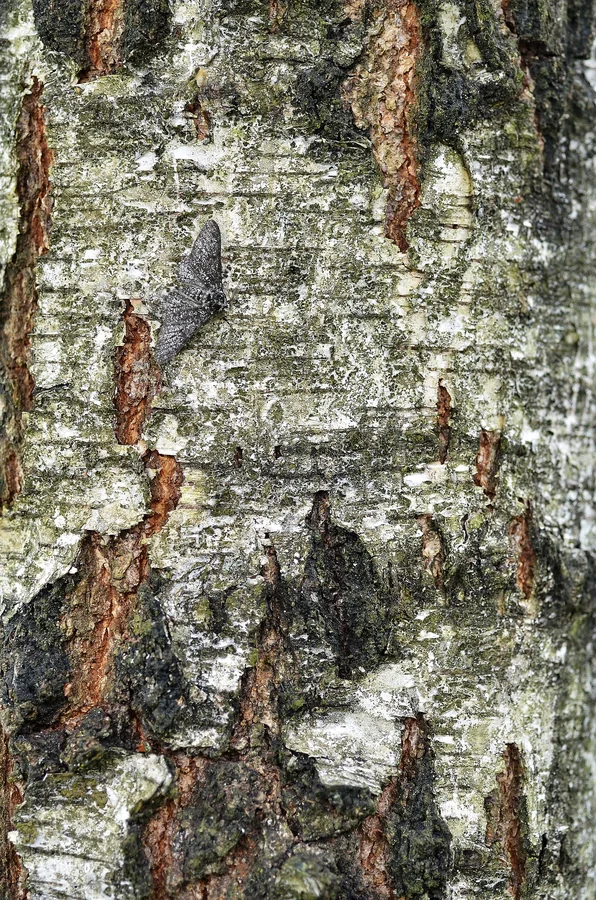
Speckled wings repeat the tones and texture of tree bark.
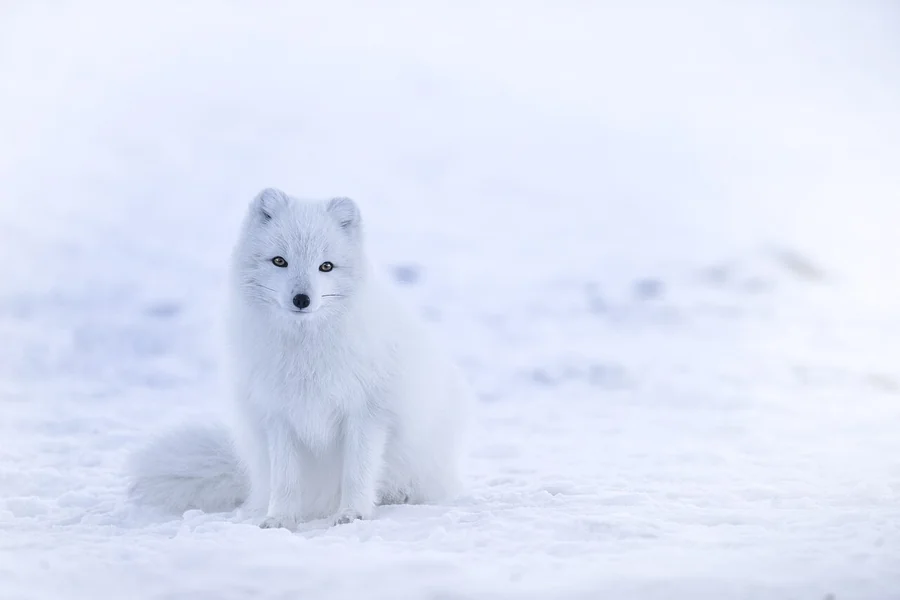
A winter coat makes a white fox difficult to separate from snow.