Touch & sensation
0 entriesExplore tactile illusions and touch perception. Learn how context, adaptation and body position change sensation, with instructions and research sources. How context and adaptation change what we feel.
Search & sort
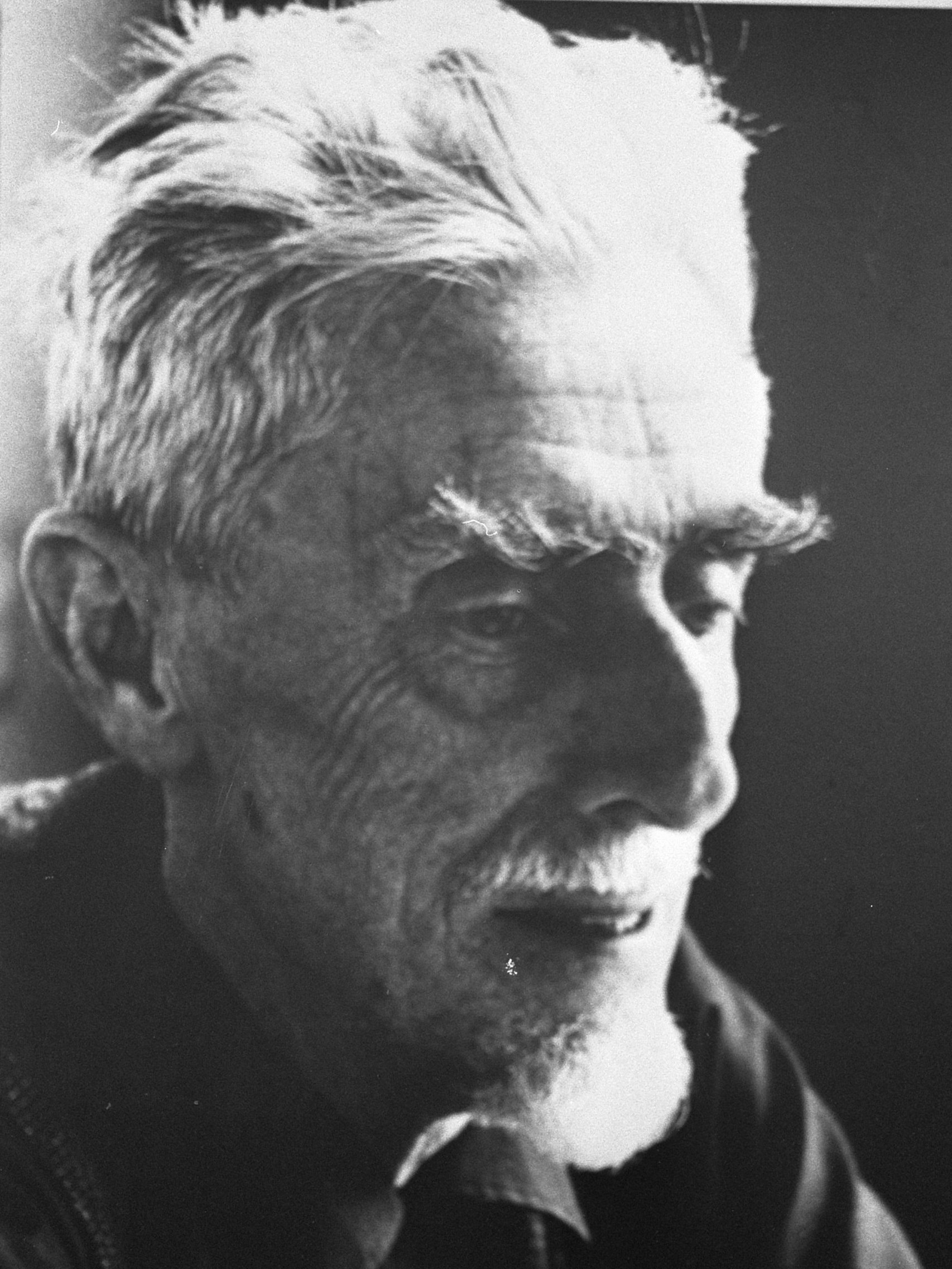 M. C. Escher — discover his impossible worlds
Explore painting techniques
The collection
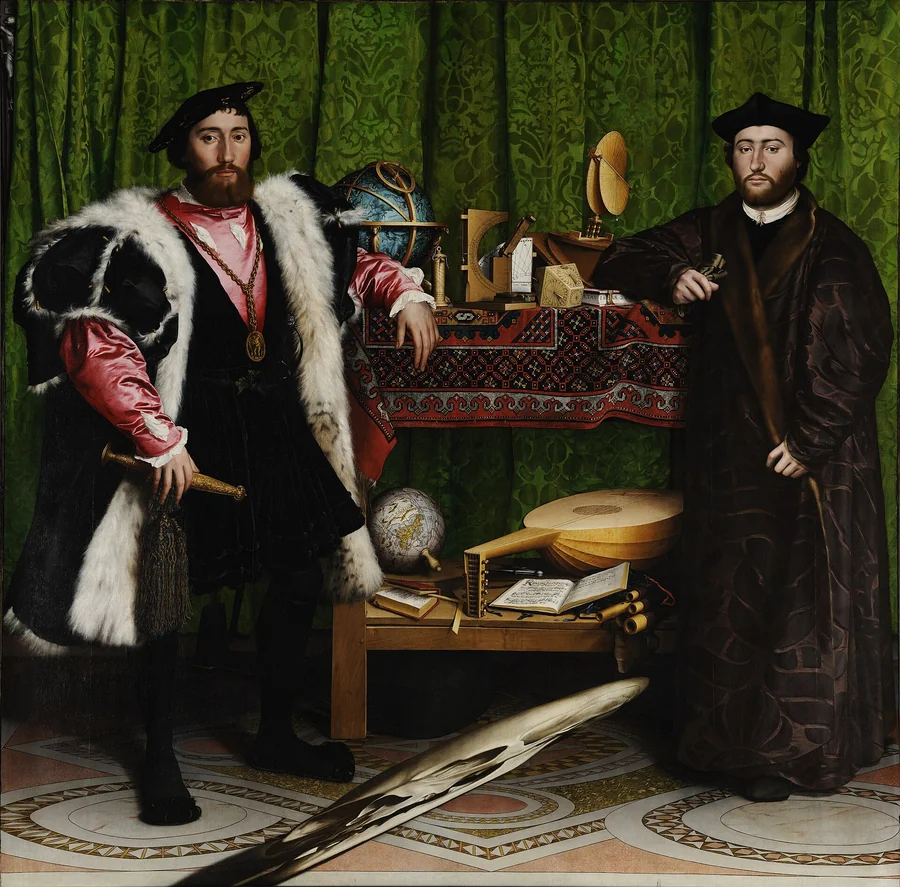
The Ambassadors
Hans Holbein the Younger
A double portrait with a skull that emerges from an oblique view.
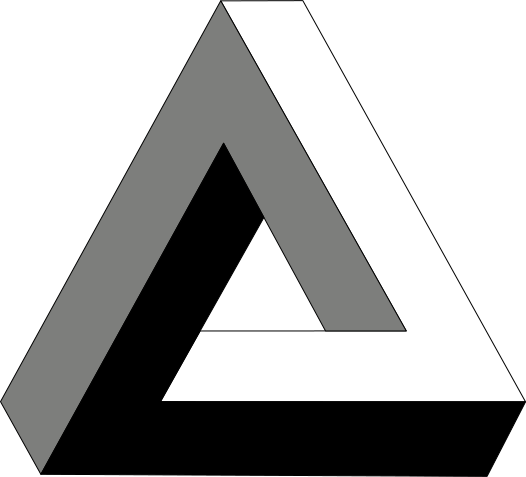
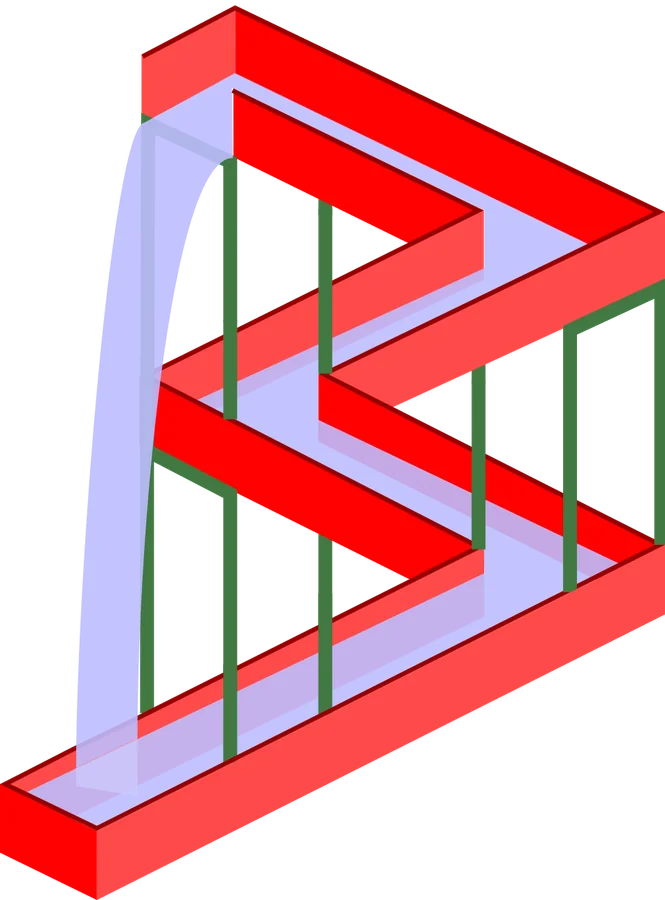
Penrose triangle
Oscar Reutersvärd; independently Lionel & Roger Penrose
Three convincing corners. One impossible connection.
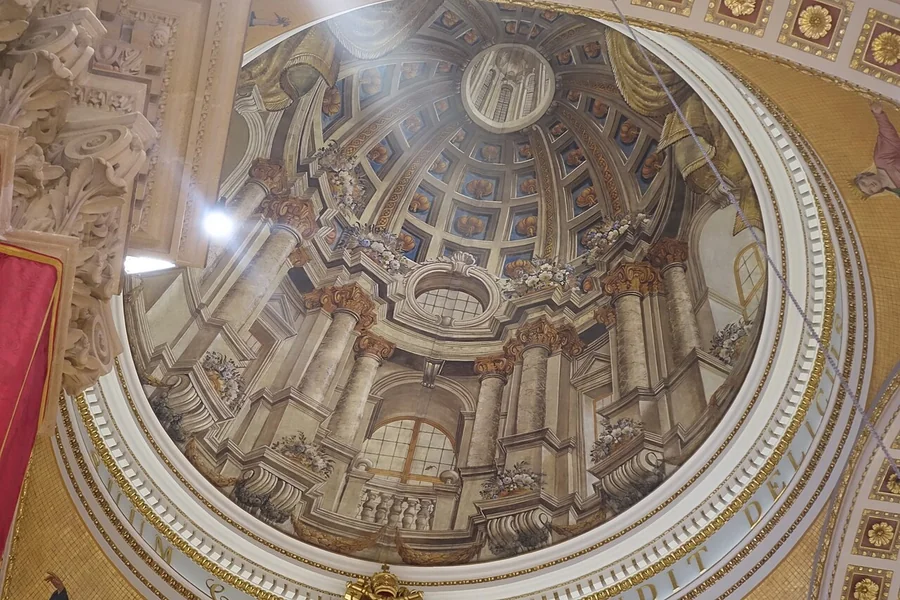
The Dome That Was Never Built
Antonino Emanuele
A flat ceiling opens into a convincing dome, entirely through paint.
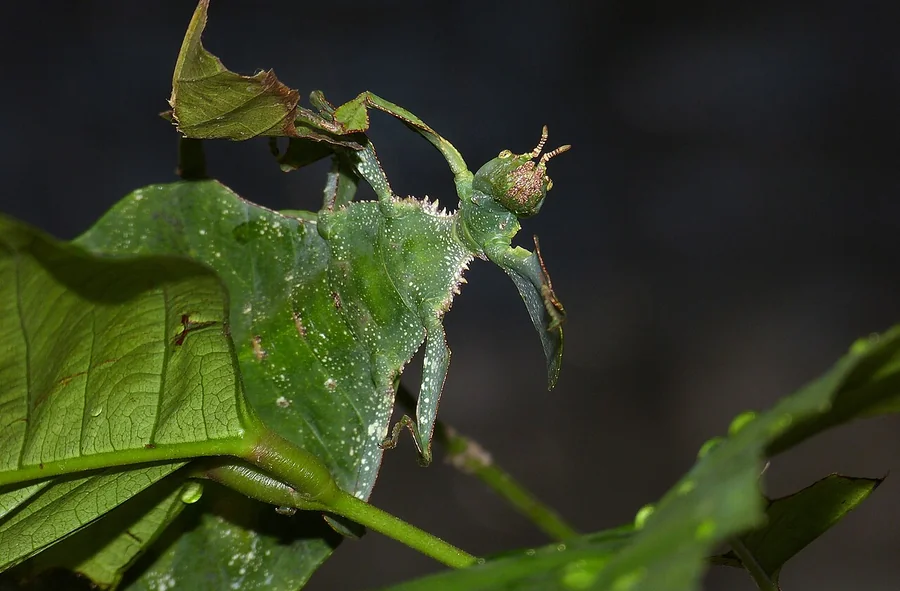
Leaf Insect — A Leaf with Legs
Leaf insects · family Phylliidae
A flattened body and leaf-like legs make an insect resemble part of a plant.
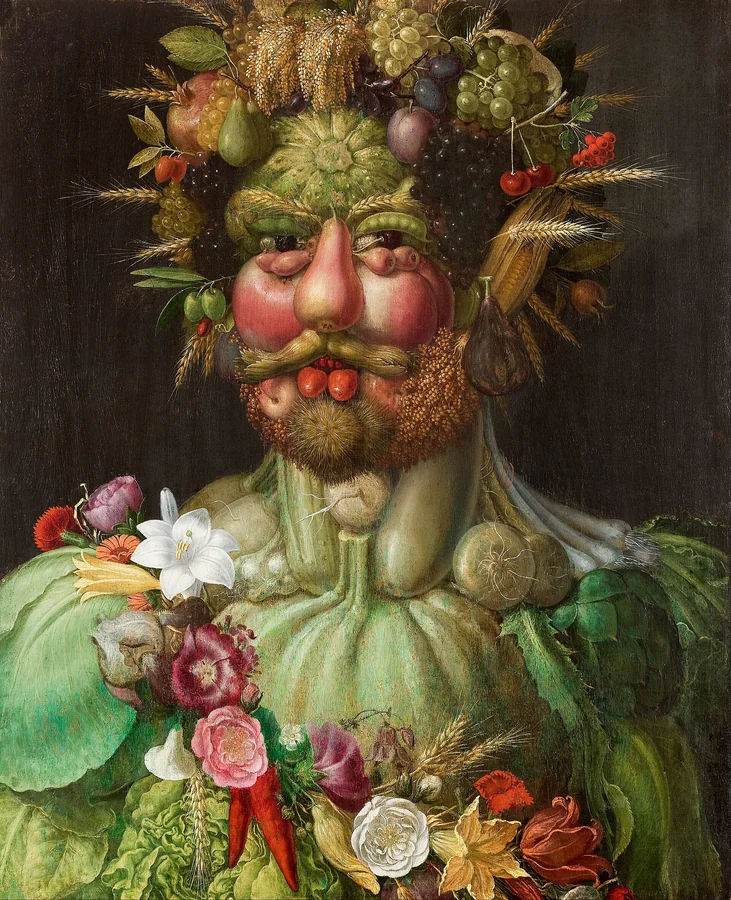
Vertumnus
Giuseppe Arcimboldo
Rudolf II appears as a face assembled from fruit, flowers, and vegetables.
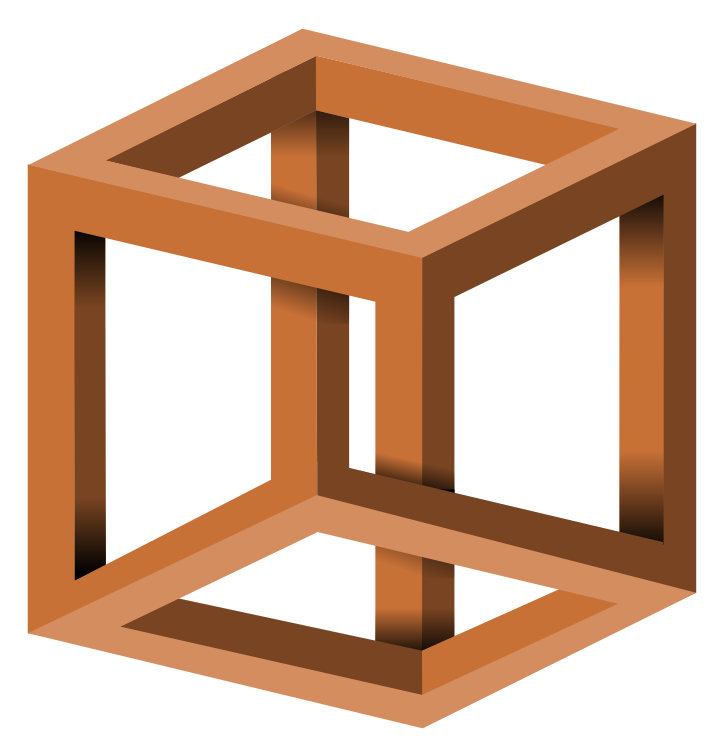
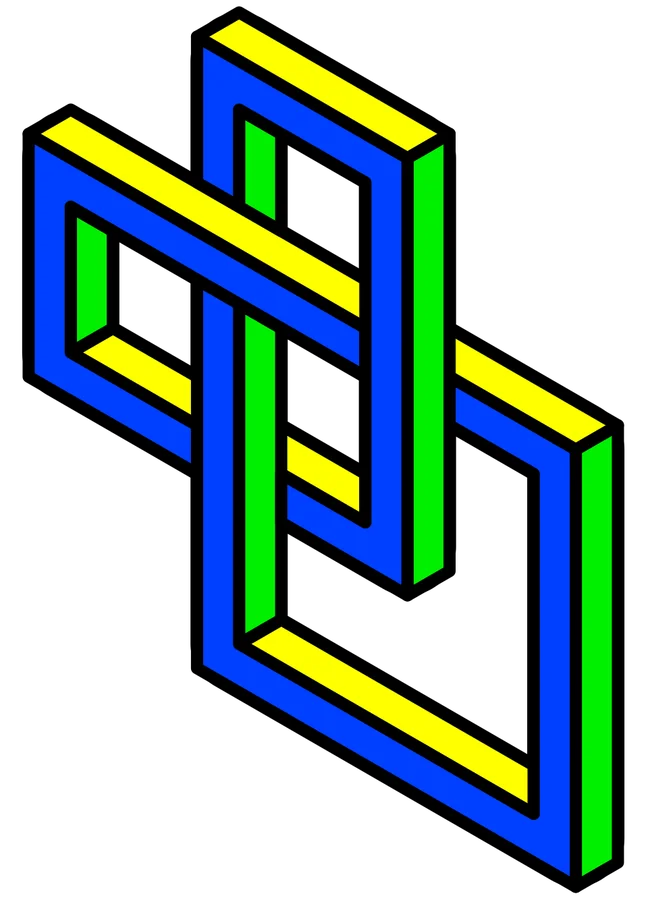
Impossible cube
M. C. Escher; modern redraw by 4C and Belbury
A familiar cube frame acquires an impossible set of overlaps.
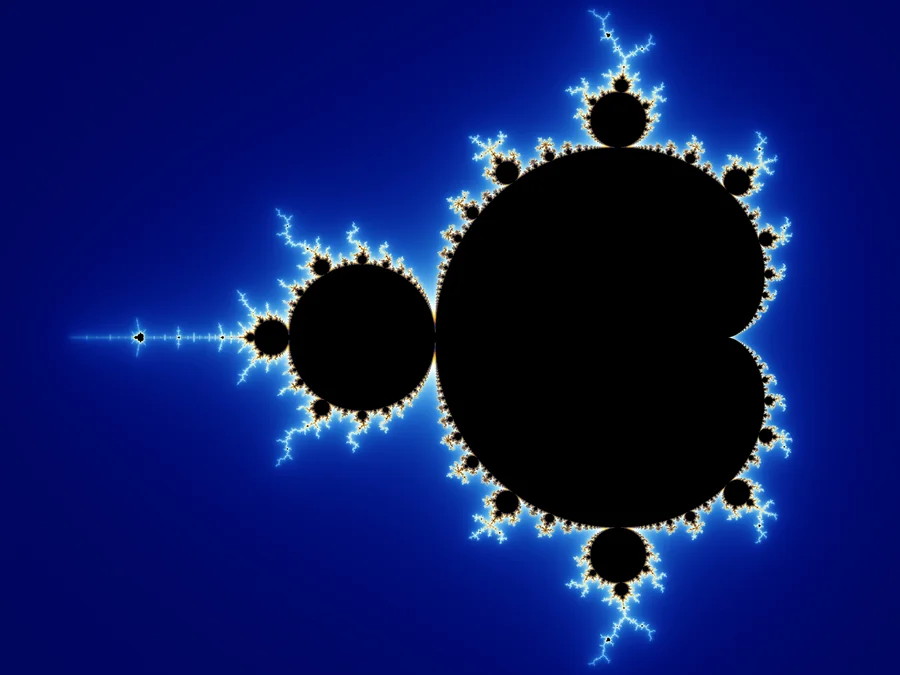
Mandelbrot Set
Benoît Mandelbrot; earlier work by Robert Brooks and Peter Matelski
A simple iteration creates a boundary with extraordinary detail.
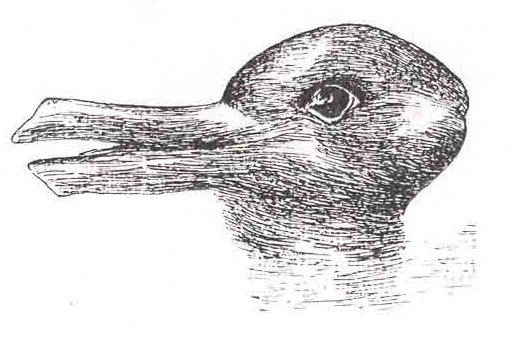
Duck or rabbit?
Anonymous artist; later studied by Joseph Jastrow
A beak becomes a pair of ears. Nothing in the drawing changes.
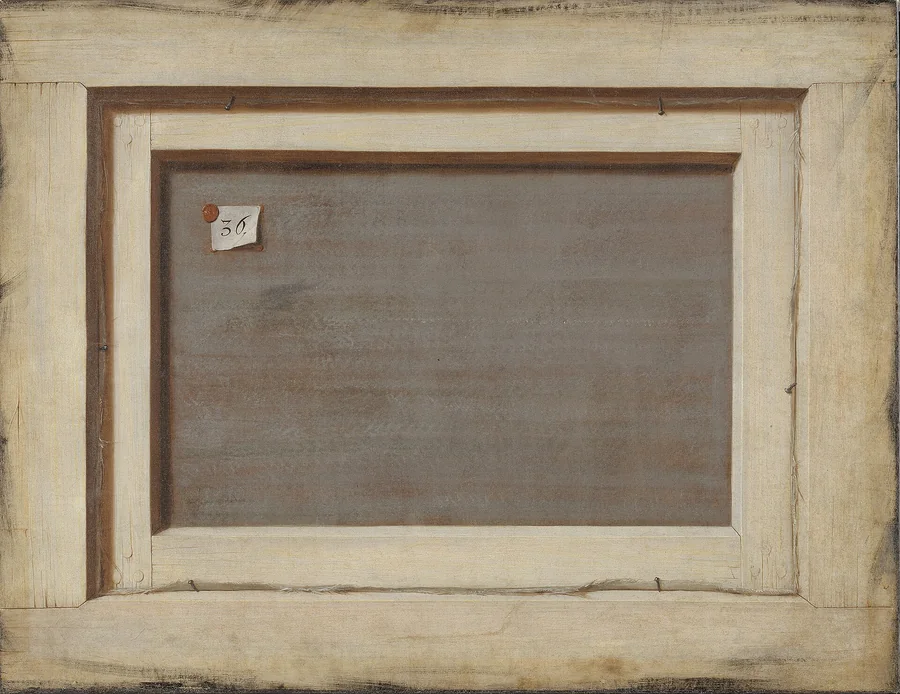
The Reverse of a Framed Painting
Cornelis Norbertus Gijsbrechts
The front of a painting pretends to be its back.
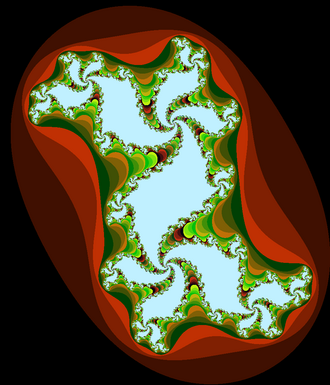
Julia Set
Gaston Julia and Pierre Fatou
Repeated complex mappings produce intricate connected shapes or dust-like sets.
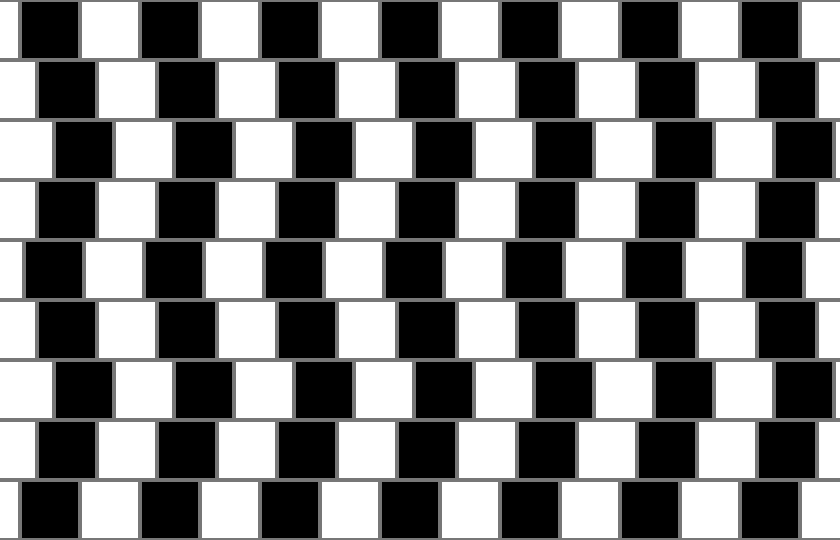
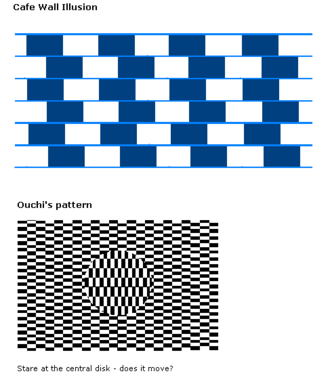
Café wall
Richard Gregory & Priscilla Heard; observed by Steve Simpson
Perfectly parallel mortar lines seem to slope.
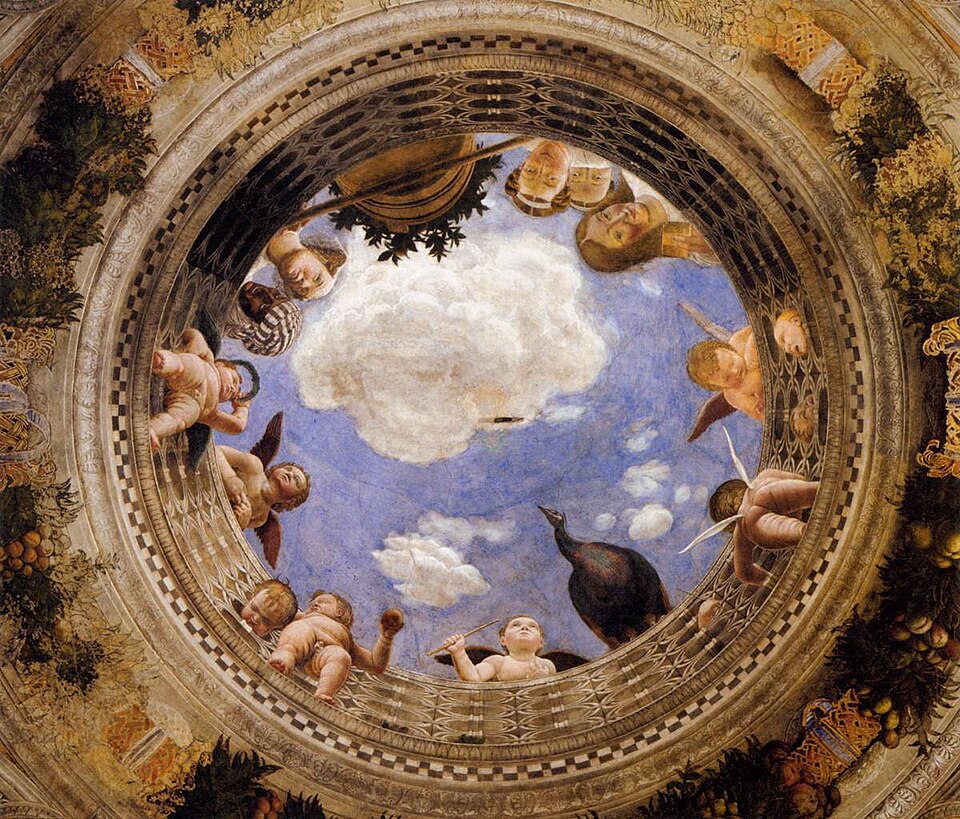
Oculus — Camera degli Sposi
Andrea Mantegna
A ceiling seems to open onto the sky, with figures peering down.
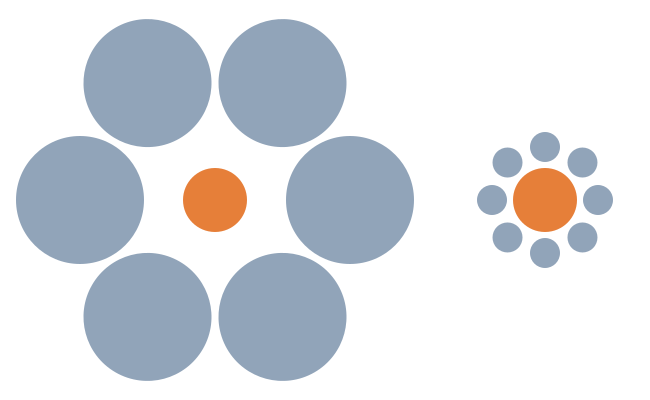
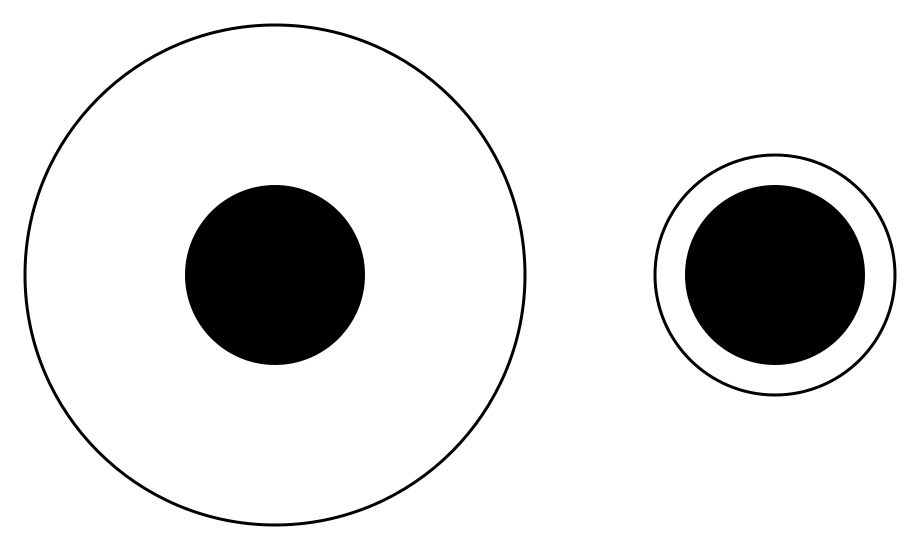
Ebbinghaus circles
Traditionally Hermann Ebbinghaus; popularized by E. B. Titchener
The neighbors change the size of the circle you see.
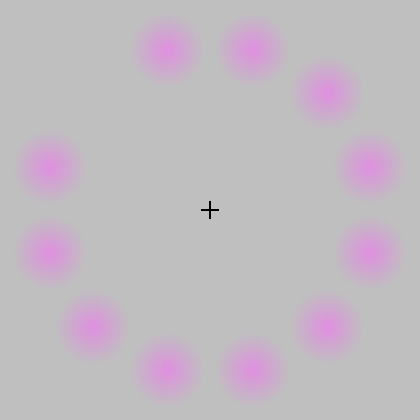
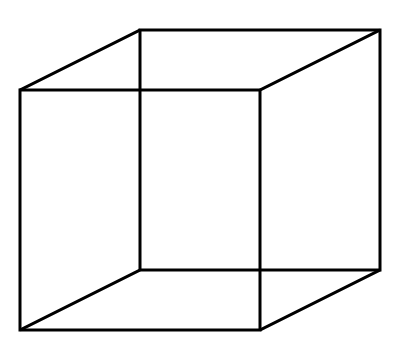
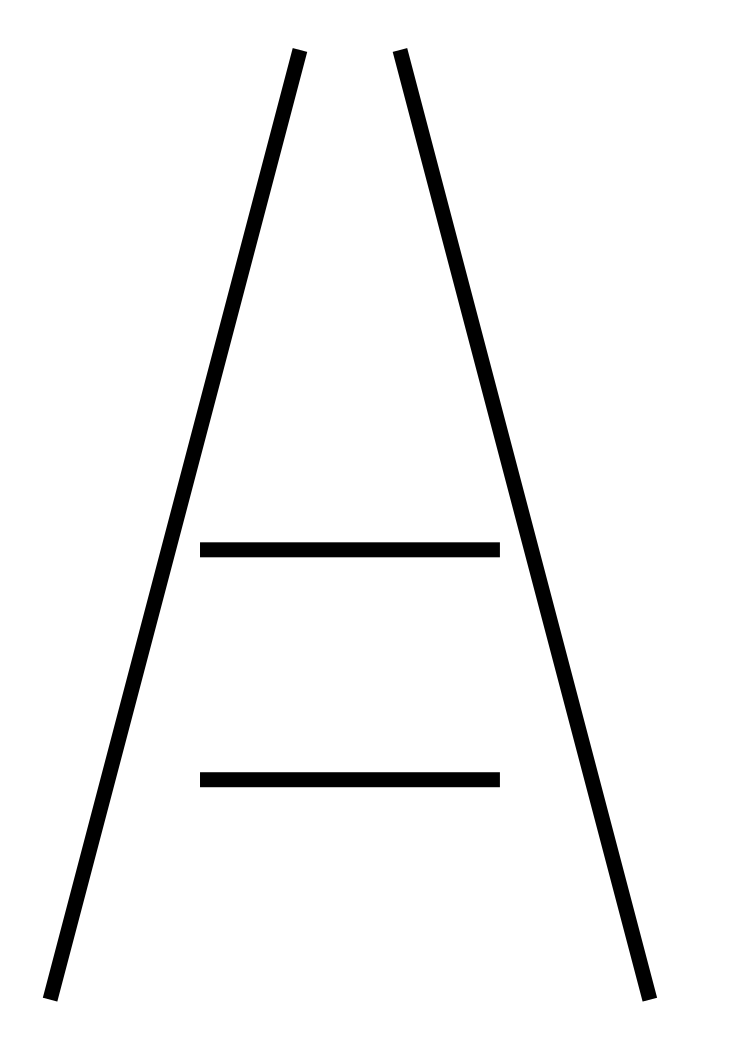
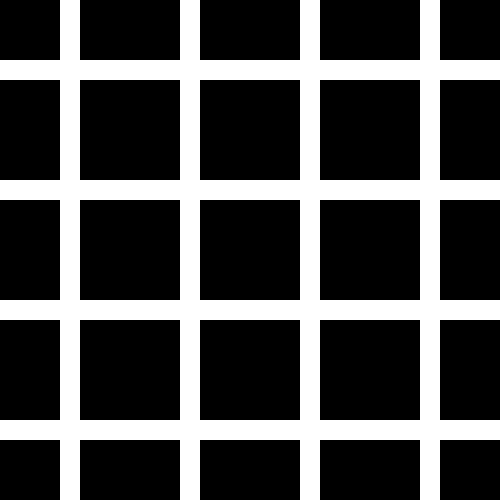
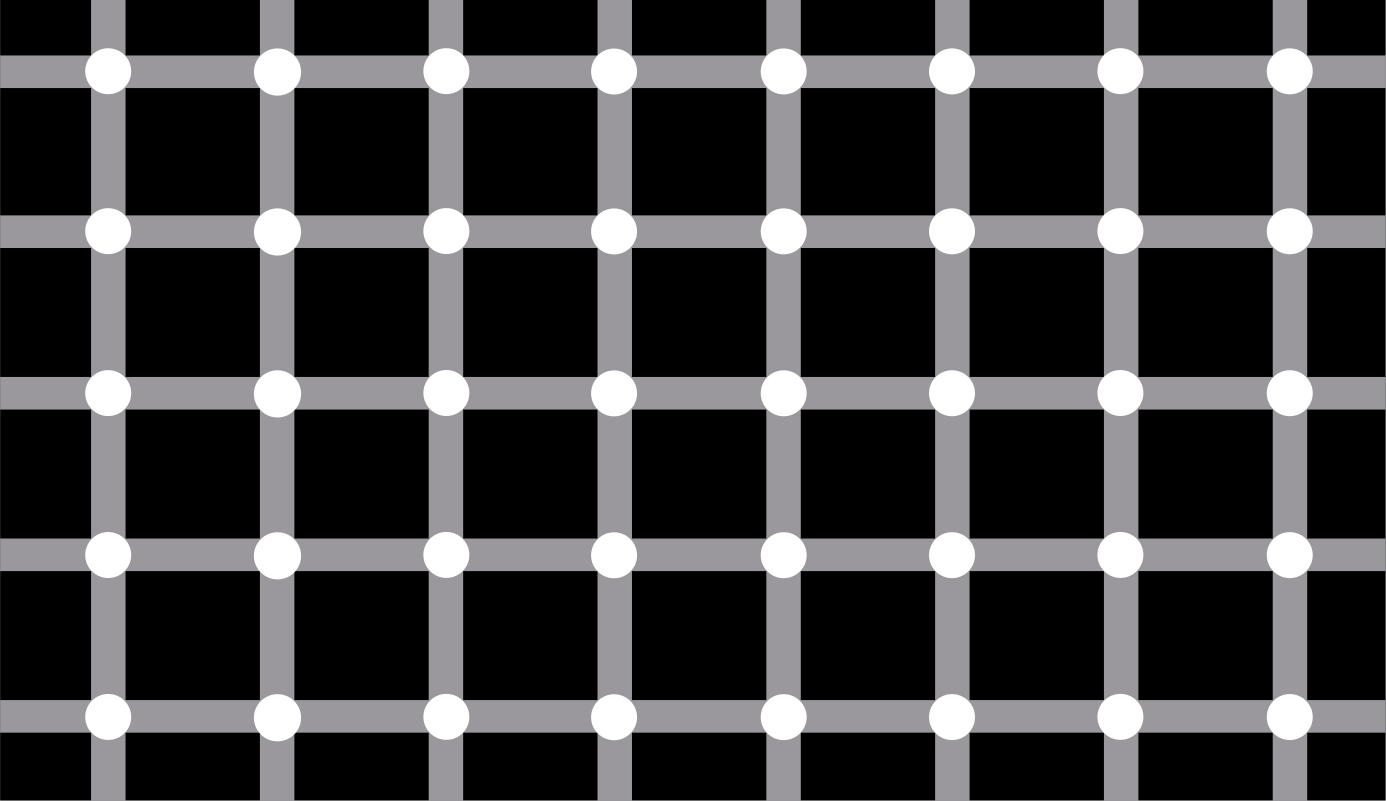
Scintillating grid
James R. Bergen; later Bernd & Elke Lingelbach, Michael Schrauf & E. R. Wist
Black dots flicker across a grid of white dots.
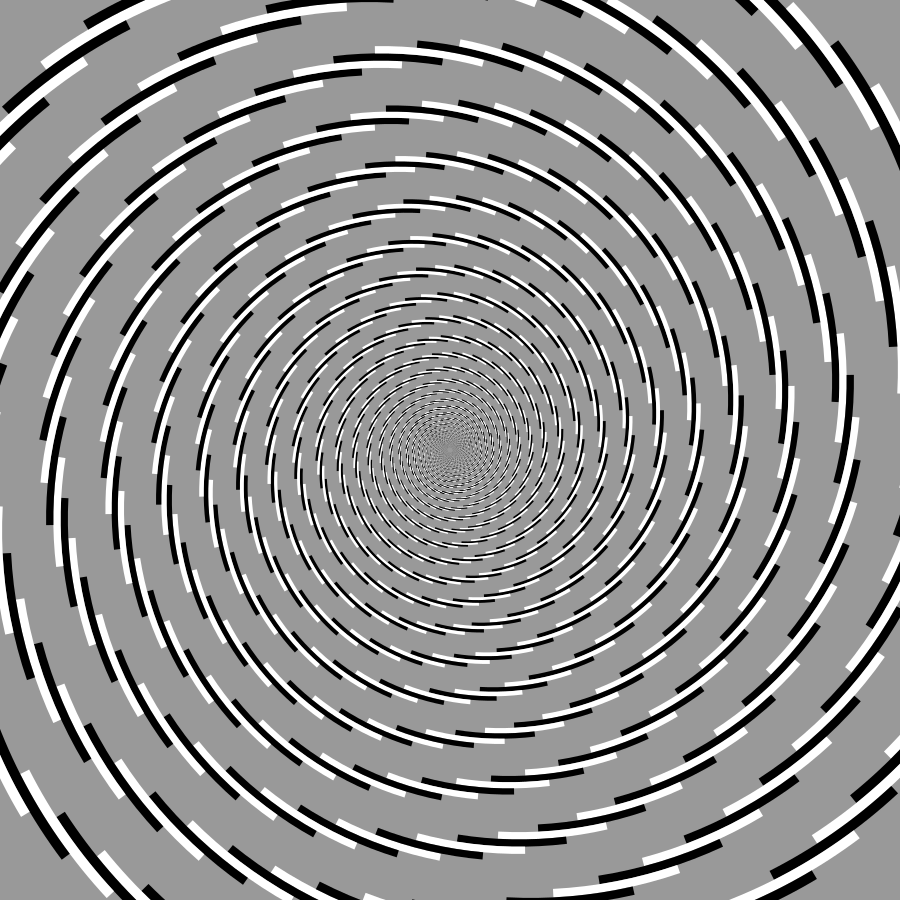
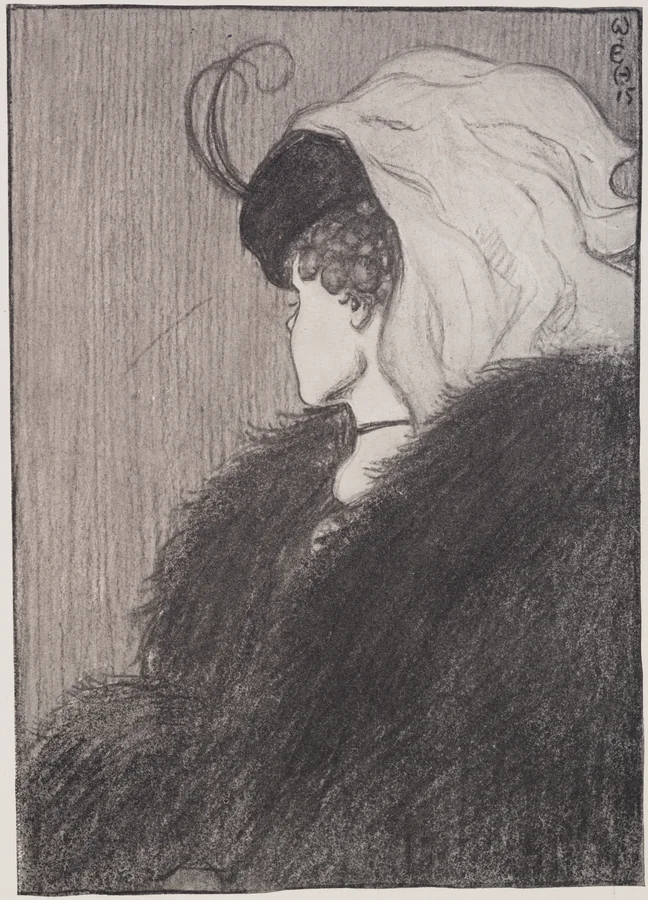
My wife and my mother-in-law
William Ely Hill; earlier anonymous postcard
One portrait, two women, two very different ages.
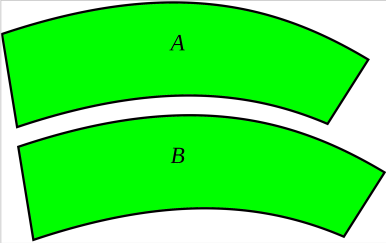
Jastrow curves
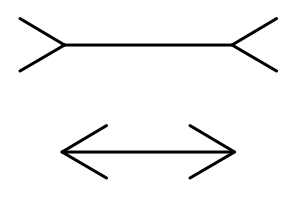
Joseph Jastrow; earlier figure by Franz Müller-Lyer
Identical curved pieces seem to have different sizes.
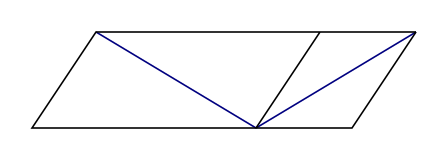
Sander’s parallelogram
Friedrich Sander; earlier Matthew Luckiesh
Equal diagonals look unequal inside different frames.
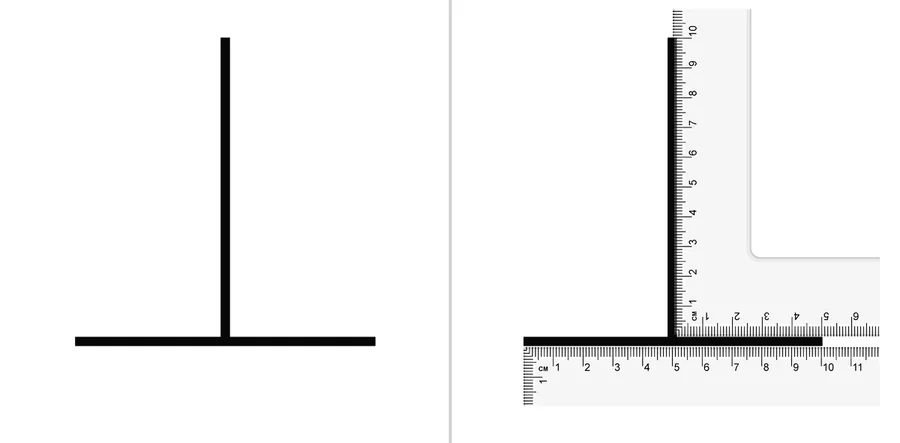
Horizontal–vertical illusion
Nineteenth-century researchers including J. J. Oppel
The upright line seems longer than its equal horizontal partner.


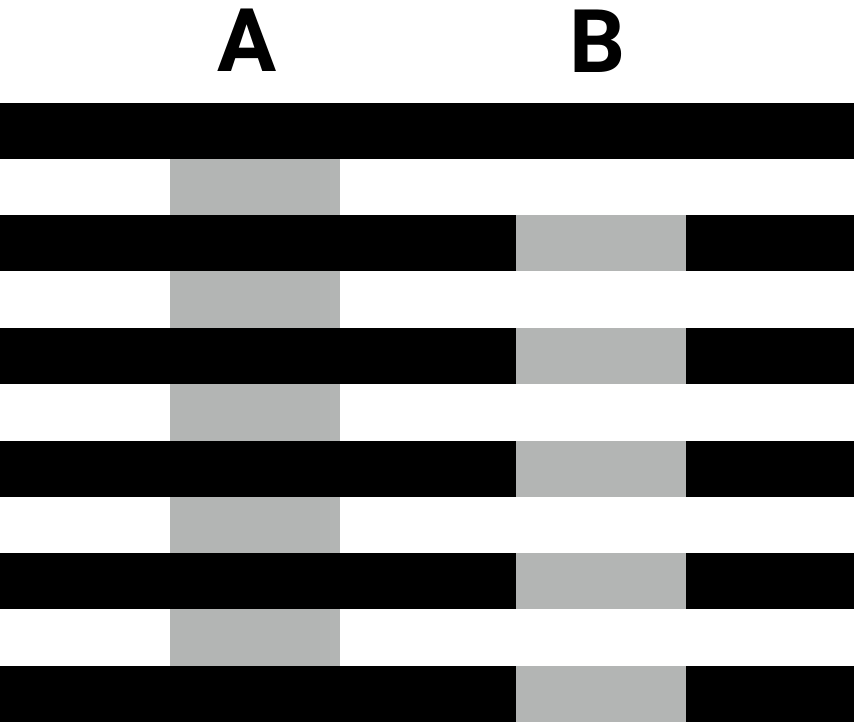
Simultaneous contrast
Longstanding phenomenon; studied by Michel Eugène Chevreul
One gray looks light; the same gray looks dark.
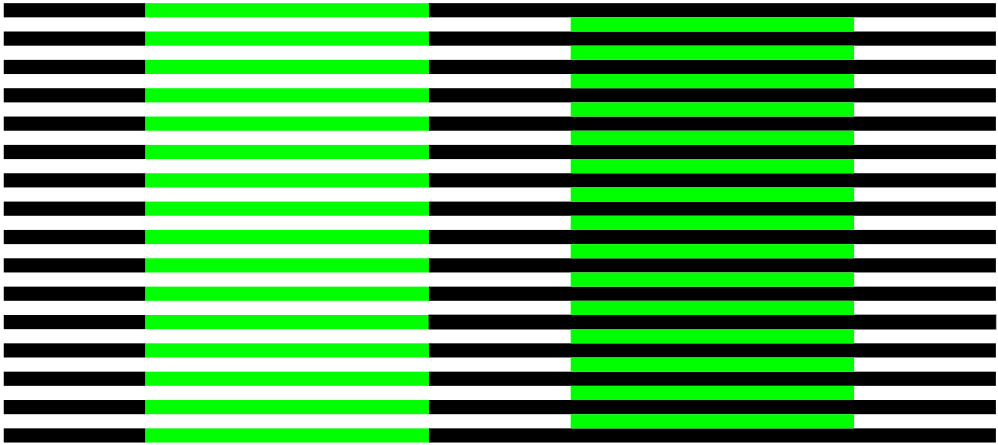
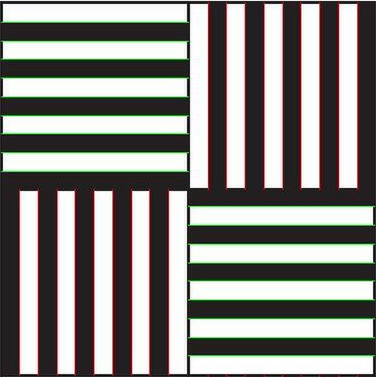
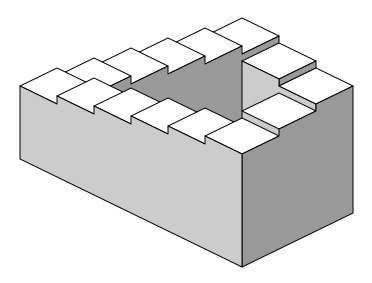
Penrose stairs
Oscar Reutersvärd; independently Lionel & Roger Penrose
A staircase that climbs forever and gets nowhere.
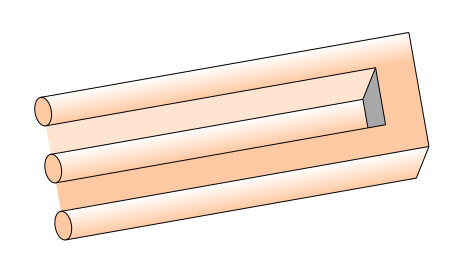
Impossible trident
Original creator uncertain; reported by D. H. Schuster
Three prongs quietly become two supports.
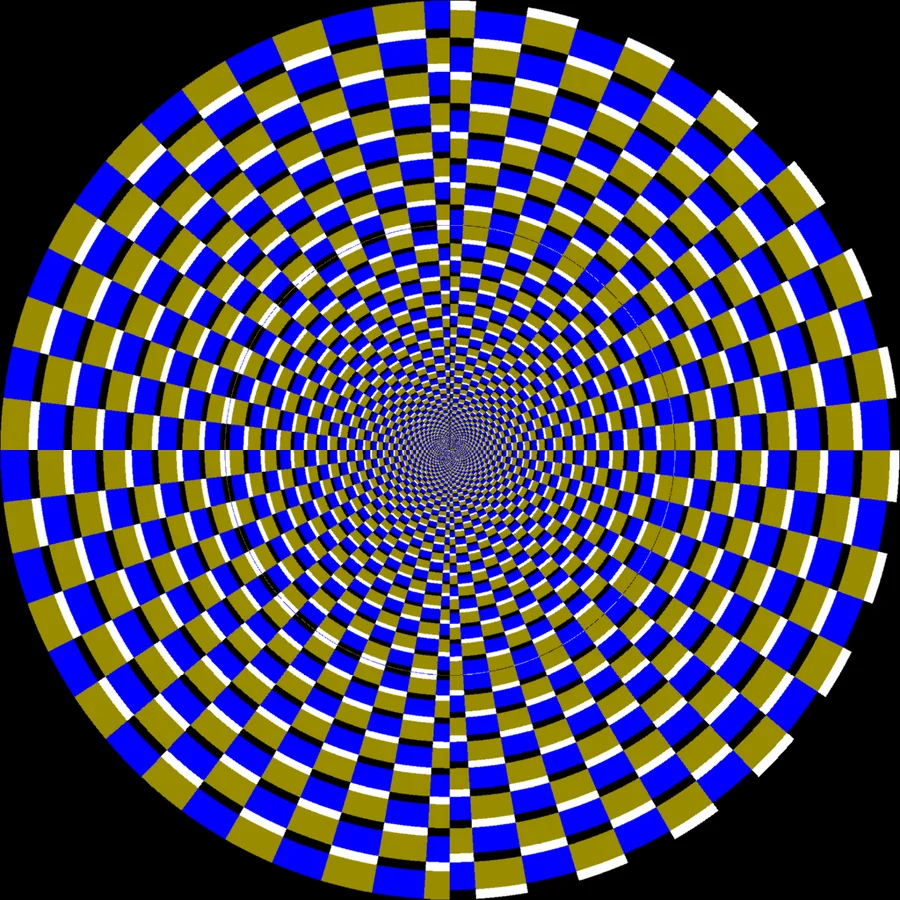
Peripheral drift
Jocelyn Faubert & Andrew M. Herbert
Still gradients seem to drift at the edge of vision.
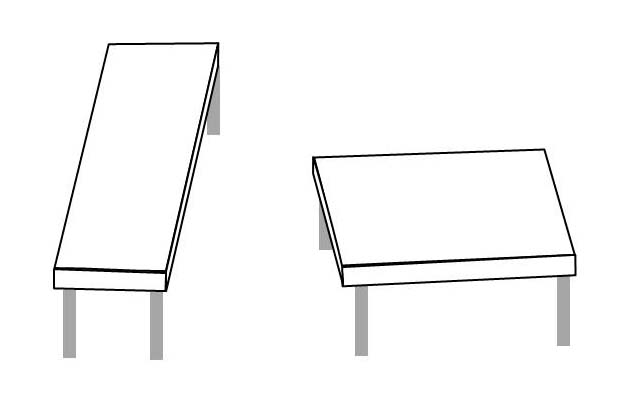
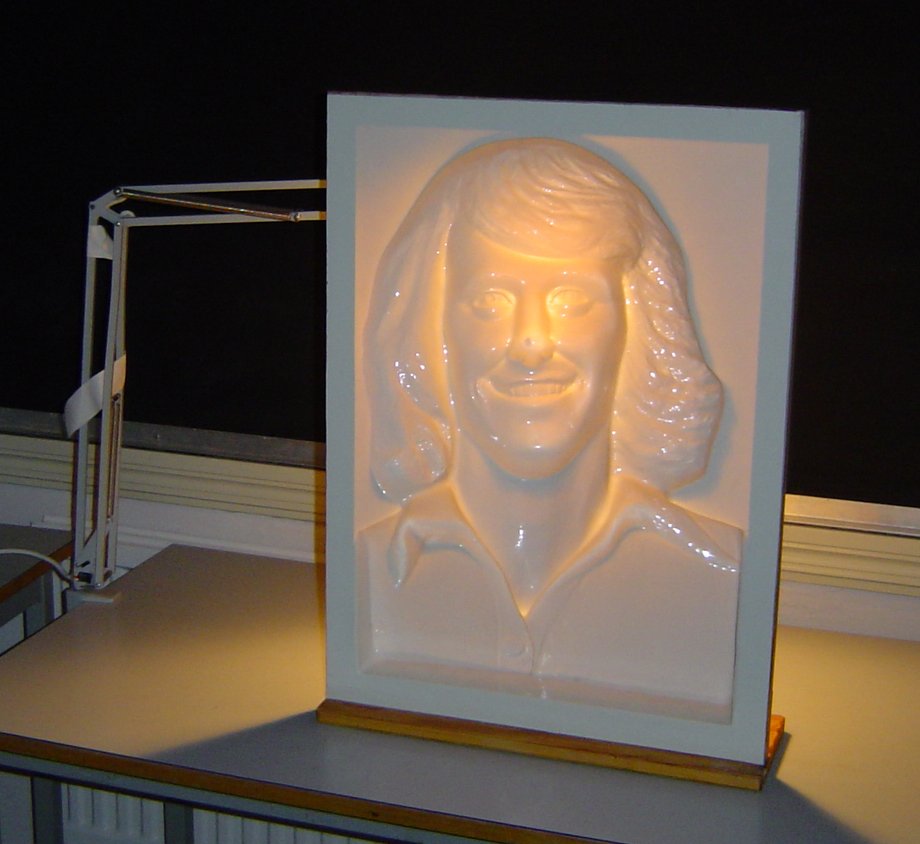
Hollow-face illusion
Longstanding demonstration; studied by Richard Gregory & others
A hollow face can look like a face turned toward you.
 Moving image
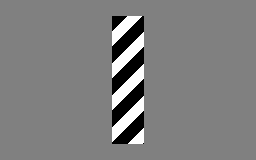
Barber pole
J. P. Guilford; investigated by Hans Wallach
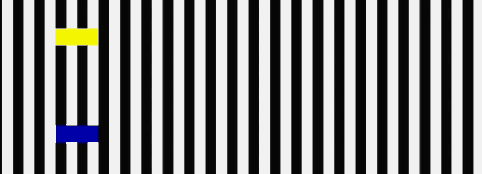
Diagonal stripes move sideways but seem to travel upward.
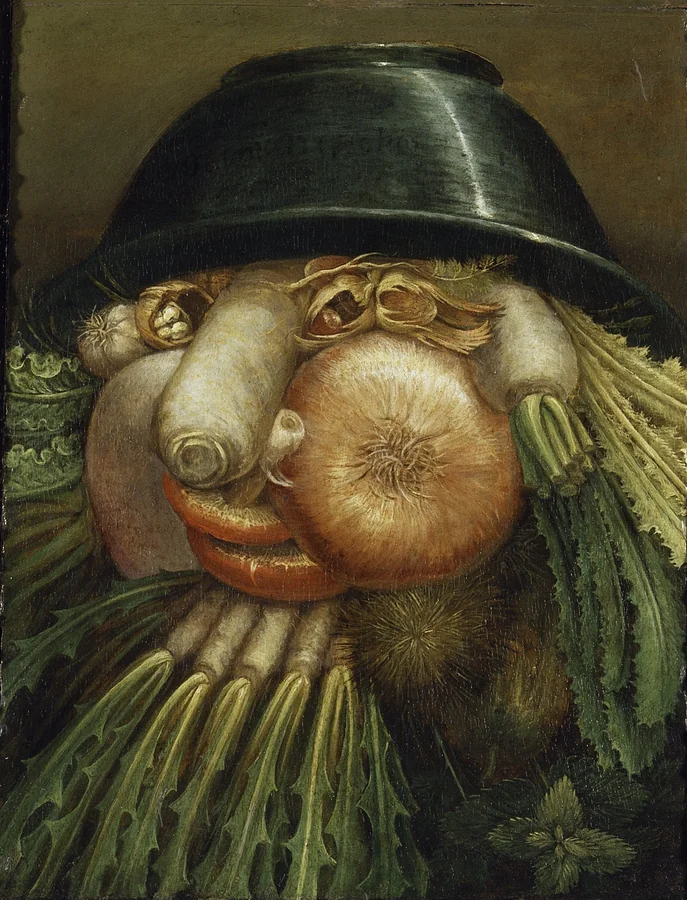
The Vegetable Gardener
Giuseppe Arcimboldo
A bowl of vegetables becomes a face when the image is turned upside down.
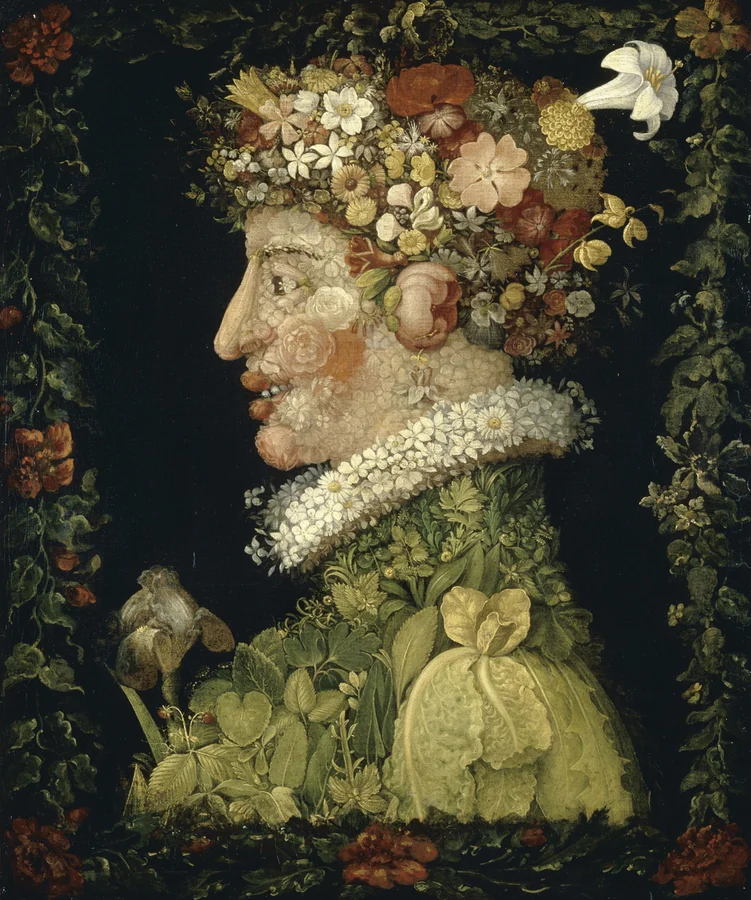
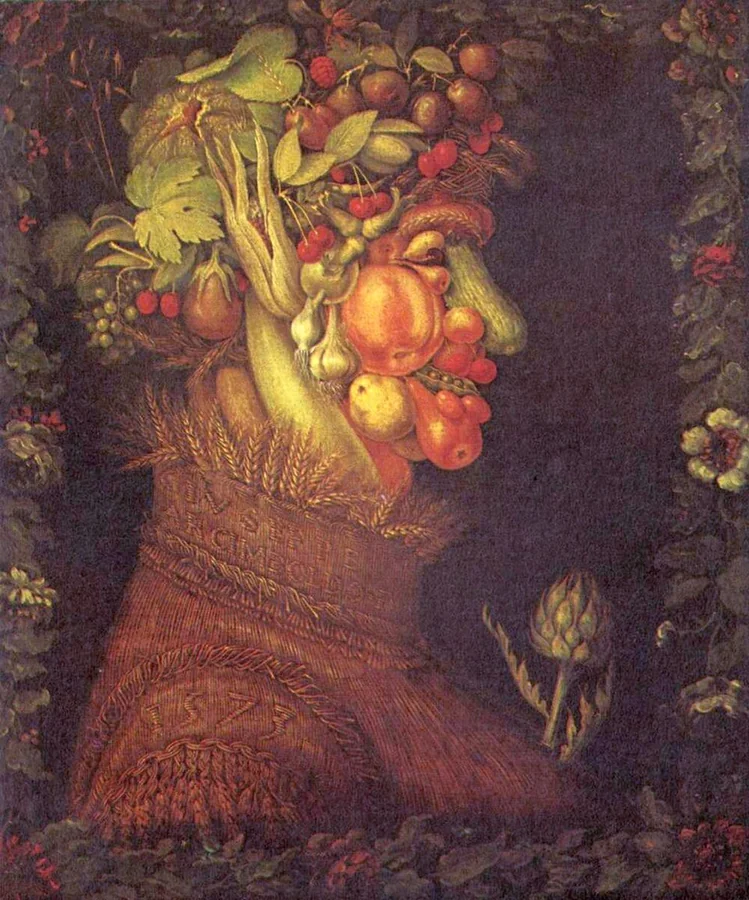
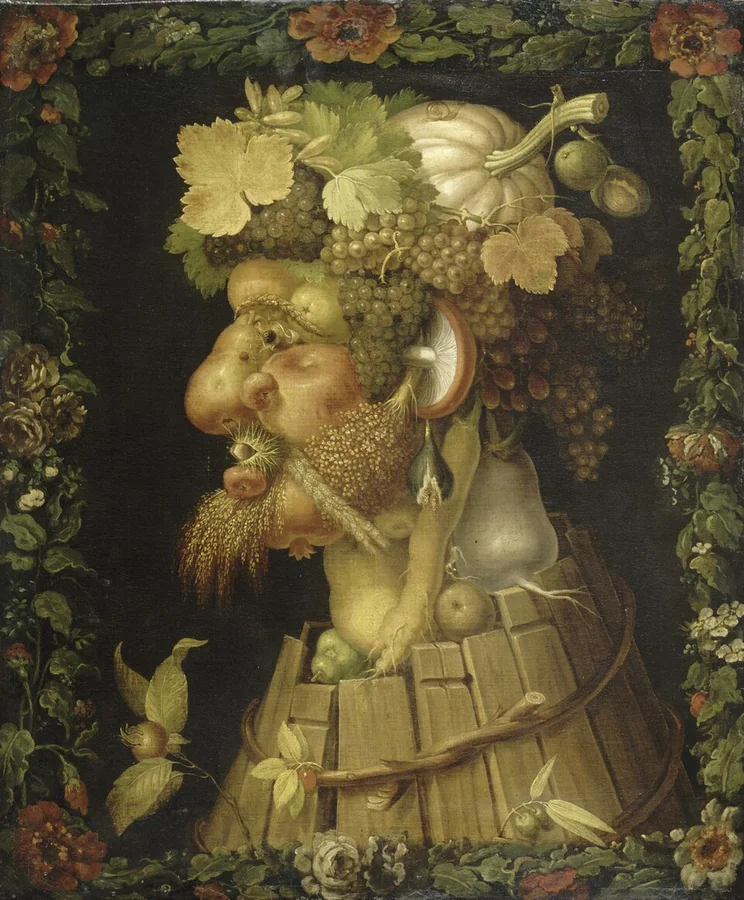
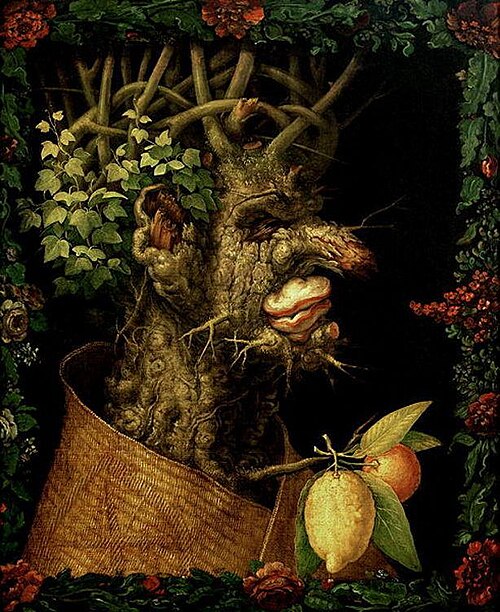
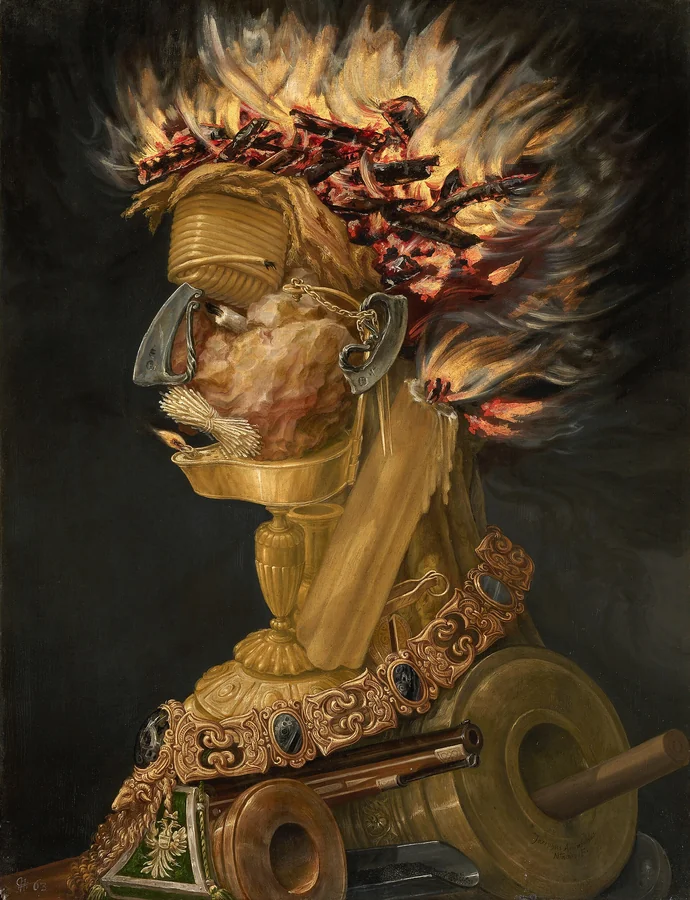
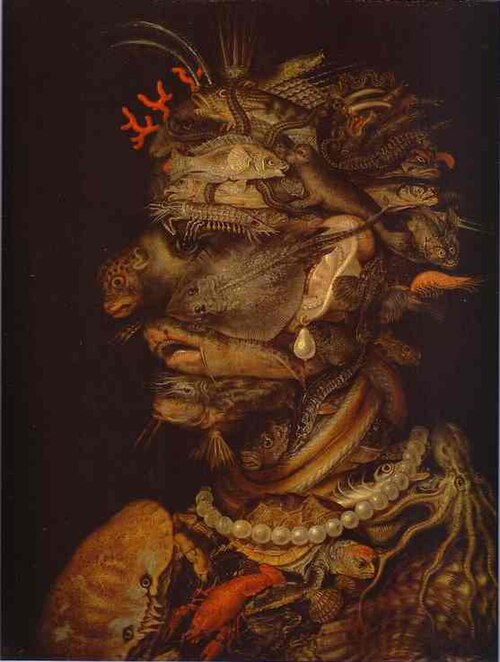
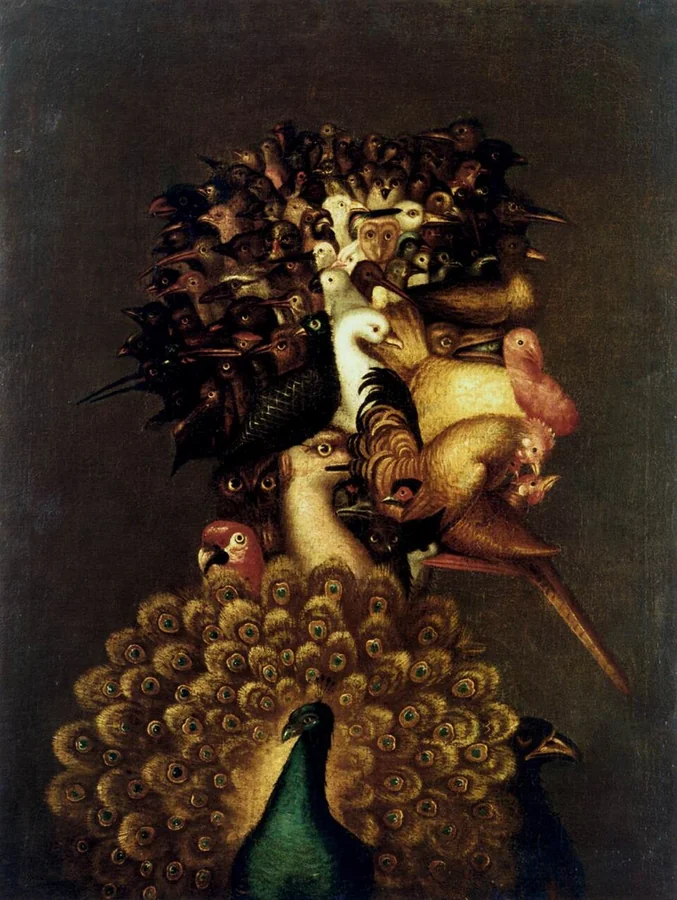
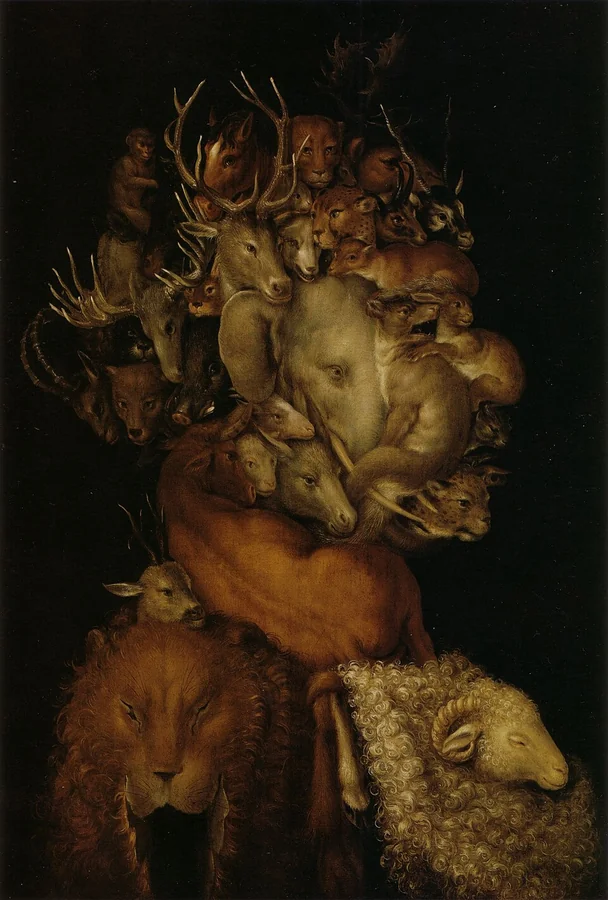
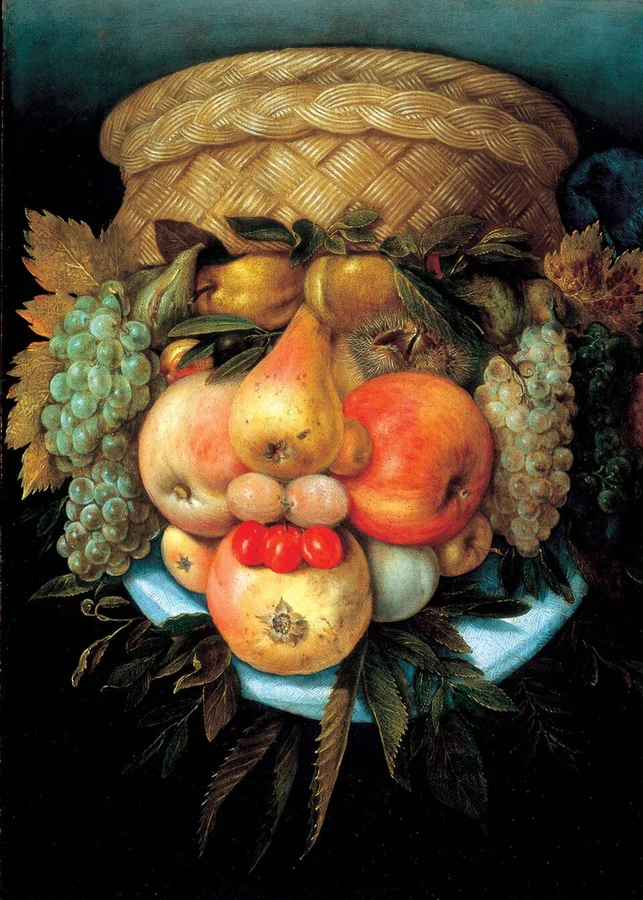
Reversible Head with Basket of Fruit
Giuseppe Arcimboldo
A fruit basket doubles as a portrait when inverted.
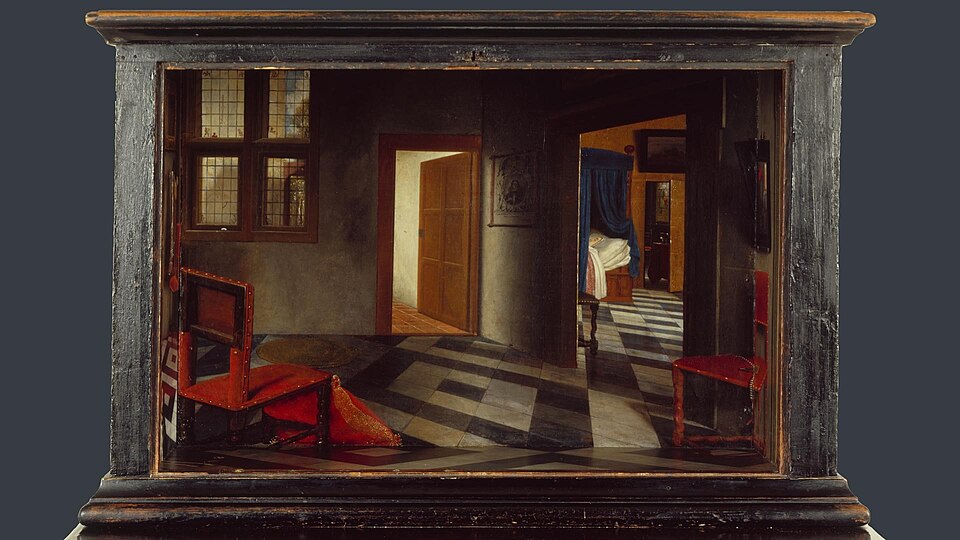
A Peepshow with Views of a Dutch House
Samuel van Hoogstraten
Painted surfaces inside a box become a convincing domestic interior.
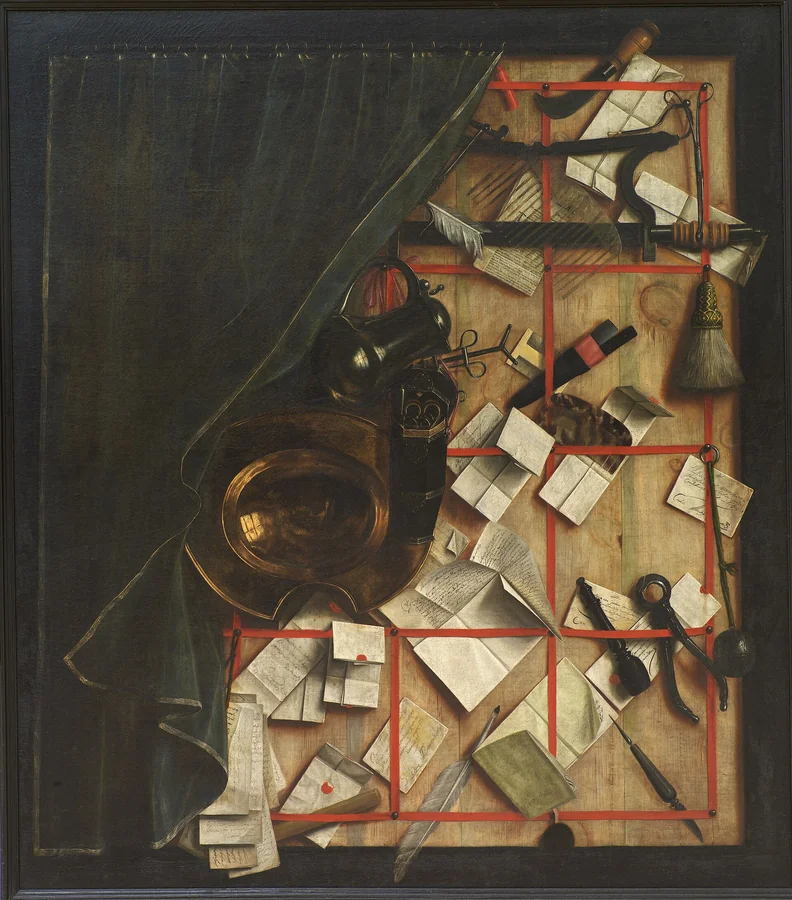
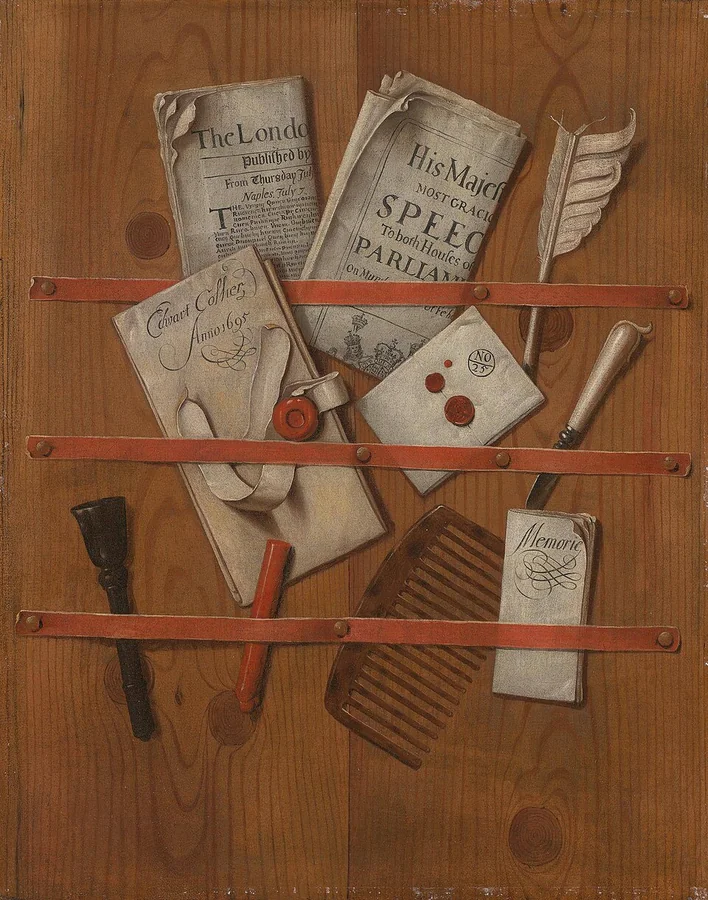
Letter Rack with Barber-Surgeon’s Instruments
Cornelis Norbertus Gijsbrechts
Letters and instruments seem to hang in front of the painted surface.
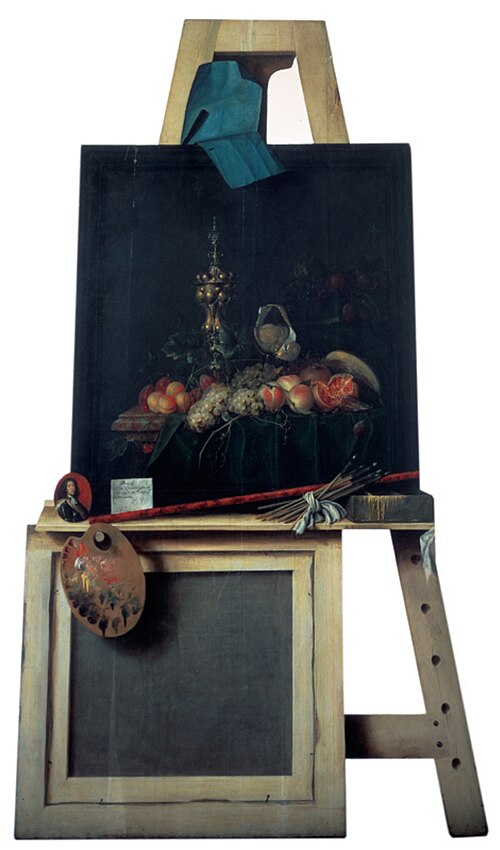
Trompe-l’œil Easel with a Fruit Still Life
Cornelis Norbertus Gijsbrechts
A cut-out painting imitates an easel supporting another painting.
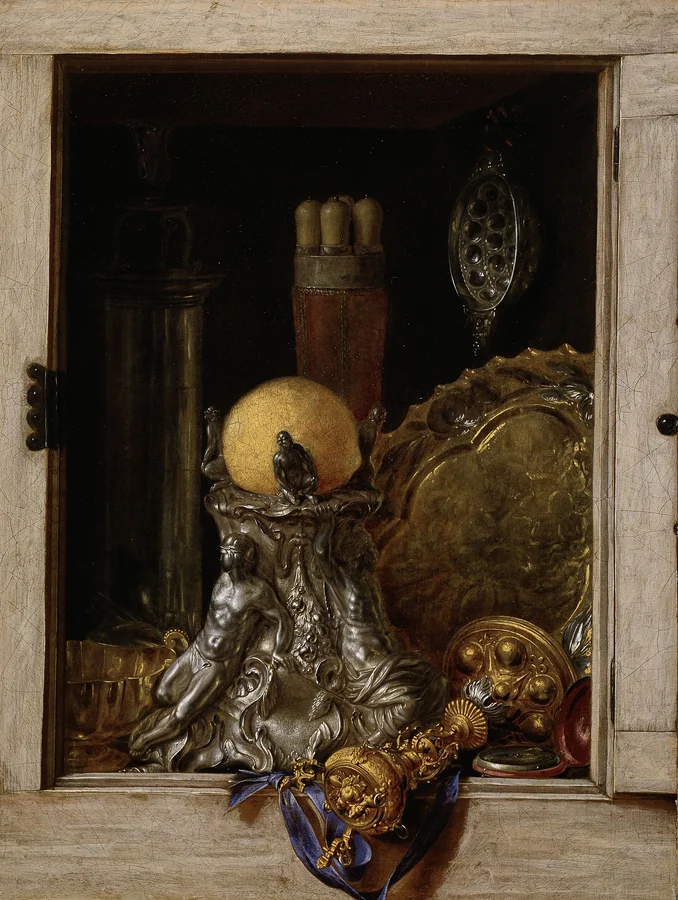
Silverware in an Open Cabinet
Cornelis Norbertus Gijsbrechts
A painted cabinet appears to hold real silverware.
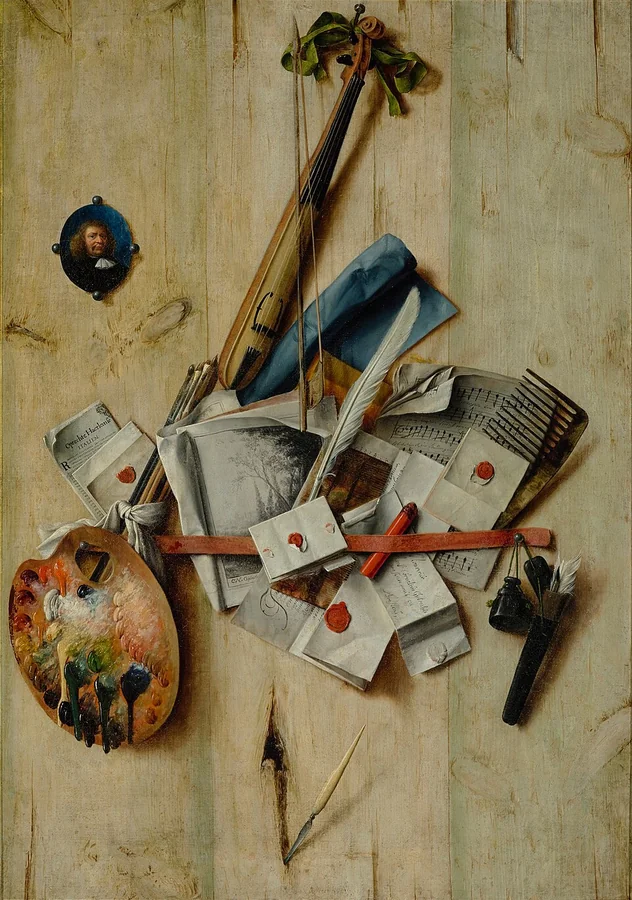
Trompe-l’œil with Violin, Painting Tools, and Self-Portrait
Cornelis Norbertus Gijsbrechts
A violin, papers, and painting tools seem attached to the wall.
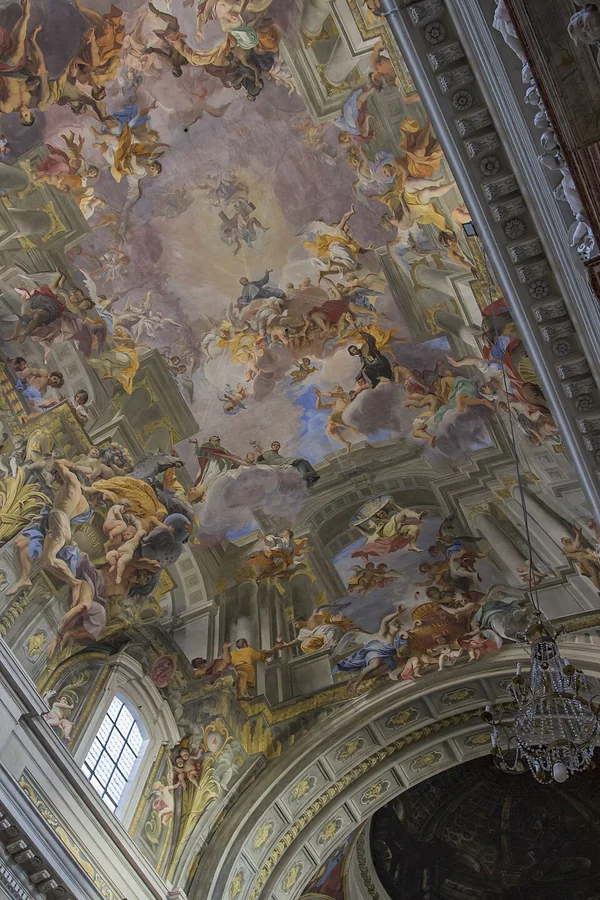
Glory of Saint Ignatius — Illusionistic Ceiling
Andrea Pozzo
Painted architecture extends a church ceiling toward an open heaven.
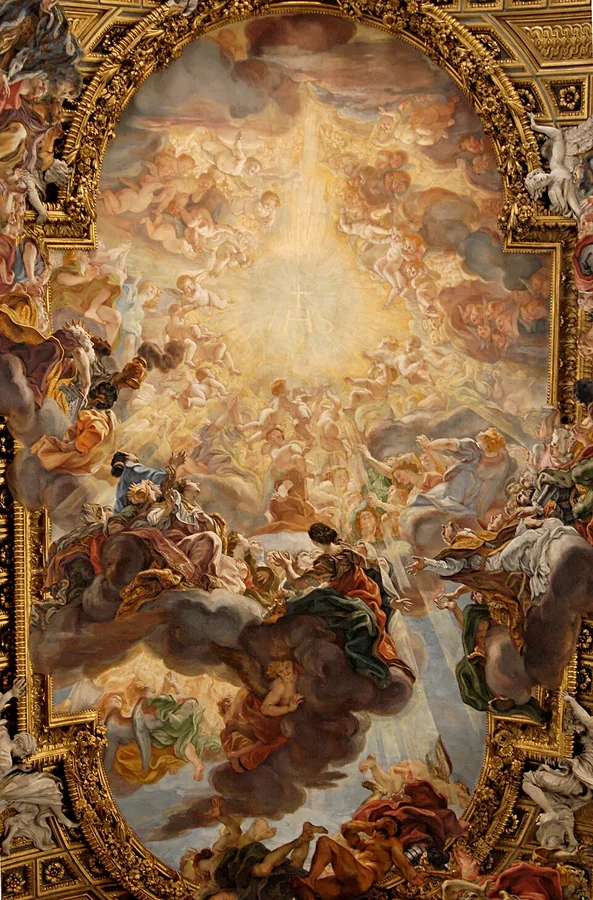
Triumph of the Name of Jesus
Giovanni Battista Gaulli (Baciccio)
Figures and clouds appear to overflow the ceiling’s golden frame.
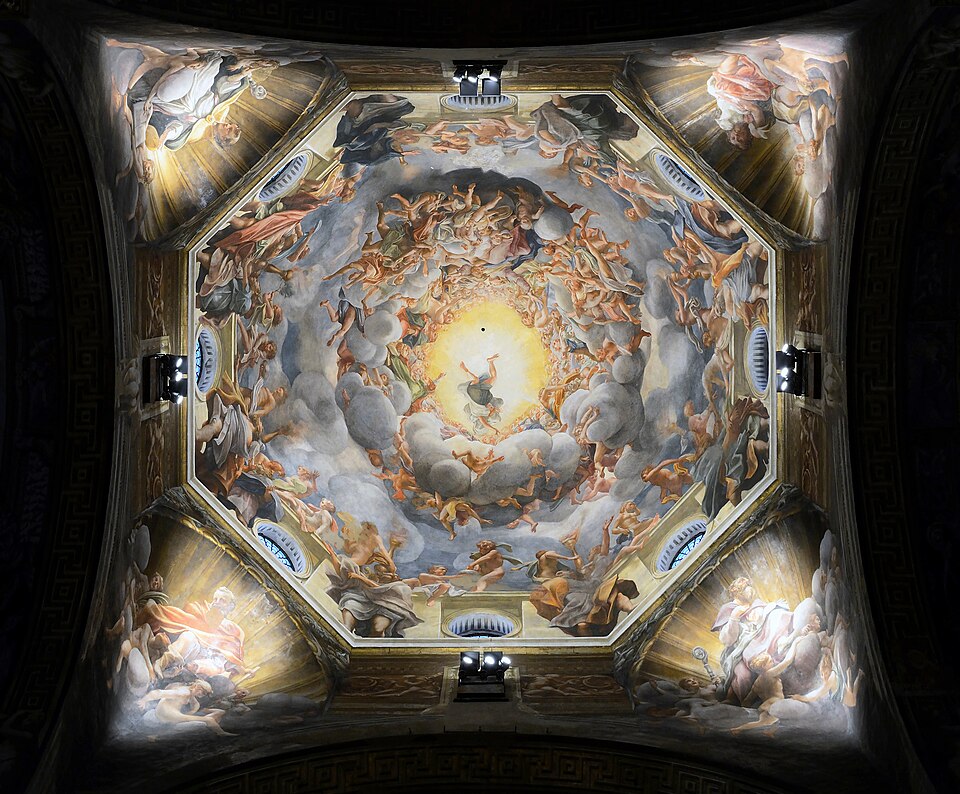
Assumption of the Virgin — Parma Dome
Correggio (Antonio Allegri)
A painted dome becomes a swirling ascent into heaven.
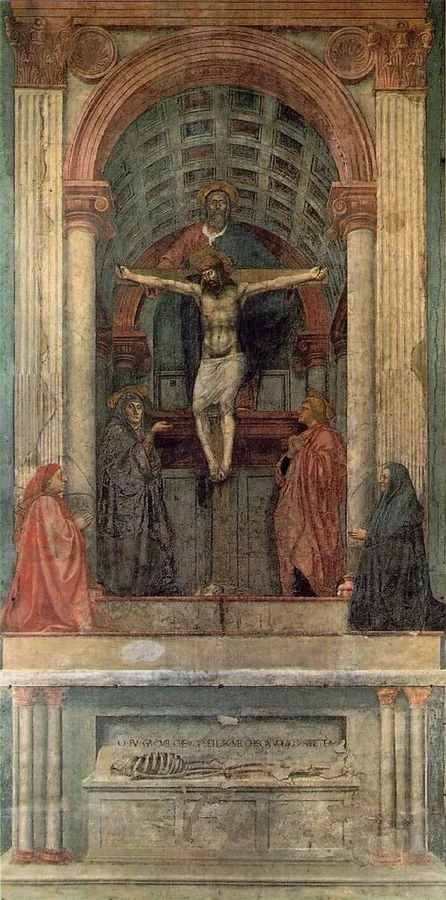
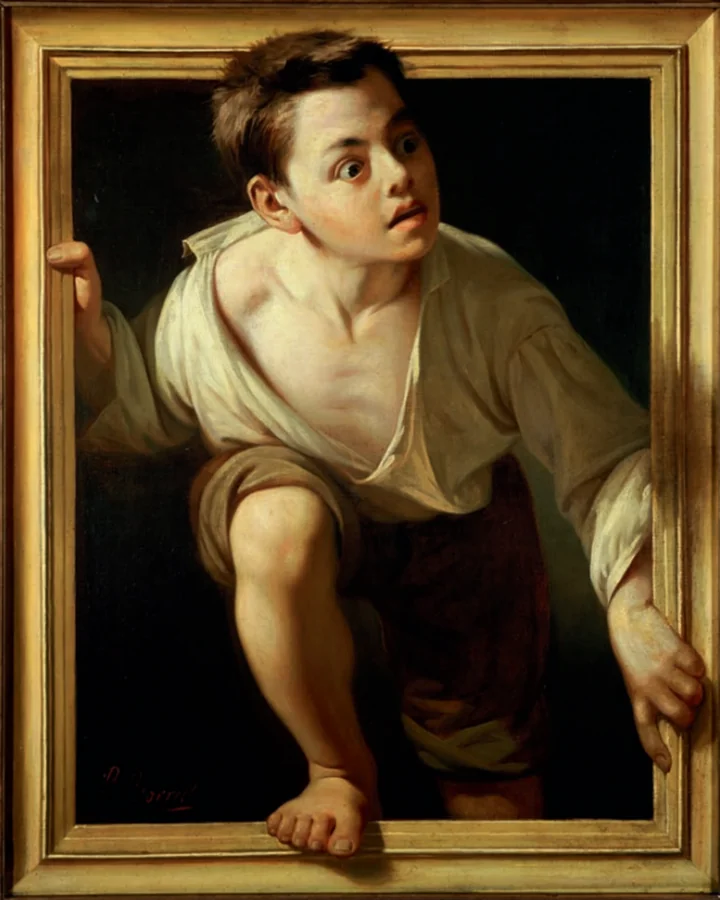
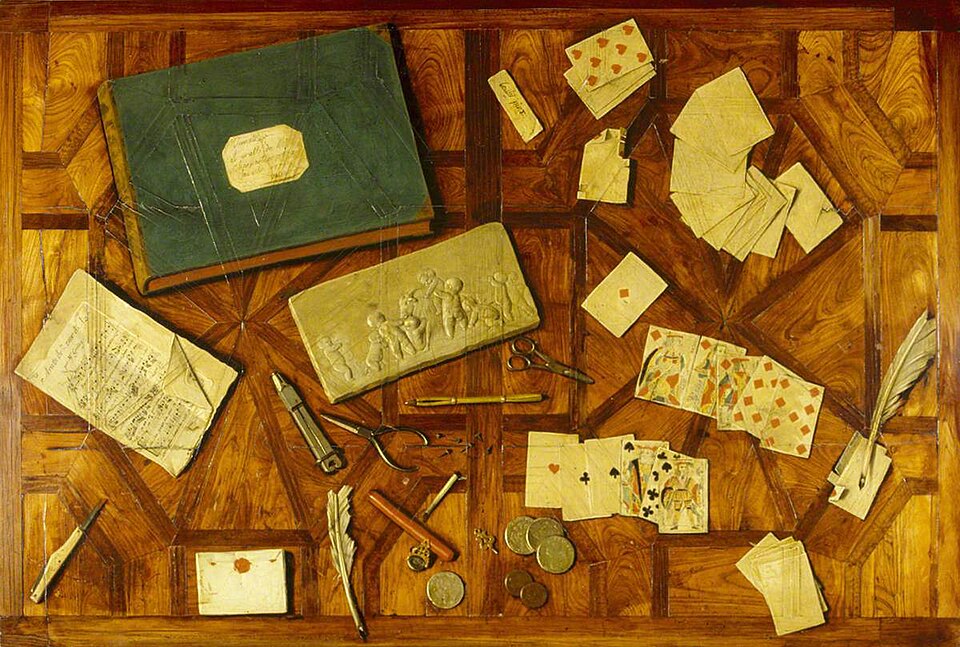
Trompe-l’œil Tabletop
Louis-Léopold Boilly
A painted table surface seems covered with cards, papers, coins, and tools.
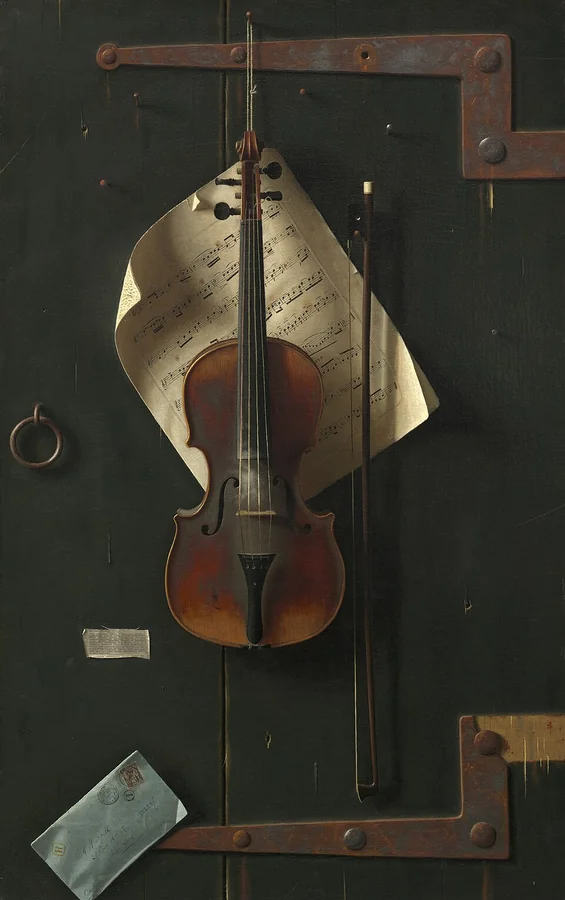
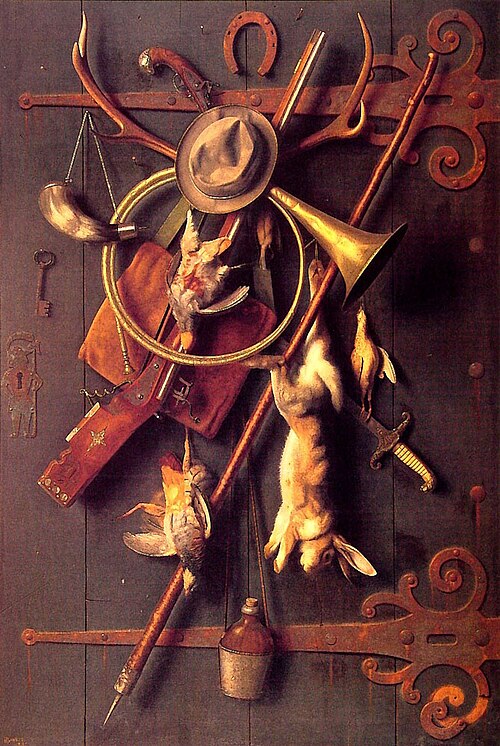
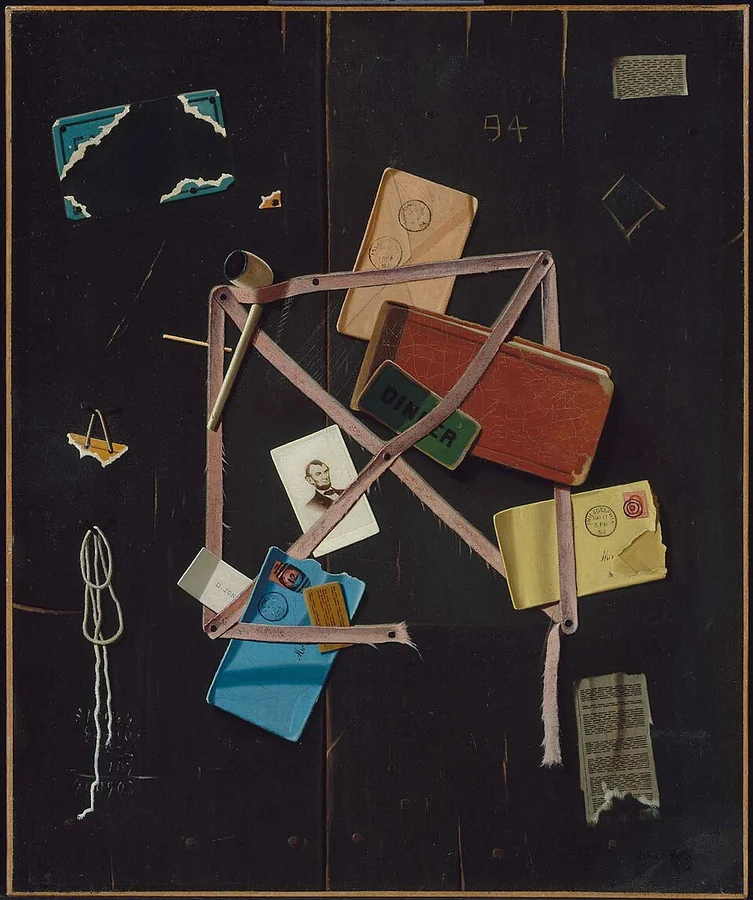
Old Time Letter Rack
John Frederick Peto
Old papers and everyday objects seem attached to a real rack.
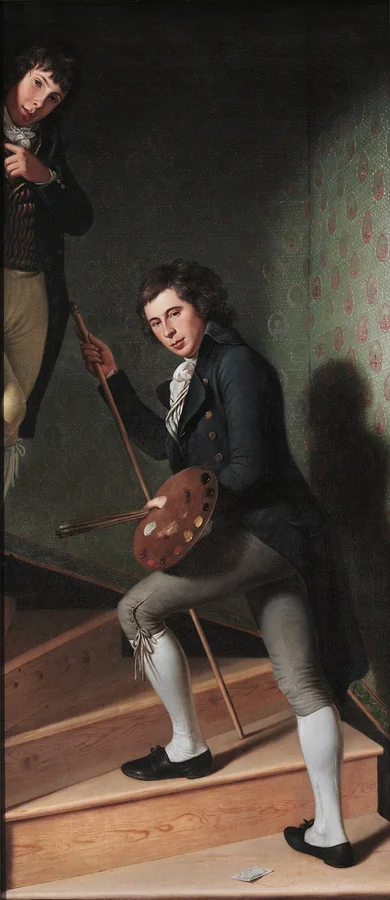
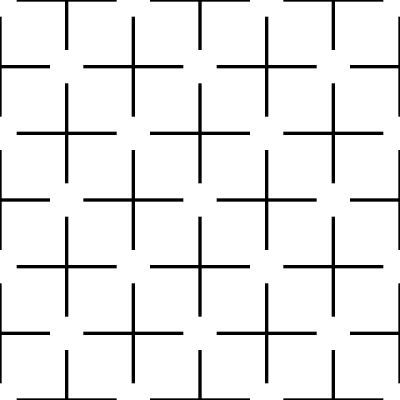

Craik–O’Brien–Cornsweet Illusion
Kenneth Craik, Vivian O’Brien, and Tom Cornsweet
Equal fields look different because of a narrow gradient at their boundary.
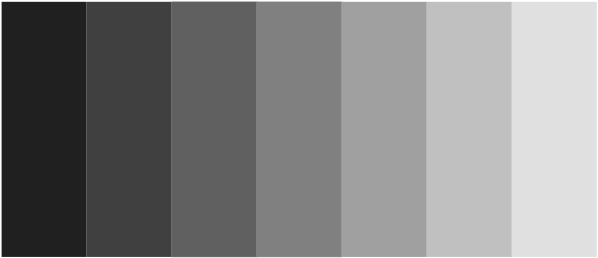
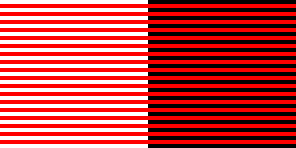
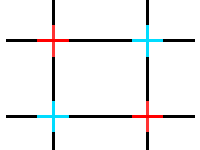
Neon Color Spreading
Dario Varin; H. F. J. M. van Tuijl
Color seems to spread into areas that were never filled.
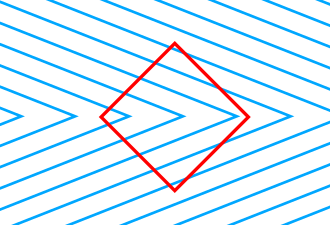
Orbison Illusion
William Orbison
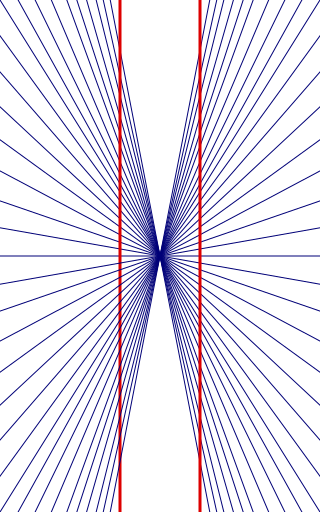
Straight sides and a circle appear distorted over a radiating background.

Moiré Pattern
Pattern interference; drawing by Fibonacci
Overlapping fine patterns produce a larger rippling pattern.
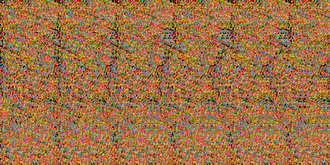
Hidden Shark Autostereogram
Christopher Tyler and Maureen Clarke; image attributed to Fred Hsu
A repeated dot pattern contains a hidden three-dimensional shark.
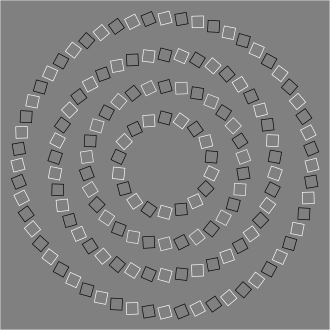
Pinna’s Intertwining Circles
Baingio Pinna and Richard L. Gregory
Concentric circles seem to intertwine.
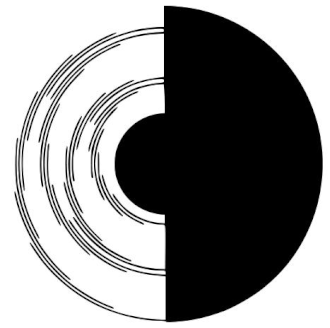
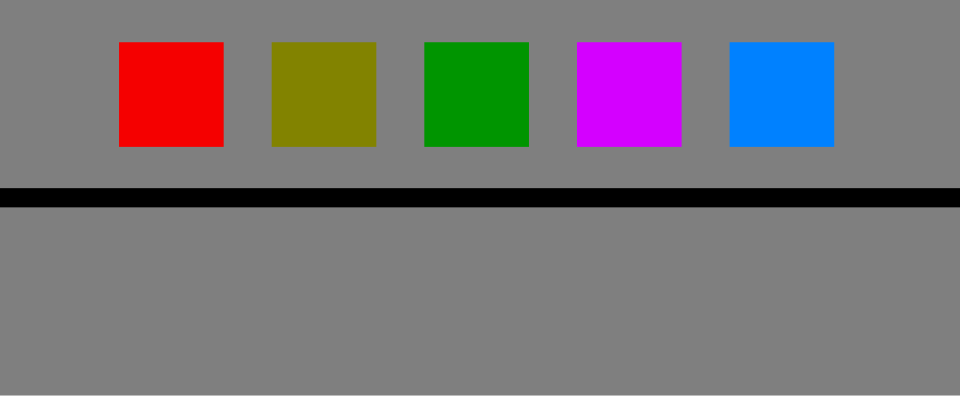
Helmholtz–Kohlrausch Effect
Hermann von Helmholtz and V. A. Kohlrausch
Saturated colors can appear brighter than equal-luminance gray.
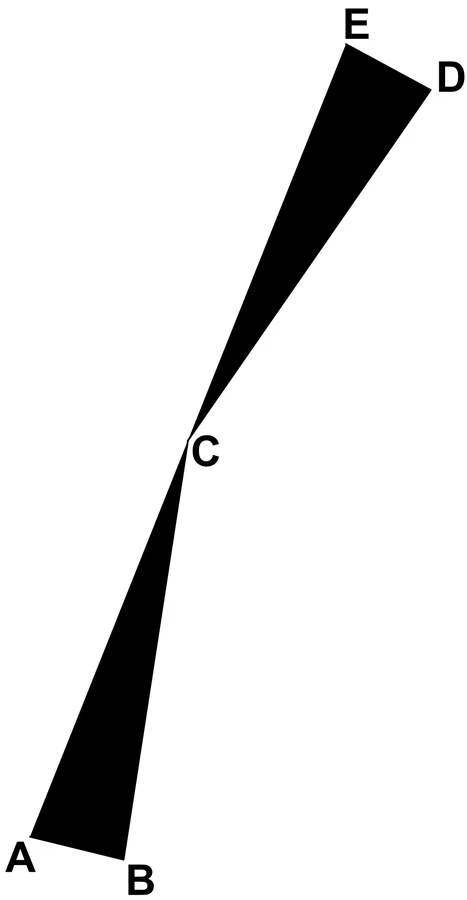
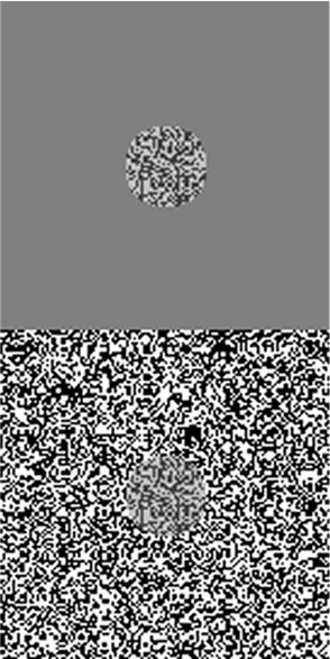
Chubb Illusion
Charles Chubb, George Sperling, and Joshua Solomon
The same central texture appears to have different contrast.
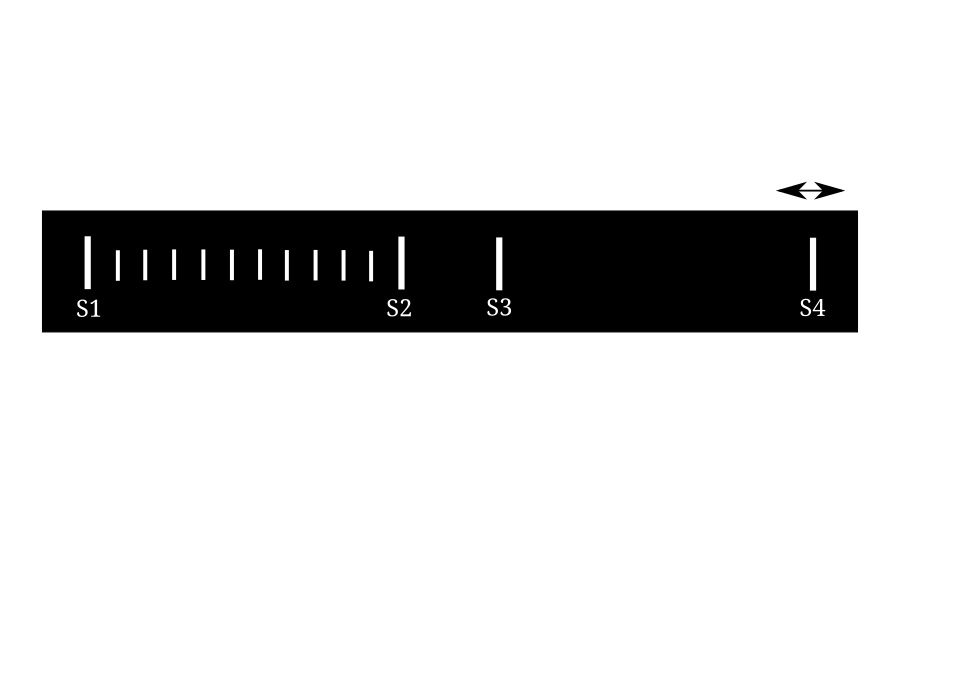
Oppel–Kundt Illusion
Johann Joseph Oppel and August Kundt
A subdivided distance can look longer than an empty one.
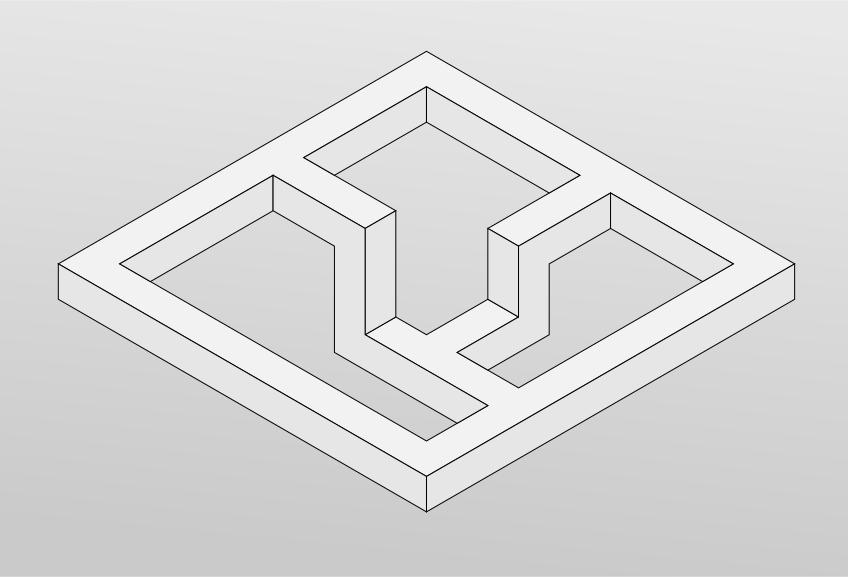
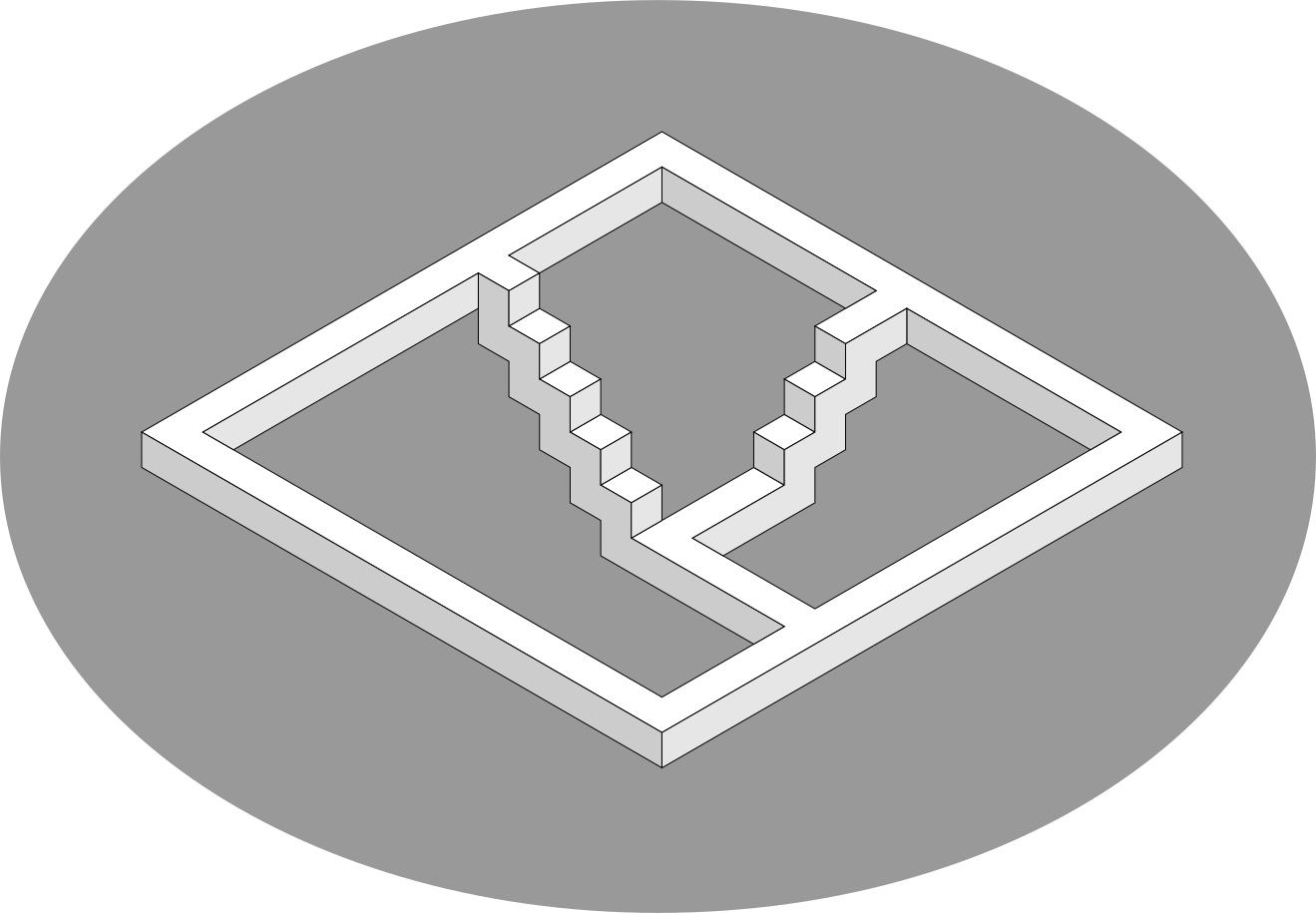
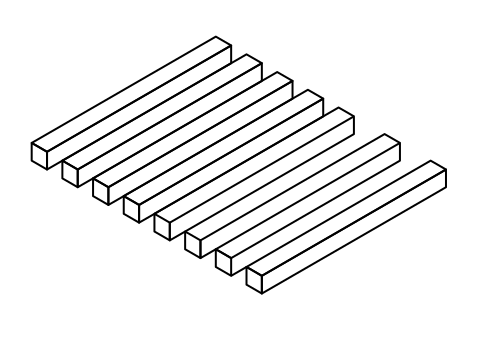
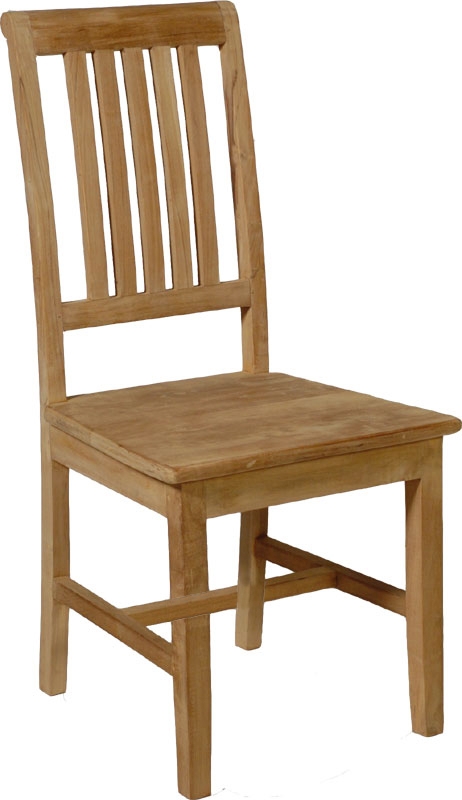
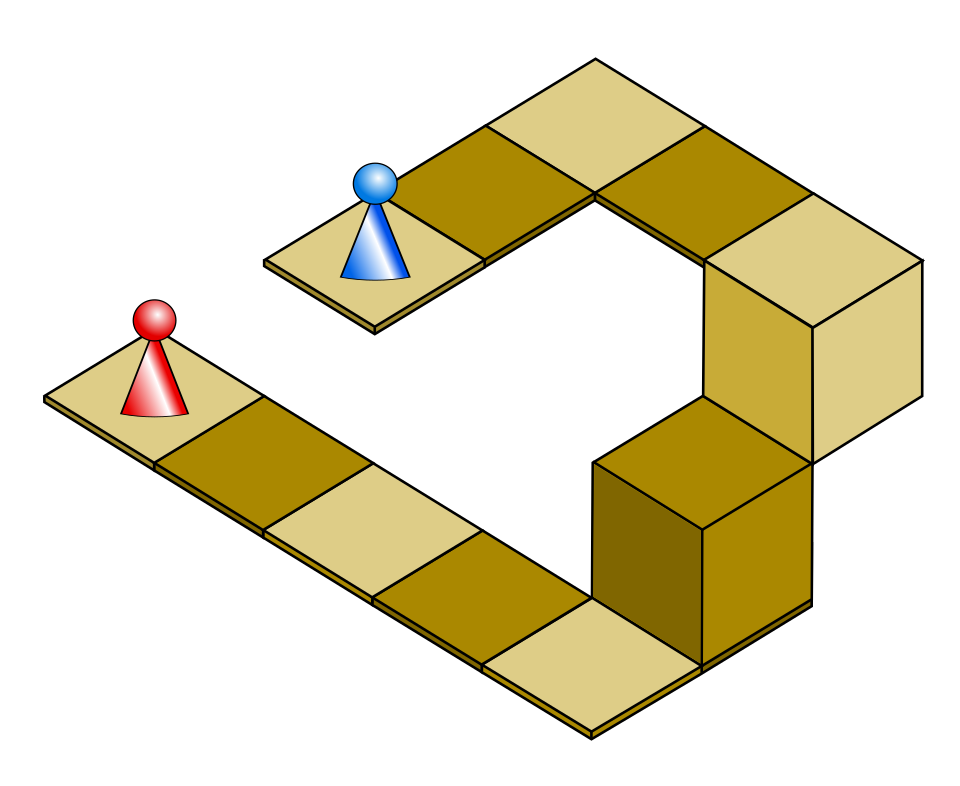
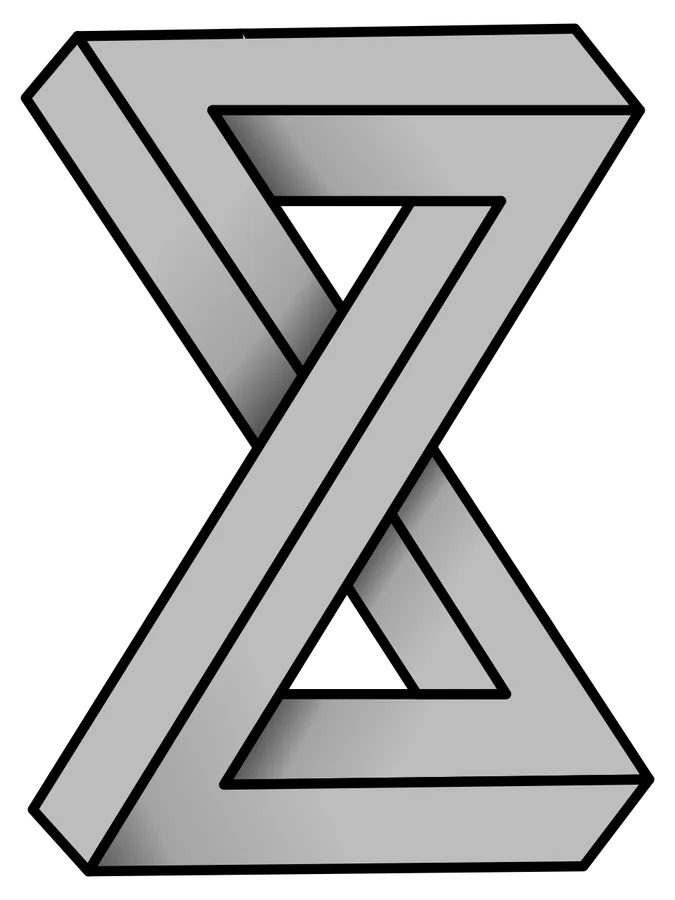
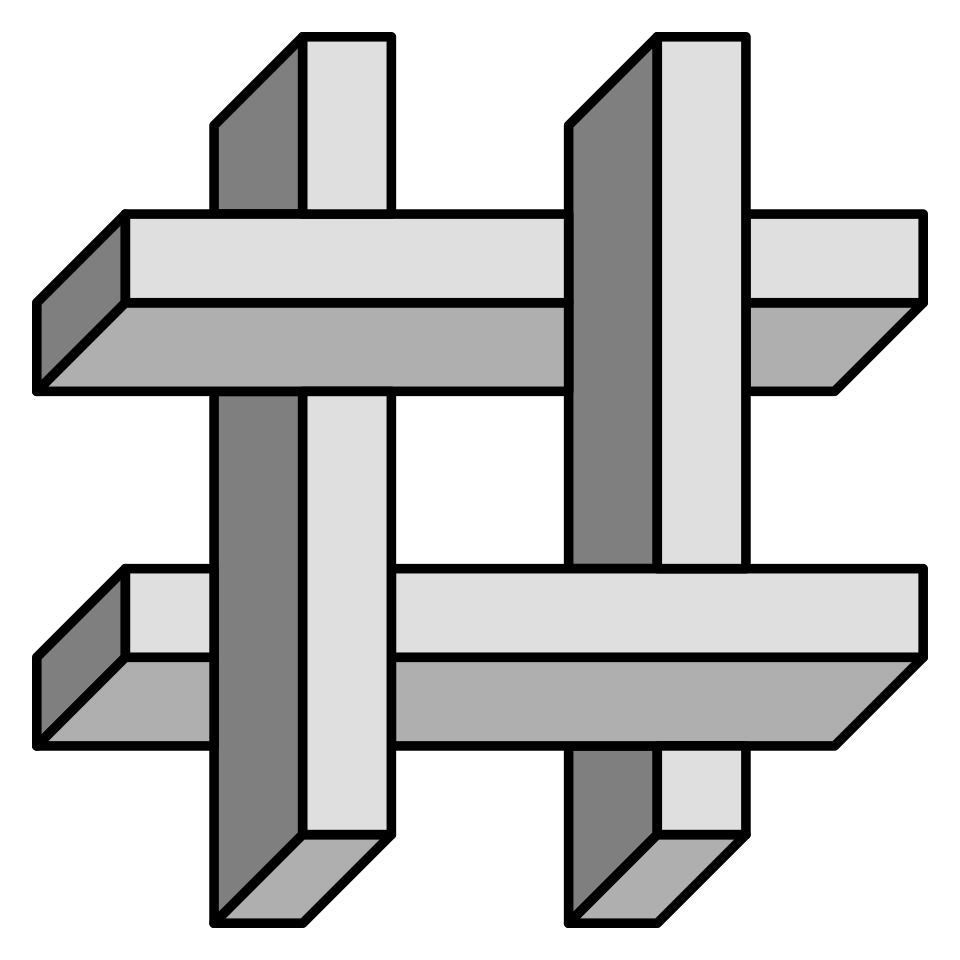
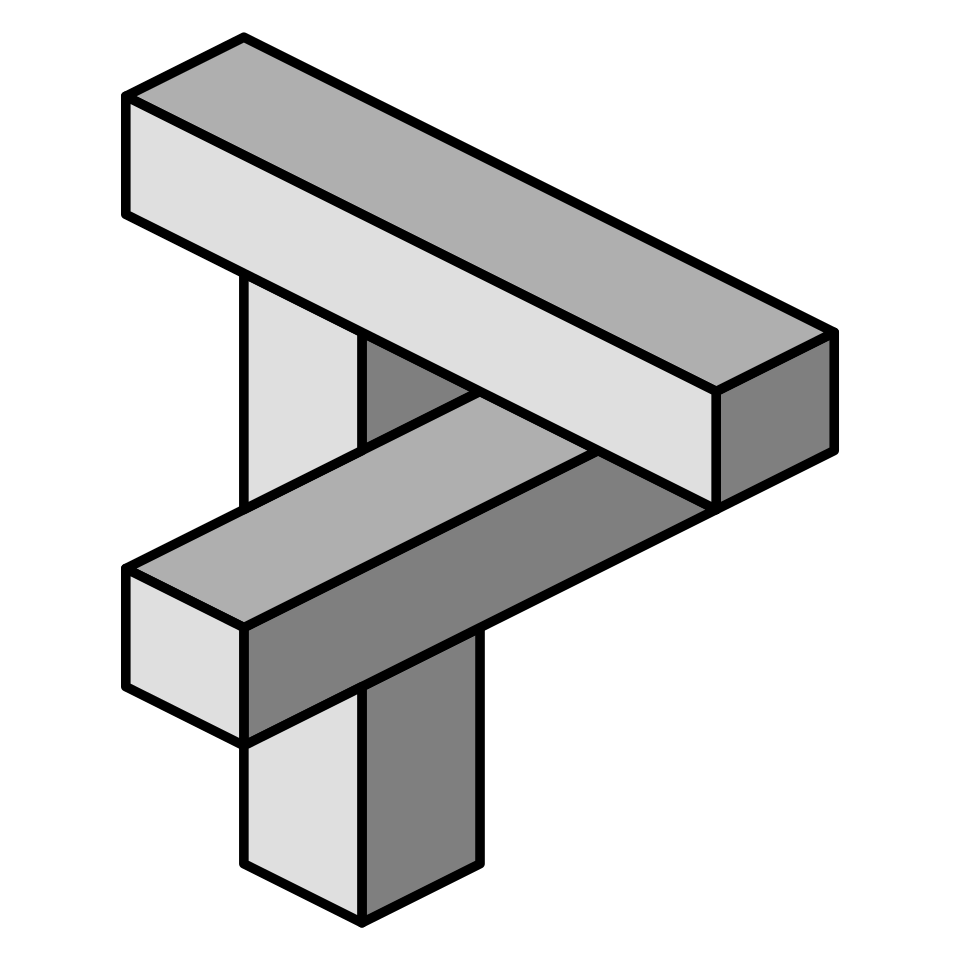
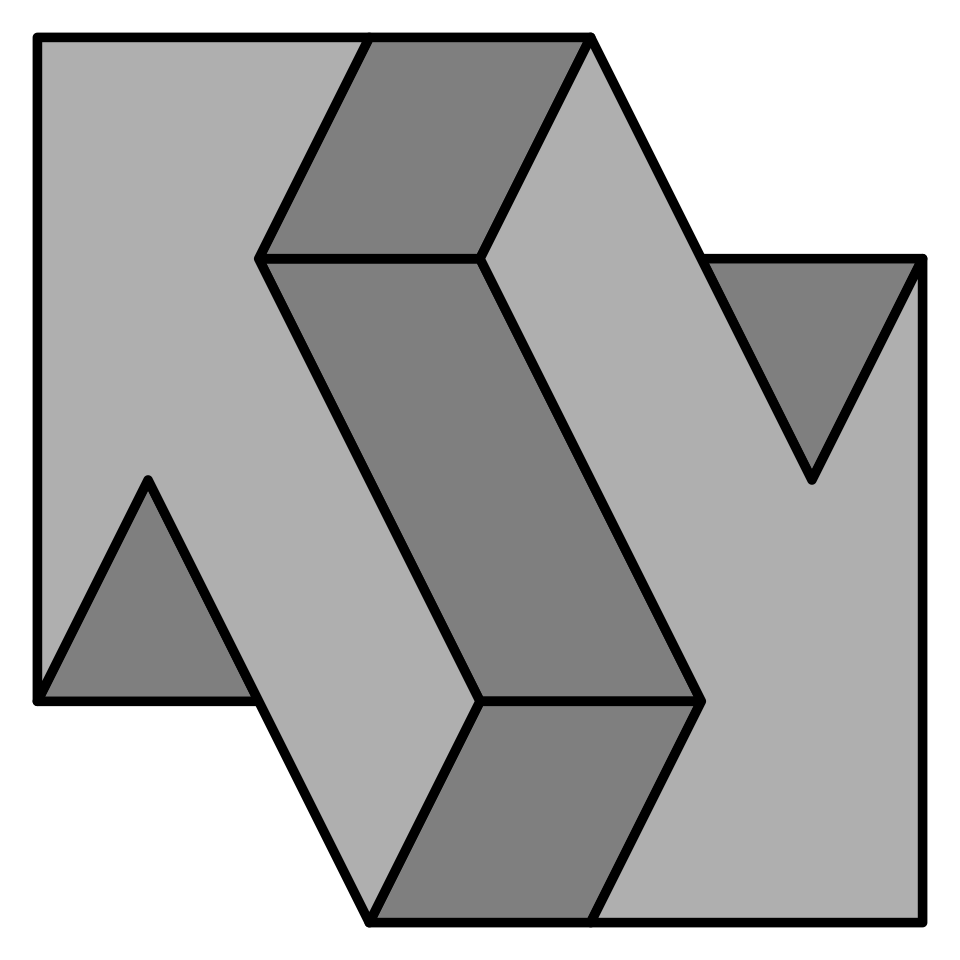
Impossible isometric junctions
Icey
Believable isometric corners combine into an inconsistent structure.
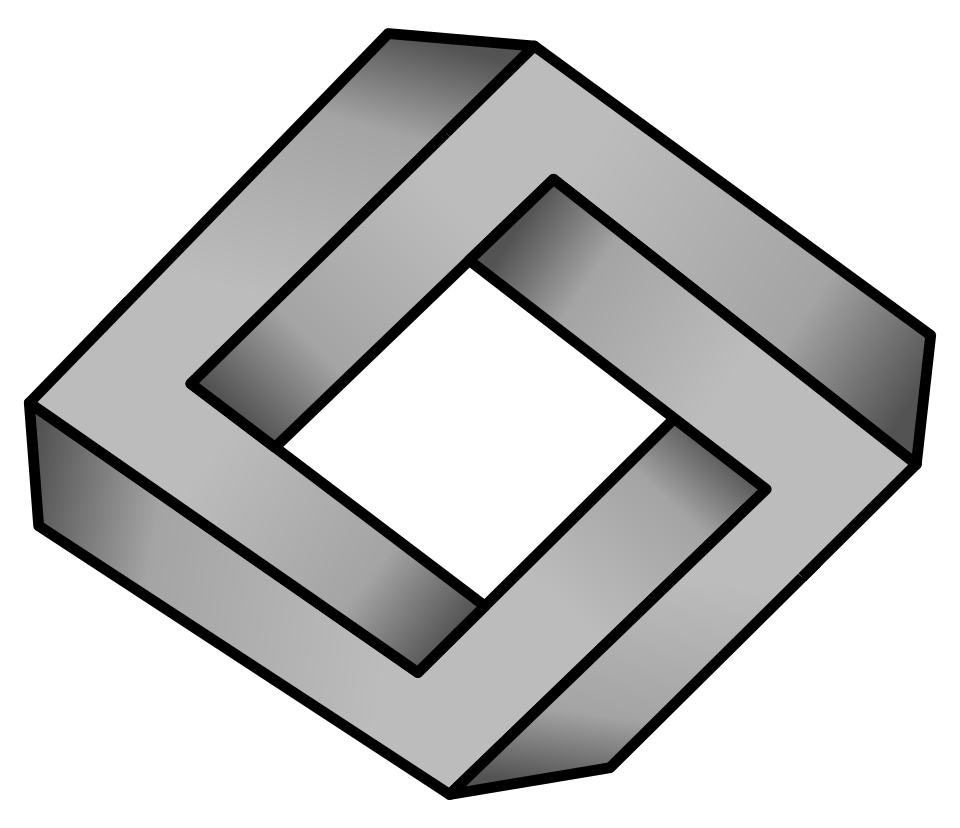
Skew impossible quadrilateral
Vectorization: Mrmw
A skew four-sided frame changes its depth logic at the corners.
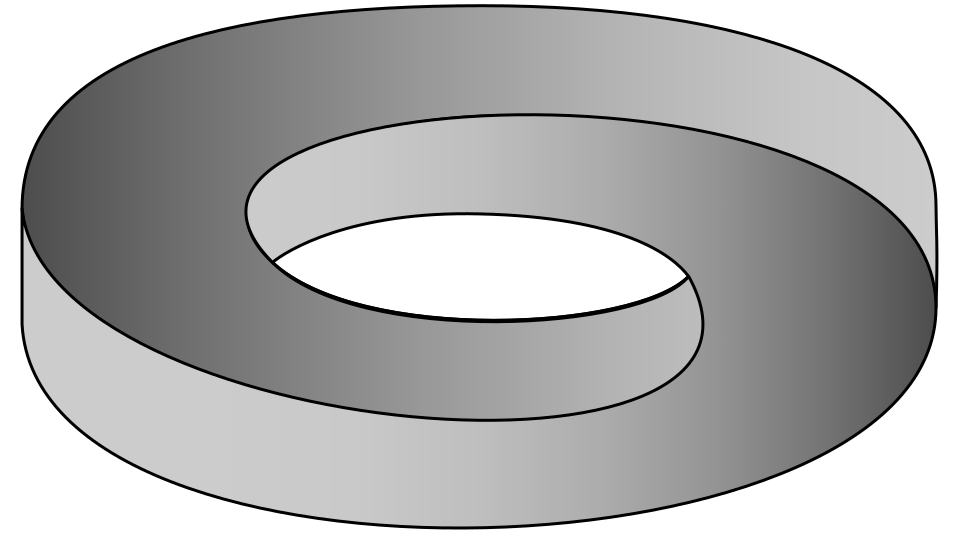
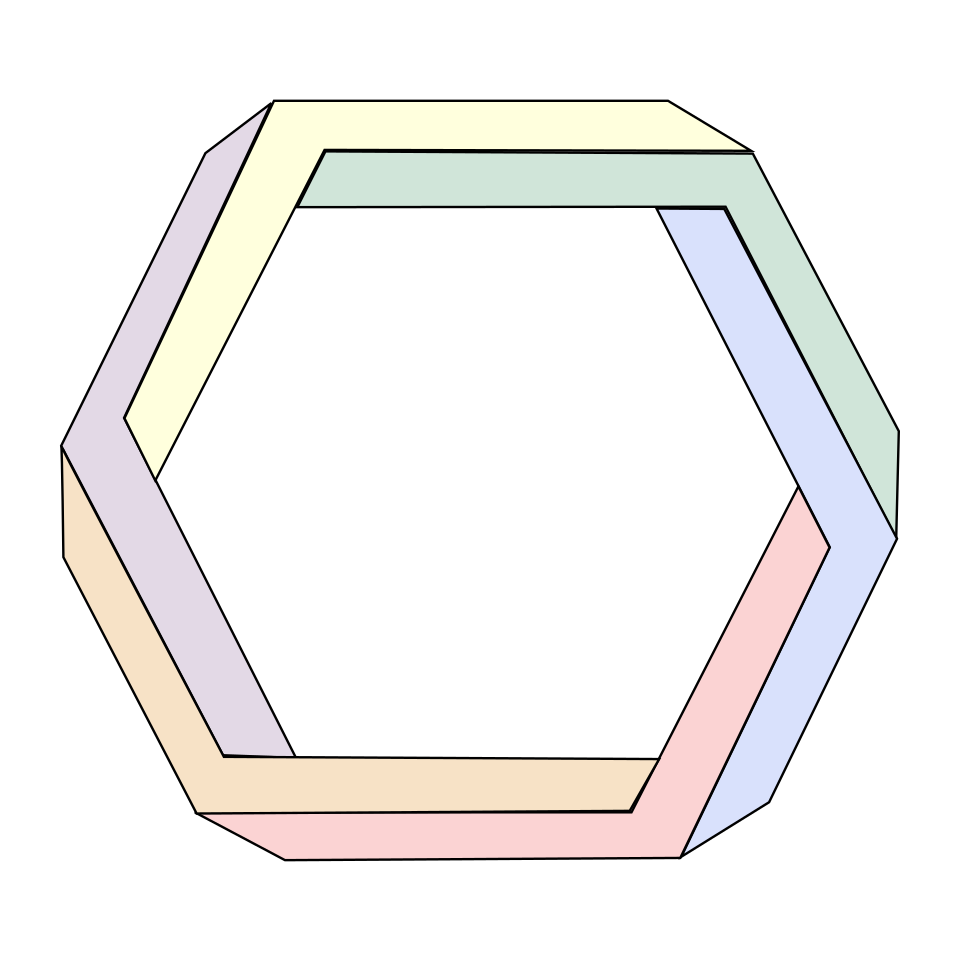
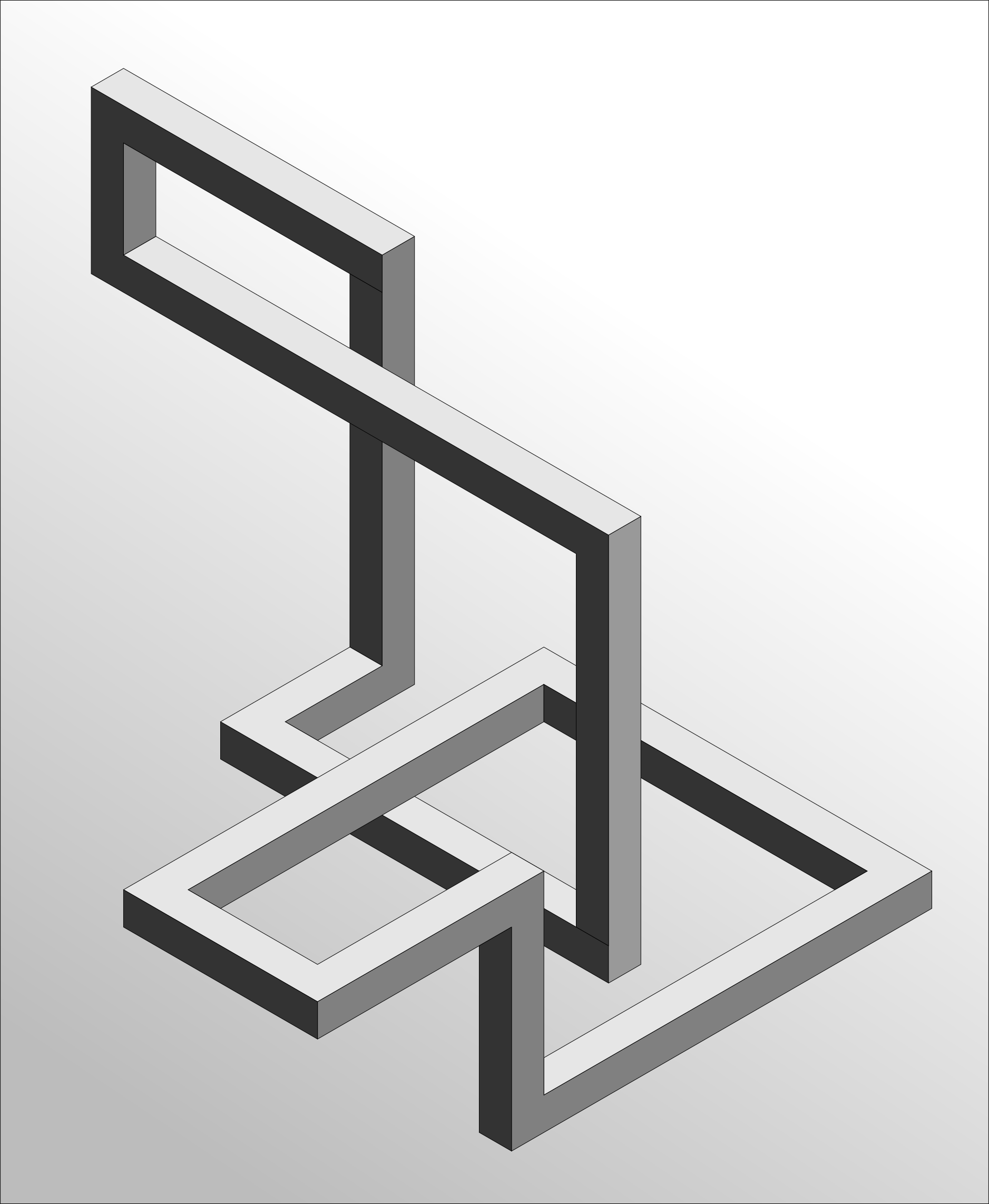
Impossible hexagon
Original uploader was Trilink at en.wikipedia
A six-sided beam loop carries impossible depth around its perimeter.

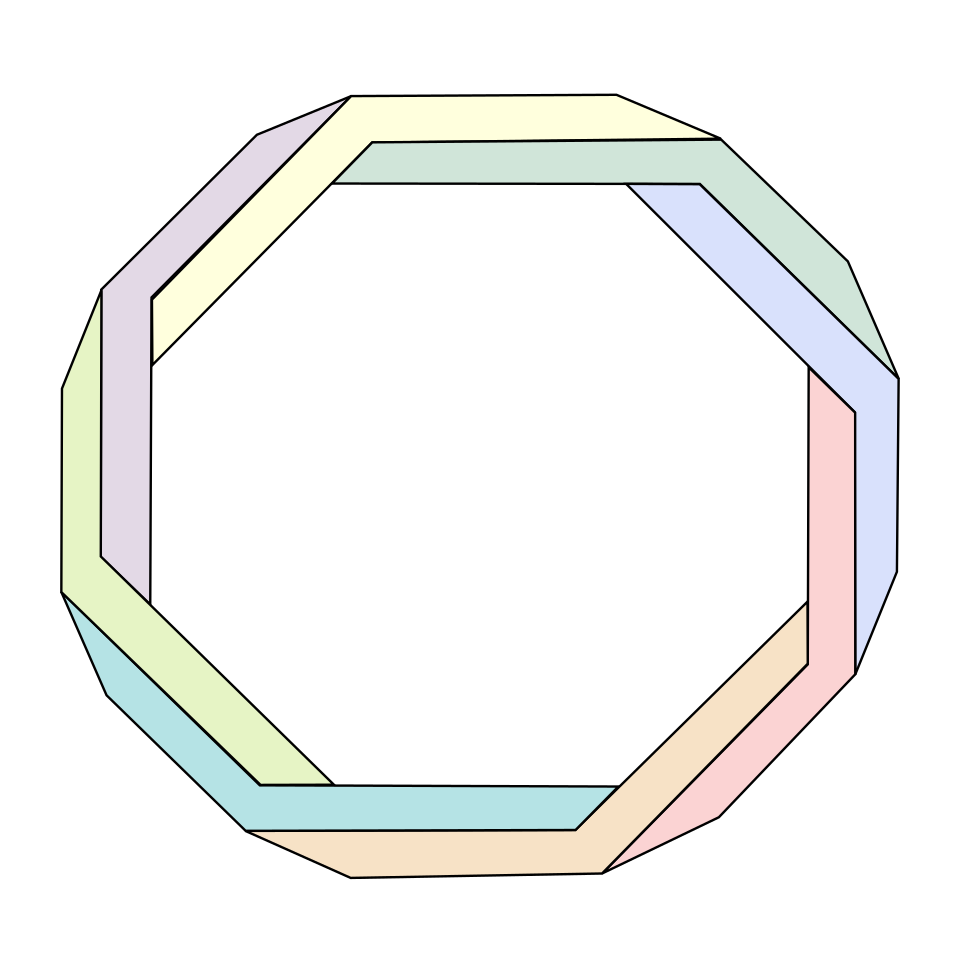
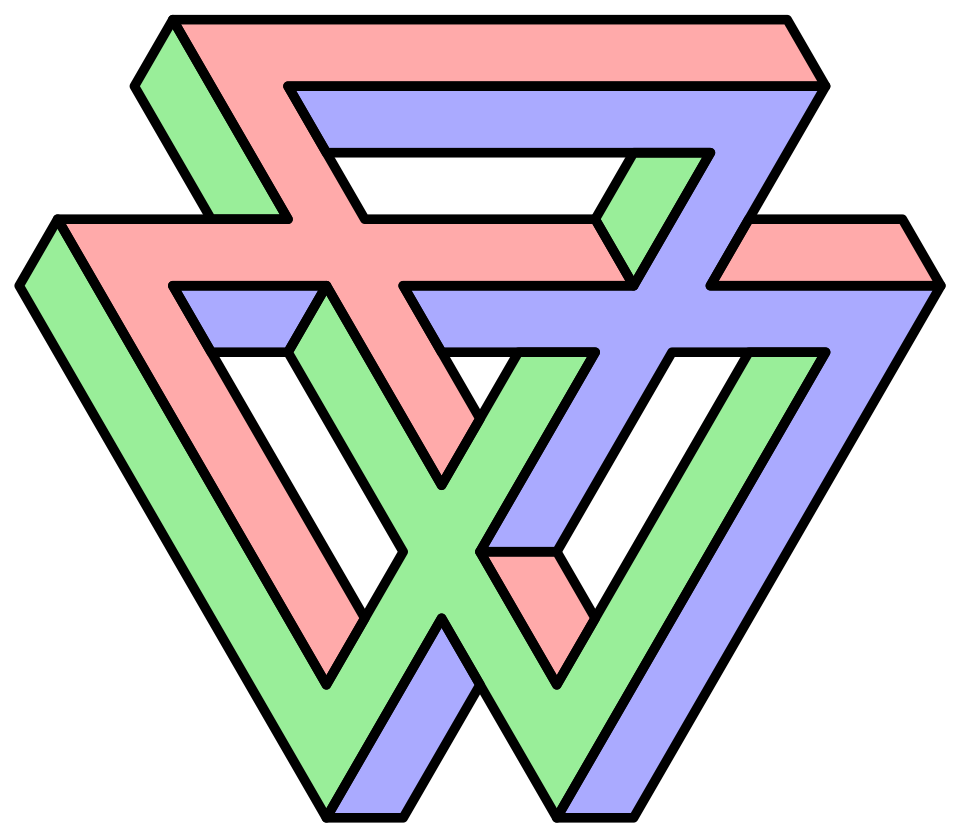
Impossible octagon
Trilink at English Wikipedia
Eight sides make a deceptively convincing impossible loop.
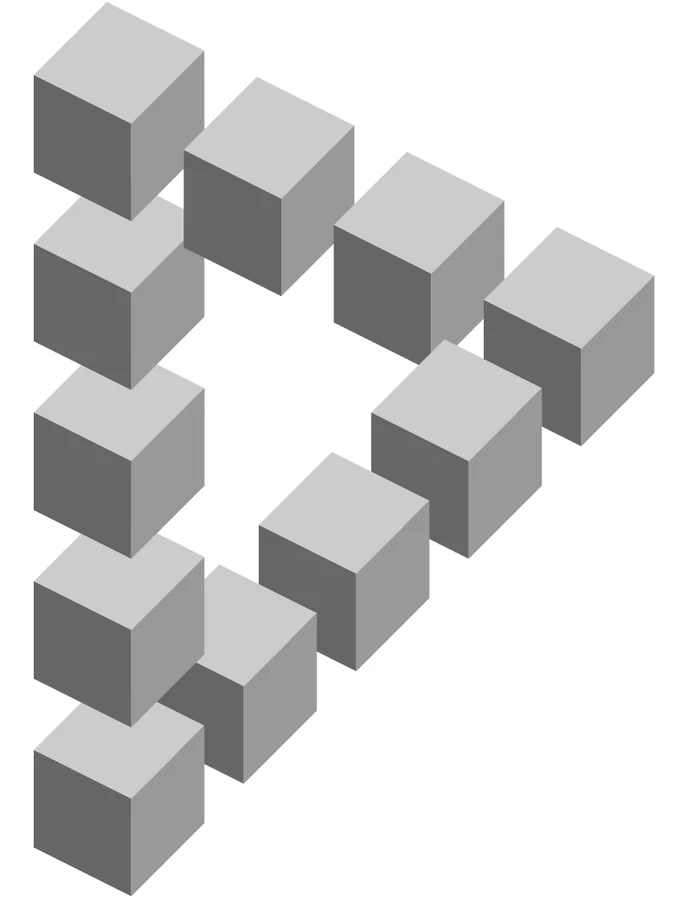

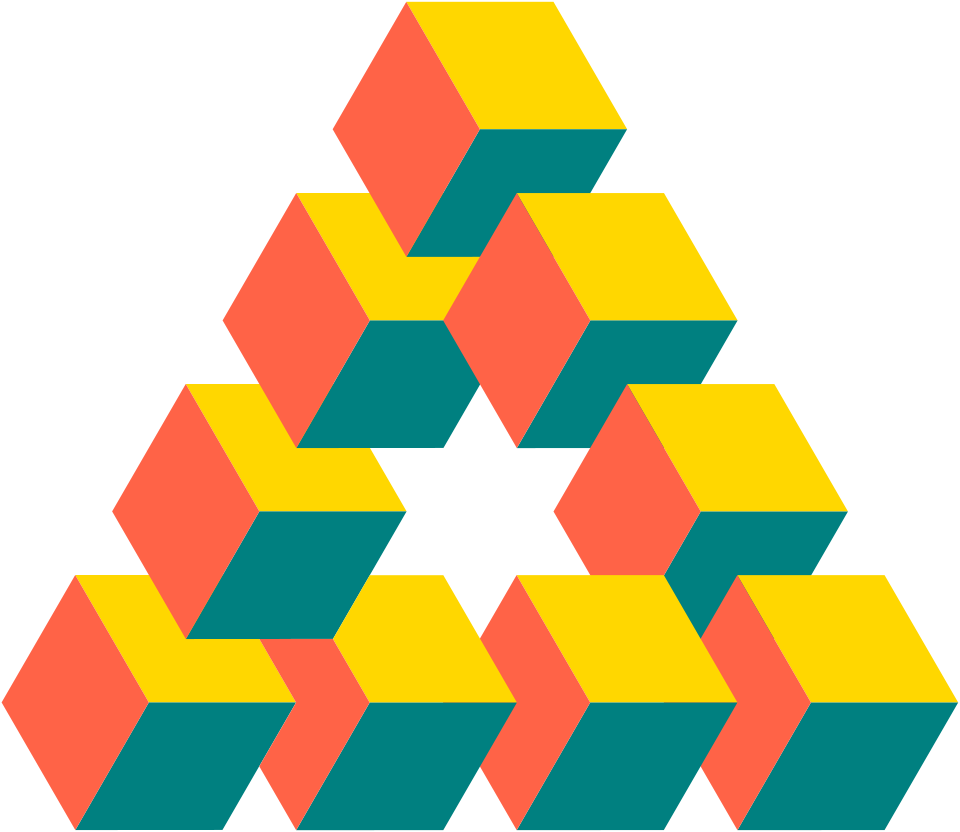
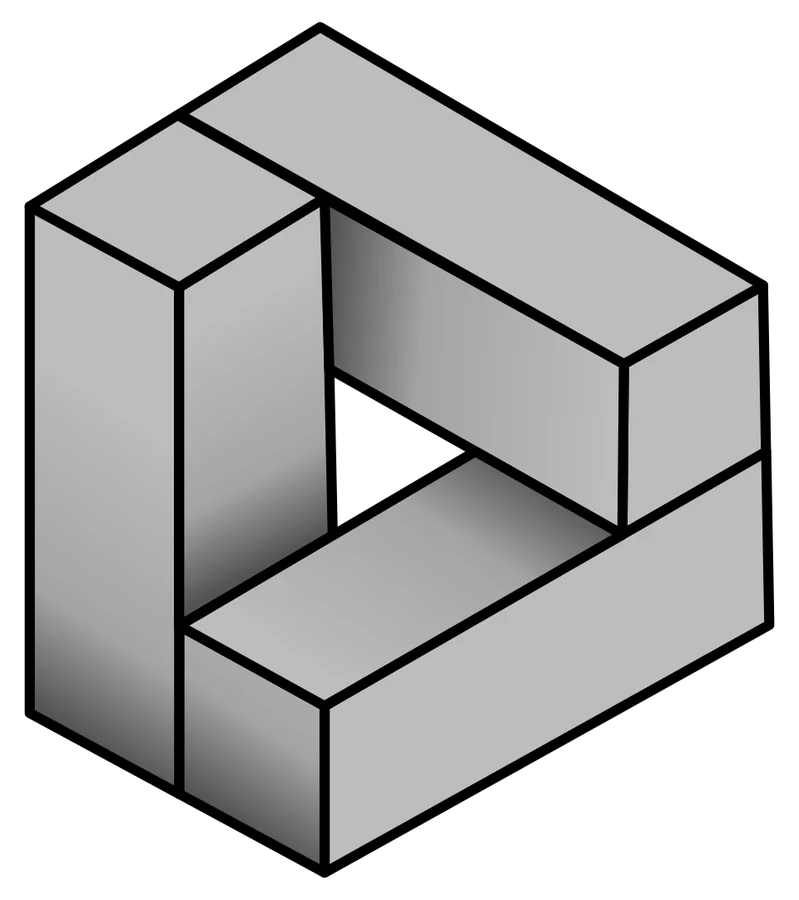
Reutersvärd’s triangle
Oscar Reutersvärd; modern drawing by László Németh
A triangle of blocks recalls Reutersvärd’s pioneering impossible figure.
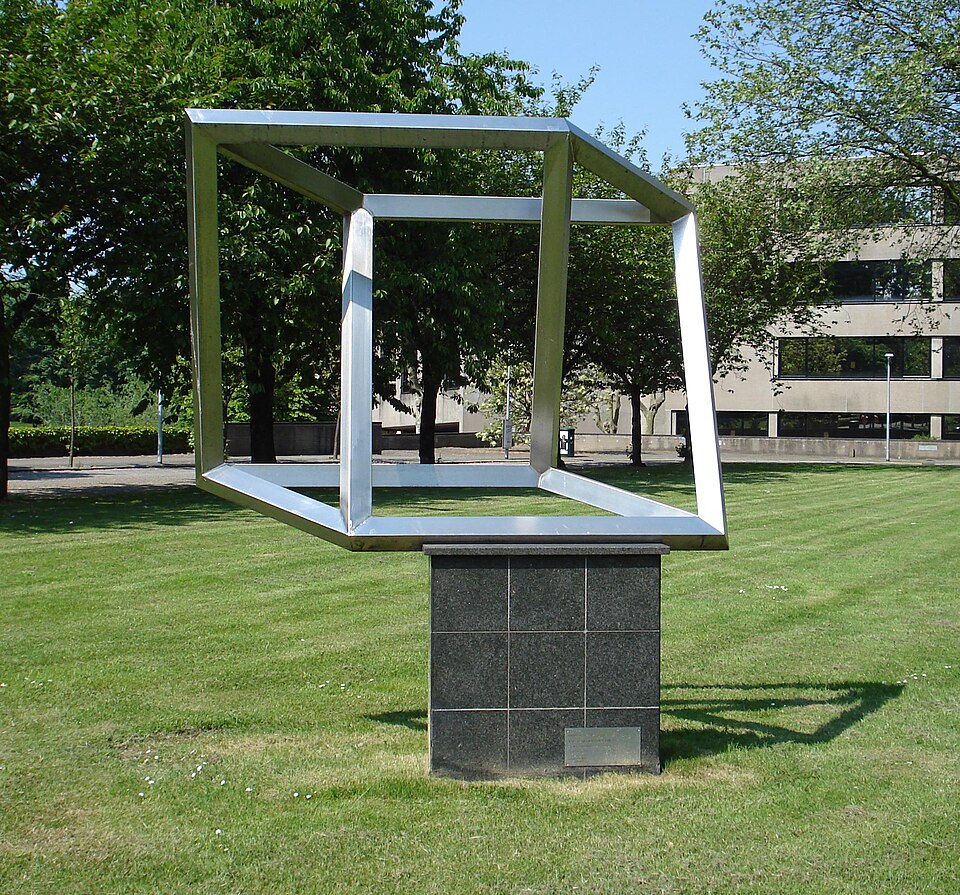
The impossible cuboid
J. Verhoeff, D. Baas Becking, and P. Bakker; photograph by Wikifrits
A public sculpture appears to form an impossible cuboid.
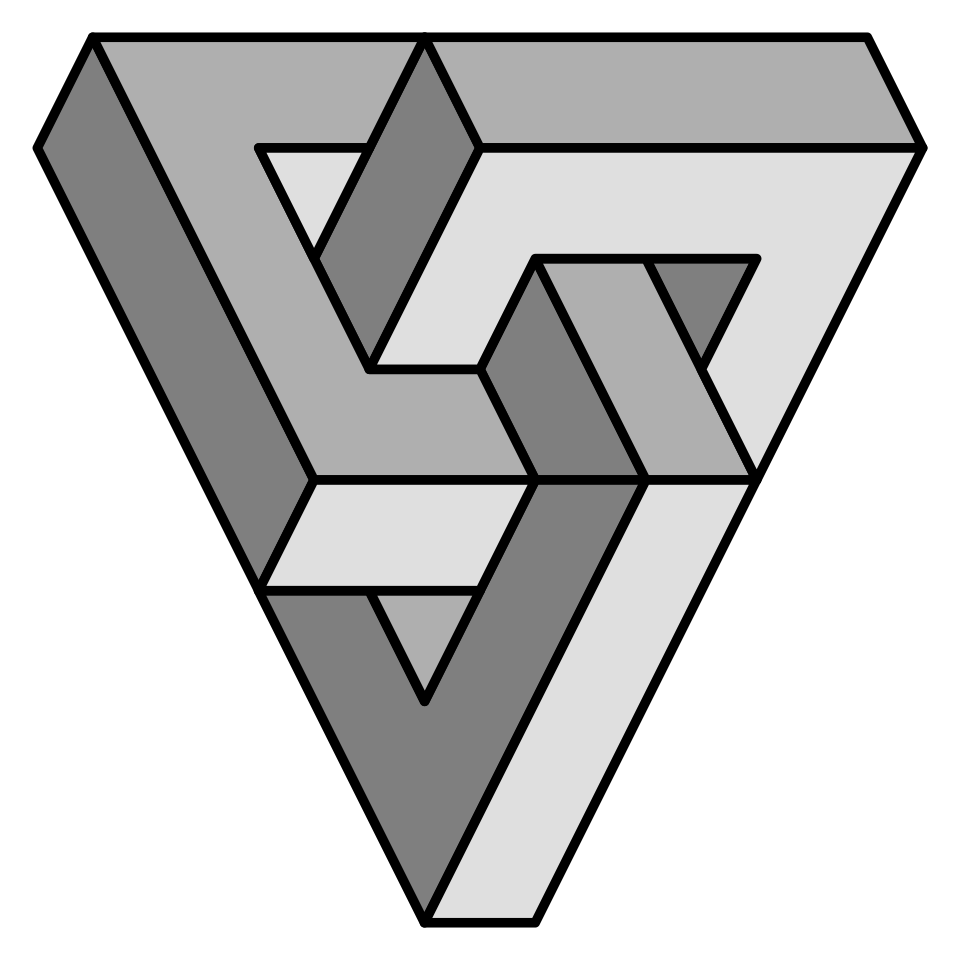
Impossible wooden cube
Wmccallie
A real wooden construction looks like an impossible cube from one view.
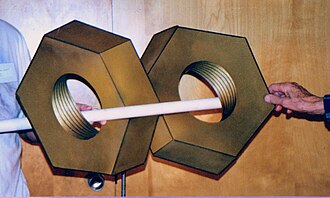
Andrus’s nuts and bolts
Jerry Andrus; photograph by Sgerbic
An arrangement of real nuts and bolts looks impossible from its chosen view.
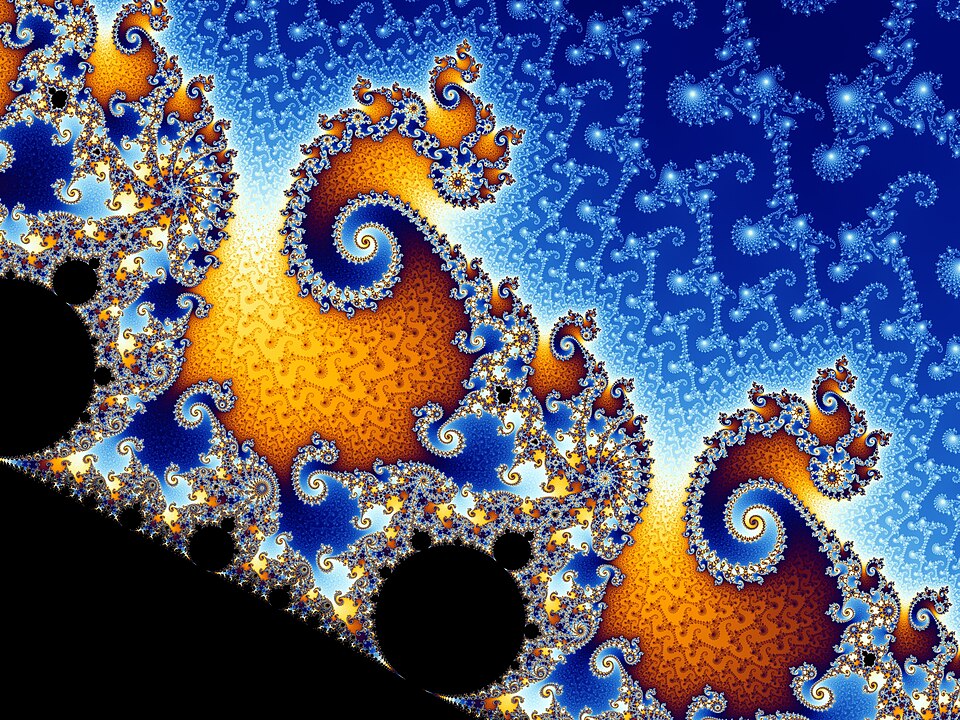
Mandelbrot Boundary Detail
Benoît Mandelbrot and researchers in complex dynamics
A close view reveals spirals, branching filaments, and smaller structures.
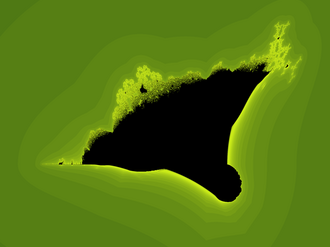
Burning Ship Fractal
Michael Michelitsch and Otto E. Rössler
A variation of complex iteration produces forms reminiscent of ships and towers.
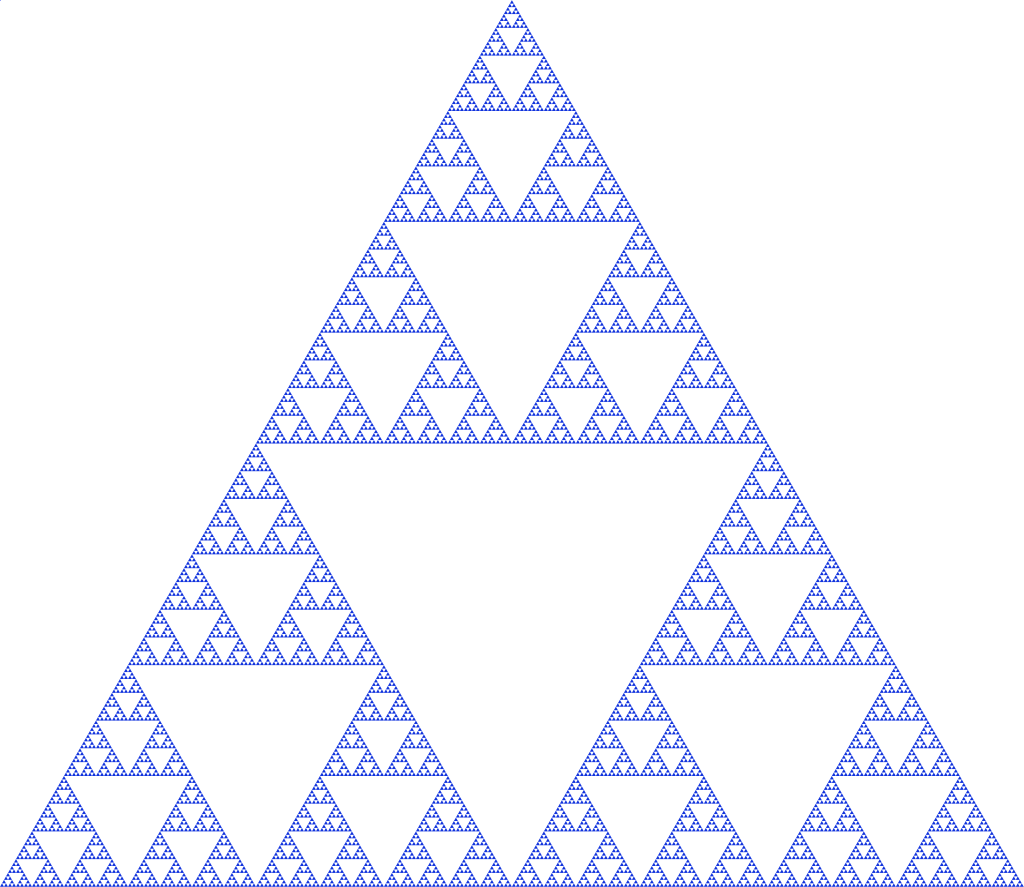
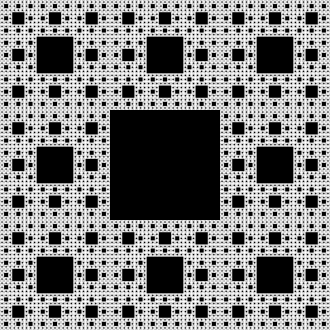
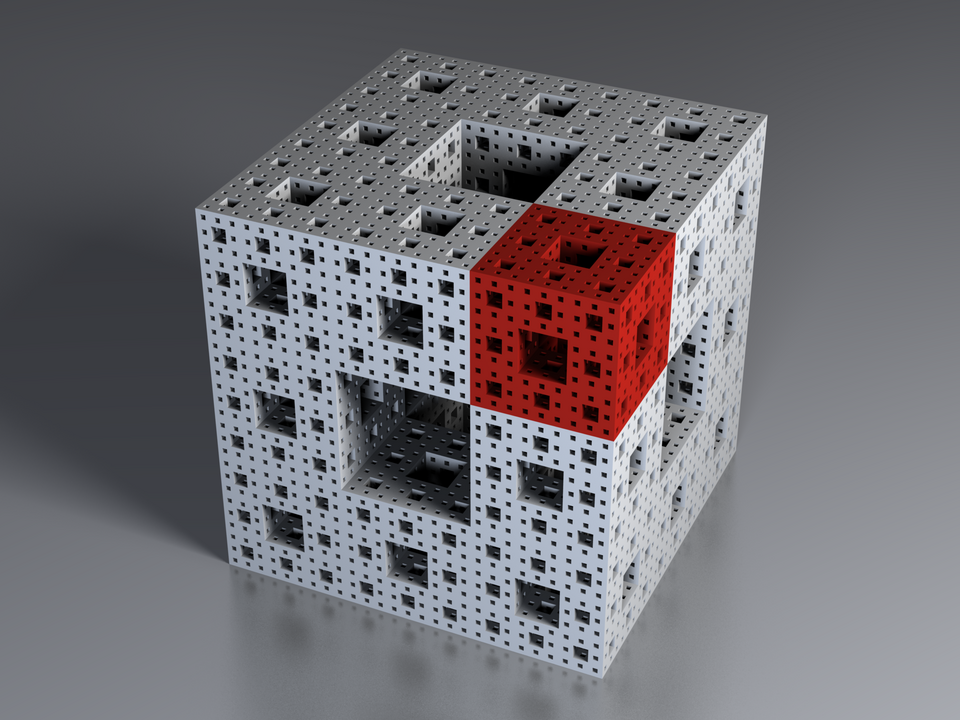
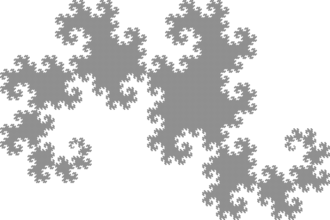
Heighway Dragon
John Heighway, Bruce Banks, and William Harter
Repeated right-angle turns fold a simple line into a complex shape.
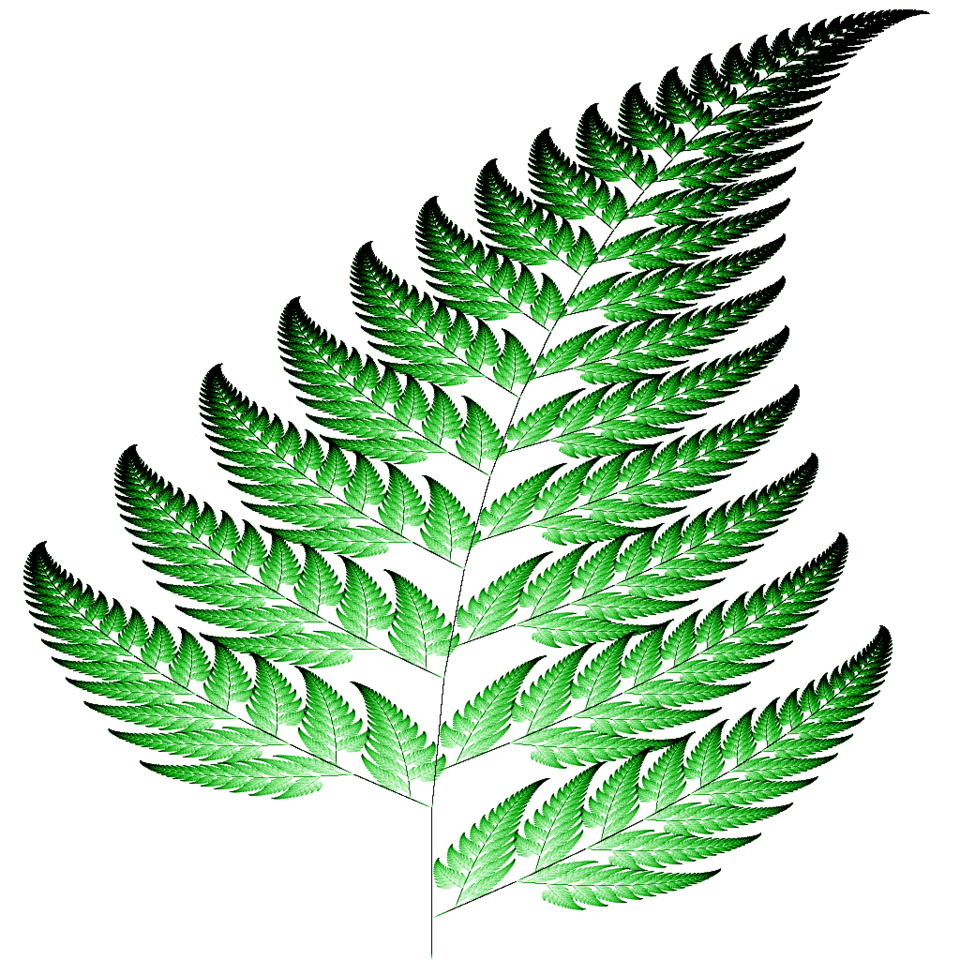
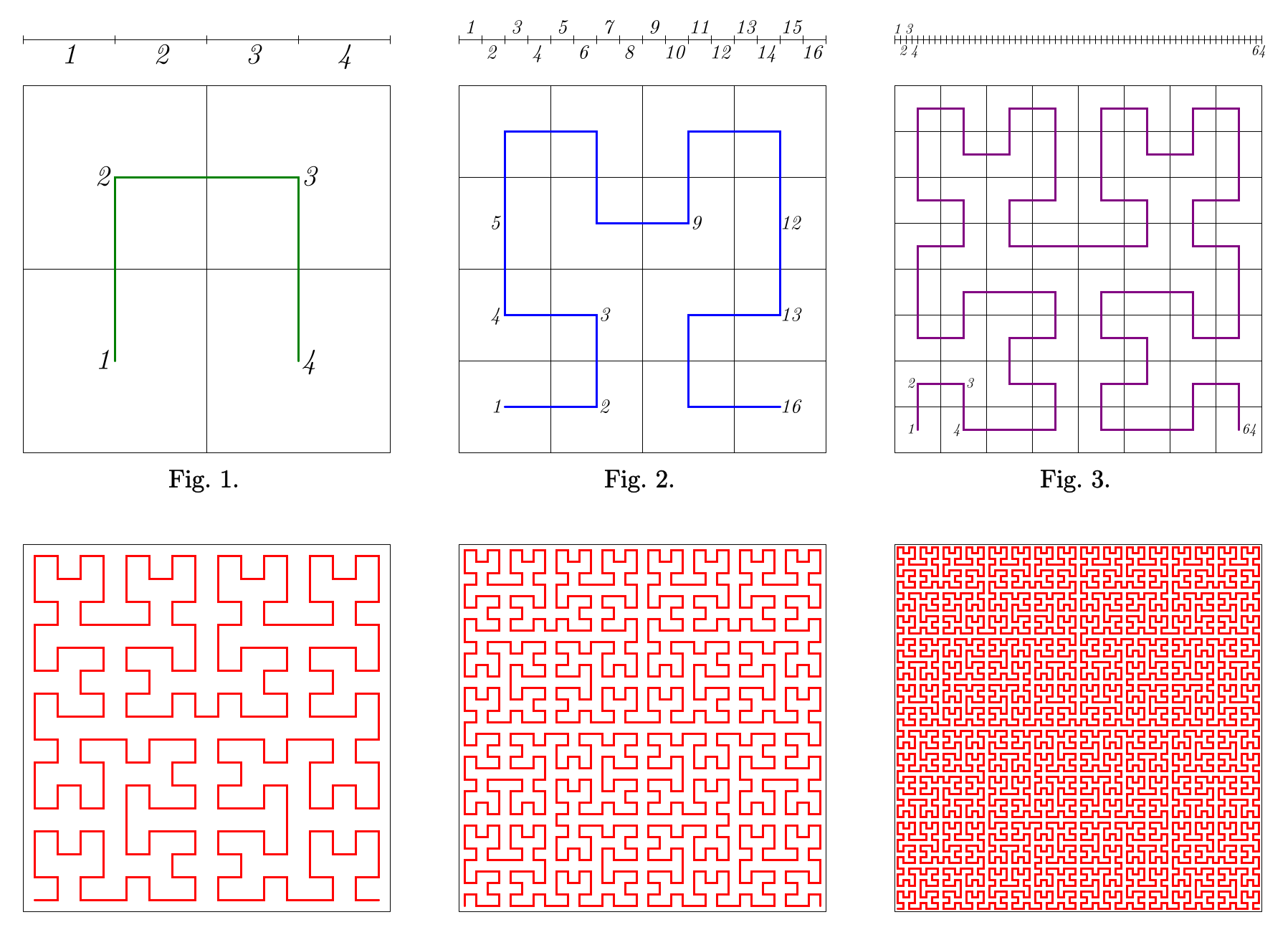
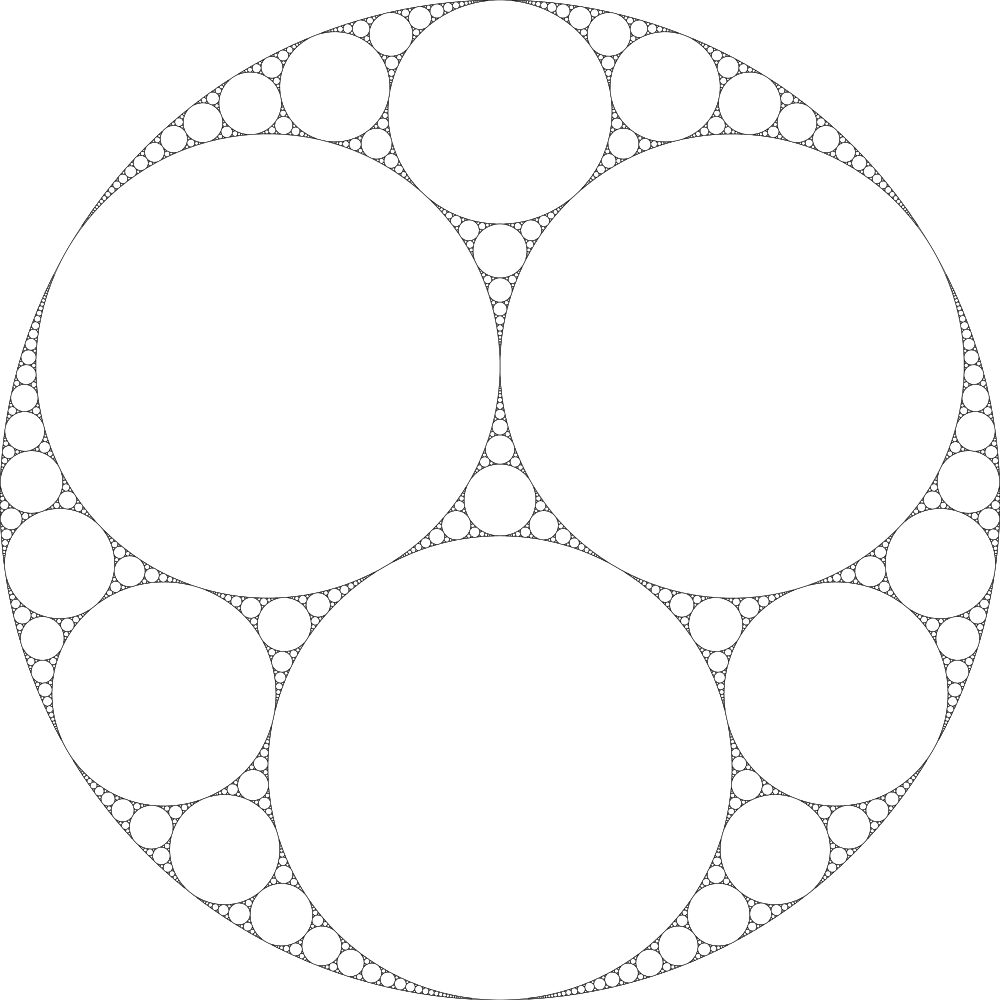
Apollonian Gasket
Classical circle geometry; later mathematical development
Tangent circles fill gaps with smaller and smaller circles.
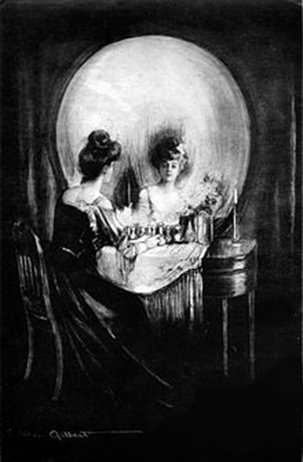
All Is Vanity
Charles Allan Gilbert (1873 – 1929), American illustrator
You should experience a 'Gestalt switch' - a change - as your experience flips between being of a woman and being of a skull.
Ambiguous Ring
The Illusions Index
You should experience a sense of perceptual confusion as you note the paradoxical nature of the depicted ring.
Aristotle's Illusion
The Illusions Index
You should feel as if your fingers are touching two objects, not one.
Belvedere
The Illusions Index
You should experience a sense of perceptual confusion as you note the paradoxical nature of the building and other features in the lithographic print.
Binaural Beats
The Illusions Index
You should have an experience of a third beat that accompanies the sound. Also, as the video proceeds, the apparent beat should change, as the sounds that you receive from left and right…
Bistable Auditory Stimulus
The Illusions Index
You should experience the tune to switch between two different tunes, in a similar way that a Gestalt switch happens in some visual experiences.
Book-Cleavage Ambiguous Figure
The Illusions Index
You should experience a 'Gestalt switch' between seeing the image as a book or cleavage.
Bookworm
The Illusions Index
You should have the visual experience of a man reaching down to get a book from a librarian. However, although the man reaching down is real, the library and the librarian are just a…
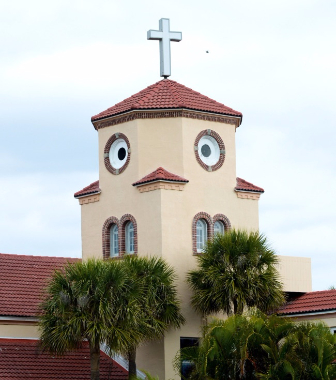
Chicken-Church Ambiguous Figure
Unknown source, viral internet image.
You should experience a 'Gestalt Switch' between seeing the church tower as a building, and seeing it as a chicken face.
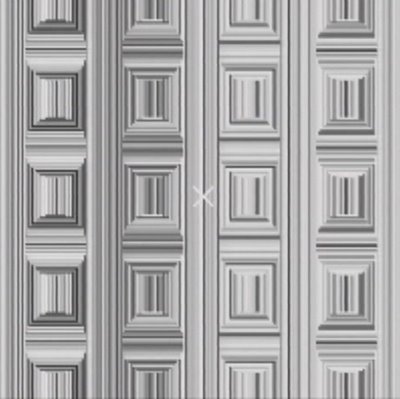
Coffer Illusion
Anthony Norcia, vision scientist at the Smith-Kettlewell Eye Research Institute in San Francisco.
You should experience a 'Gestalt switch' between seeing the image as a containing a pattern of squares versus a pattern of circles.
Curvature Blindness Illusion
The Illusions Index
Many people perceive every second line being smooth and curved, and the others being angular, zigzag lines. However, there are no angular, zigzag lines in the image. Hovering your cursor…
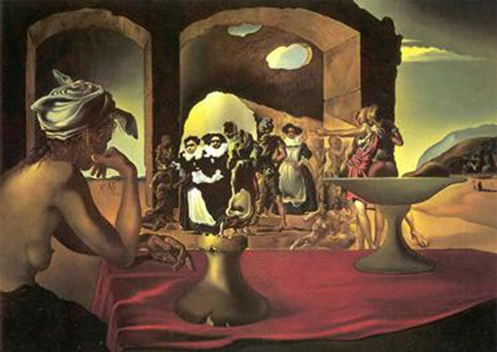
Disappearing Bust of Voltaire
Salvador Dali (1904 - 1989), Spanish surrealist artist
You should experience a 'Gestalt switch' - a change - between experiencing the centre figure in the image as a bust and as people.
 Moving image
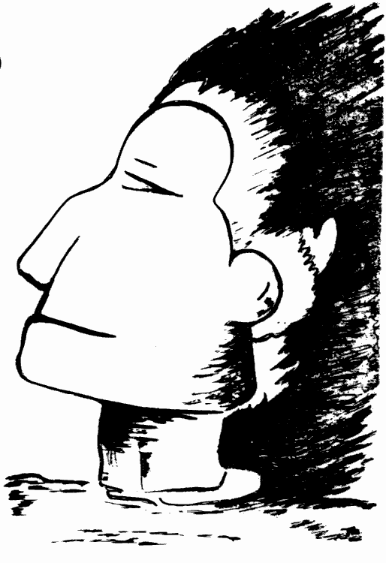
Eskimo-Face
Elizaabeth Douglass (formerly Winson) (1930-2014).
You should experience a 'Gestalt Switch' between seeing the figure as an Eskimo or a face.
Flash-lag Illusion
The Illusions Index
Most observers report that the green square appears to “lag” the red square, i.e. the green square appears slightly to the left of the red square’s horizontal position. However, the green…
Grey strawberries
The Illusions Index
You should have the experience of red strawberries in the picture, but the picture doesn't contain any red colour.
Herald Square Celebration
The Illusions Index
You should have the visual experience of giant people seeming to stand on top of buildings. However, although people are real, they are not giants and the buildings they seem to be…
Impossible Corners
The Illusions Index
You should experience a sense of perceptual confusion as you note the paradoxical nature of the corners.
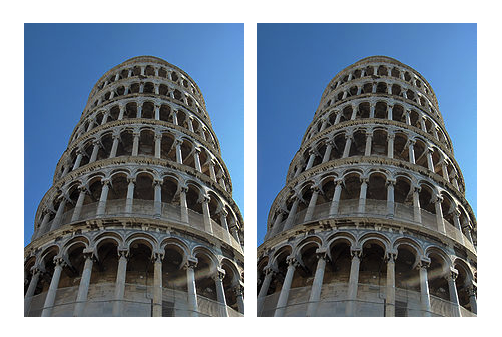
Leaning Tower Illusion
Frederick A A Kingdom, Ali Yoonessi and Elena Gheorghiu
The tower on the right seems to lean more, so it is surprising, that these are actually two identical pictures of the tower side by side!
McCollough Effect
The Illusions Index
The black and white test figure will have taken on an illusory tinge of colour - the horizontal white stripes appear tinged red, while the vertical stripes appear green.
McGurk Effect
The Illusions Index
Although the sound remains the same throughout the video, when watching different lip movements, you should experience an illusory change in the sound.
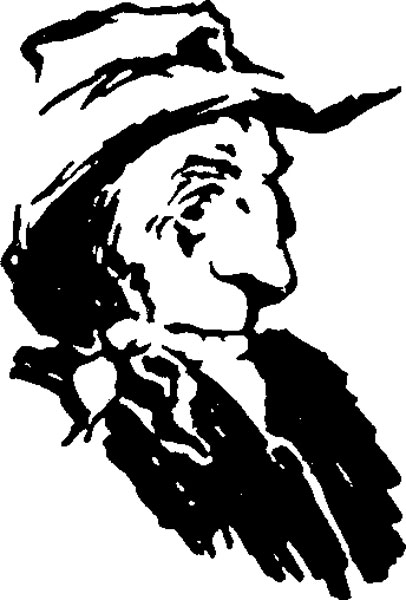
My Husband or My Father-in-Law
Jack Botwinick (1923 - 2006), American neuroscientist
You should experience a 'Gestalt Switch' between seeing the figure as a young man or old man.
Negative Afterimages
The Illusions Index
You should experience an image similar to the pink inducing circles in the region of the white inducing patch. It should exhibit inverted colours, appearing yellowish-green.
Pandora
The Illusions Index
You should have the visual experience of a man riding a mythical bird. However, although the man is real, the bird is just a cleverly constructed 2D drawing on the pavement.
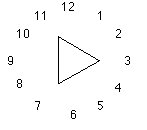
Pointing Triangle
Stephen Palmer, psychologist at UC Berkeley.
You should experience a 'Gestalt switch' between seeing the triangle as 'pointing' in each of the three directions corresponding to its angles.
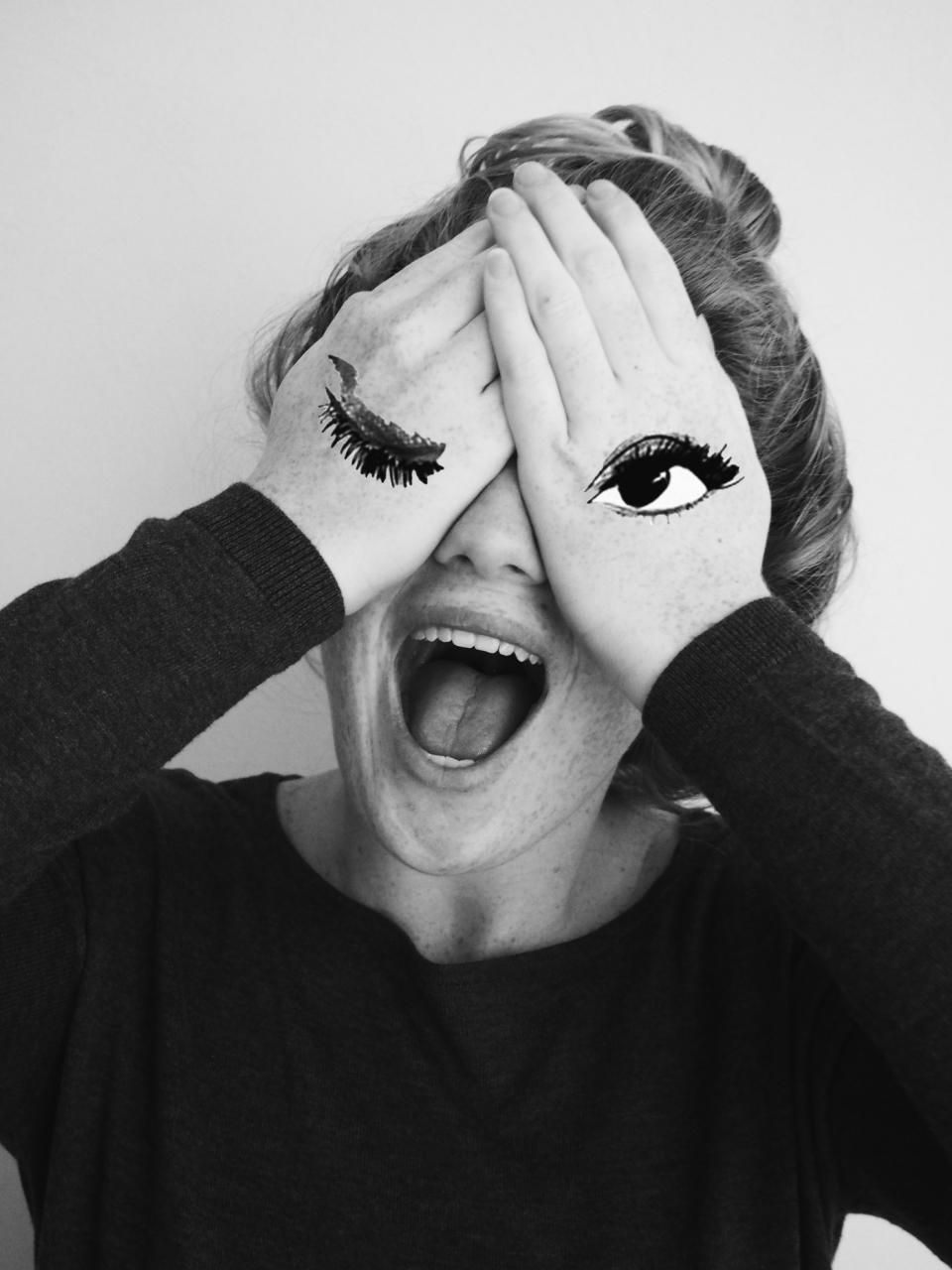
Positive Afterimages
Origin not specified in the source article
When your eyes are closed and covered again, you should continue to experience the view through the window, or the lamp, or the computer screen, which will likely fade away quickly. This…
Risset Rhythm
The Illusions Index
You should experience the beat as constantly speeding up. This is only illusory.
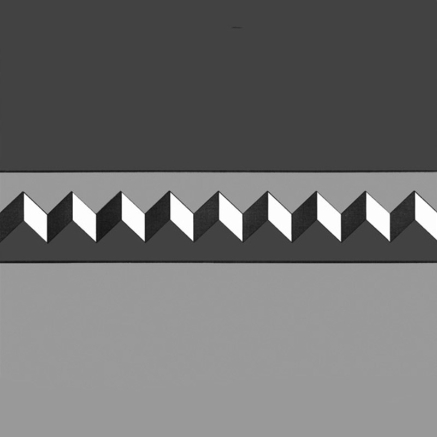
Sawtooth Ambiguous Figure
Peter Ulrich Tse, neuroscientist
You should experience a 'Gestalt switch' between experiencing the triangles as pointing downwards and resting on the dark grey lower plane, or as pointing upwards and resting on a light…
Scintillating Starburst
The Illusions Index
Bright lines will appear to be coming from the centre. If you look at them directly, you will realise that they are not actually there.
Shepard Scale Illusions
The Illusions Index
In the first sound file, you should experience the pitch as ever increasing. In the second file, you should experience the pitch as ever decreasing. These are illusory experiences, for the…
Skipping Pylon
The Illusions Index
Some people report that they hear the sound of the pylon hitting the ground - a thudding or boinging noise - but not everyone does.
Sound-Induced Flash Illusion
The Illusions Index
The disk always flashes once. Sometimes it is accompanied by one beep, and then people report one flash. However, when it is accompanied by two beeps some people report experiencing two…
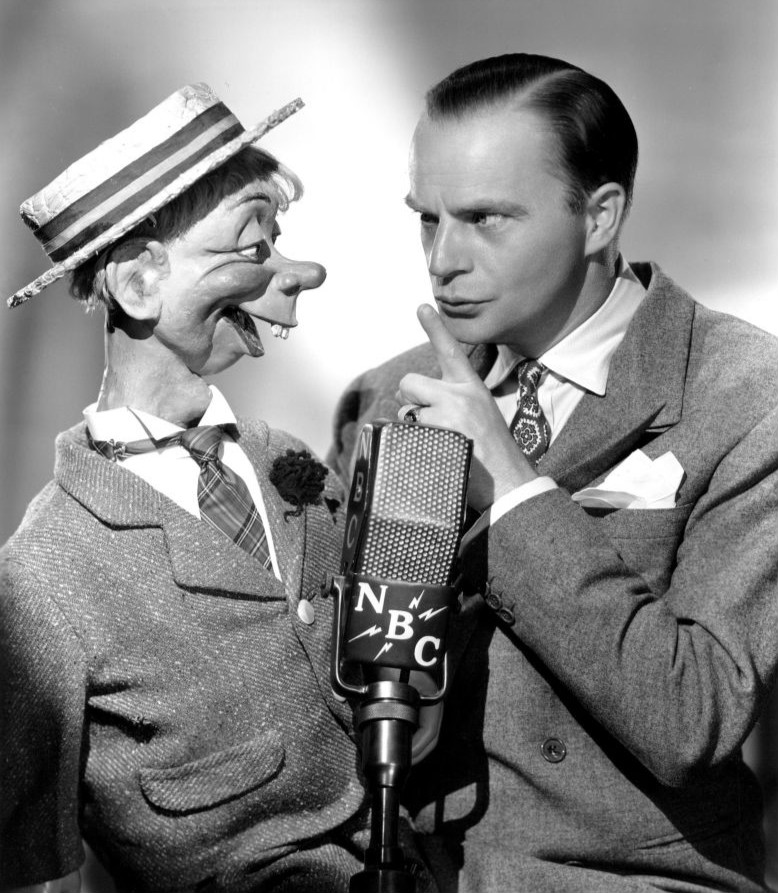
Spatial Ventriloquism Illusion
The spatial ventriloquism illusion is extremely popular, as numerous ventriloquist shows attest. Below is a video taken from Paul Zerdin's Youtube channel. In 2015, Zerdin won America's Got Talent with his ventriloquist act.
When viewing the video, you should experience the voice as coming from the puppet, even though the source of the sound is actually the puppeteer.
Swimming Pool in the High Street
The Illusions Index
You should have the visual experience of a man seeming to climb down into a 3D swimming pool. However, although the man is real, the swimming pool is just a cleverly constructed 2D drawing…
Tactile Aftereffect
The Illusions Index
When you press your hands to the flat surface you should experience the flat surface as curved for a few seconds.
The Colour Dove Illusion
The Illusions Index
In the first few seconds you should notice that the dove appears red—a faint version of the red that was in the background of the first image. You are experiencing a positive afterimage…
The Crevasse
The Illusions Index
You should have the visual experience of a woman seeming to stand on top of a crevasse. However, although the woman is real, the crevasse is just a cleverly constructed 2D drawing on the…
Waterfall Illusion
The Illusions Index
You should experience the dots in the test pattern as moving - even though they are stationary.
Waterfall Street Painting
The Illusions Index
You should have the visual experience of a person seeming to crouch on a rock on top of a waterfall. However, although the person is real, the waterfall is just a cleverly constructed 2D…
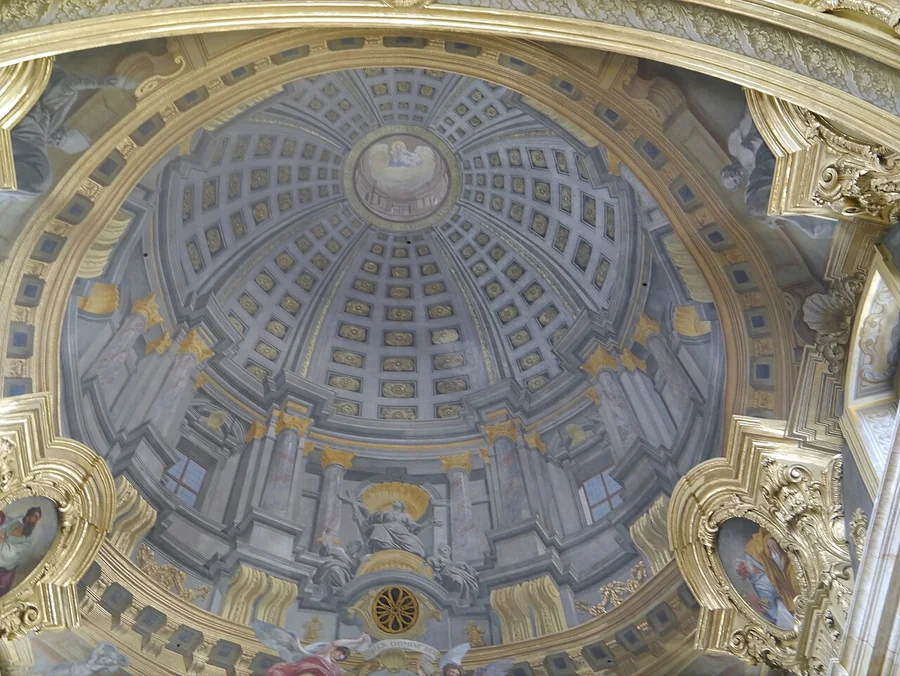
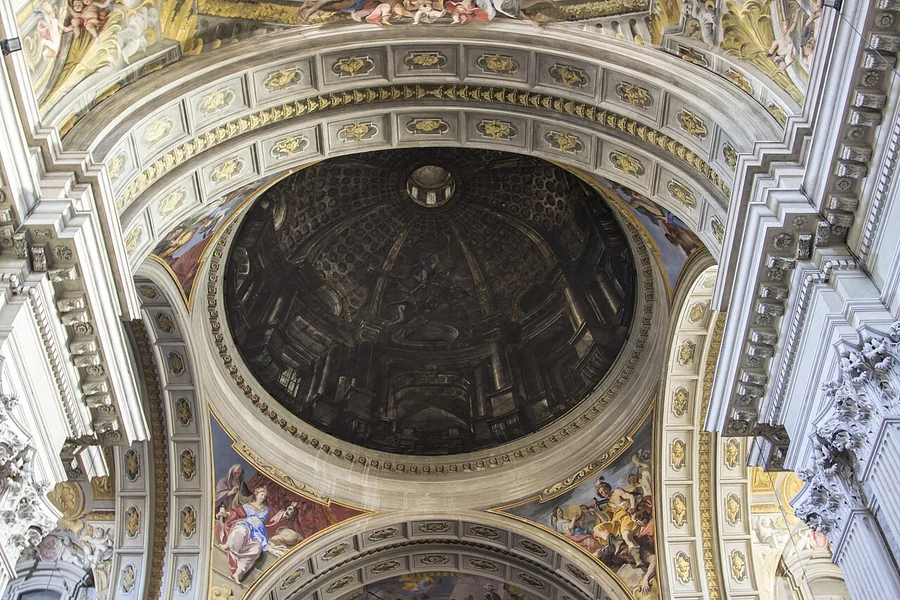
A Dome Painted onto a Vault
Andrea Pozzo
A painted cupola makes an existing vault seem to open upwards.
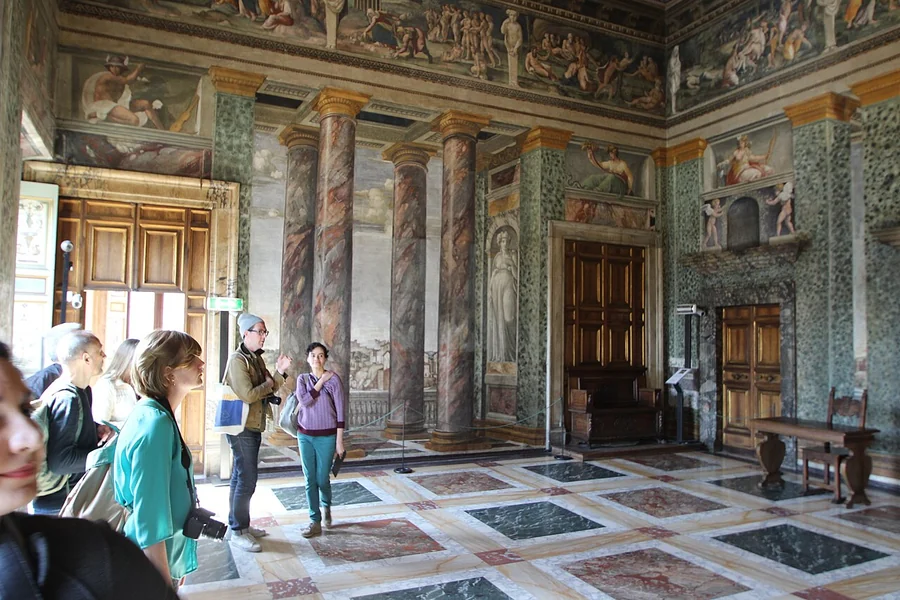
Walls That Become a Loggia
Baldassarre Peruzzi
A room’s walls appear to open through columns into the landscape beyond.
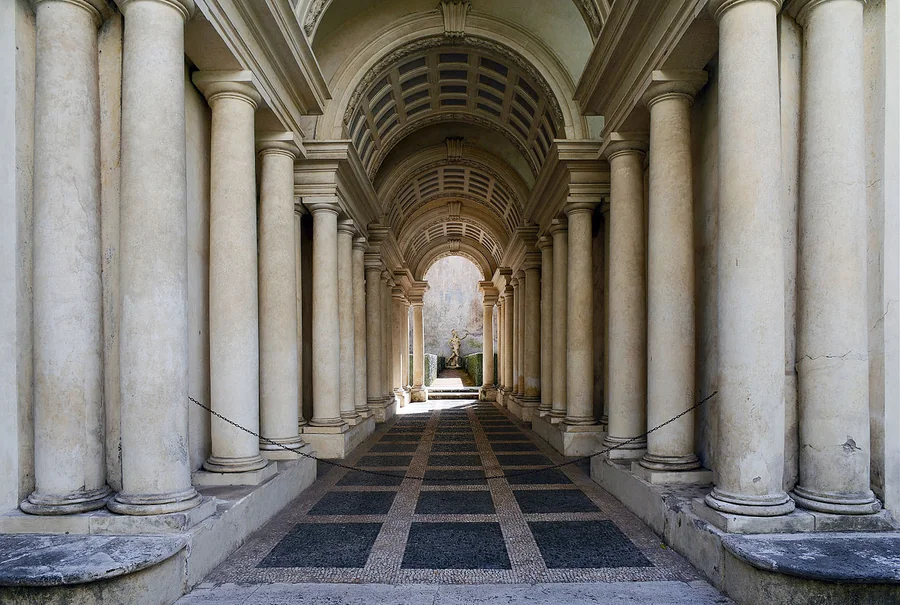
The Corridor That Grows
Francesco Borromini, with Giovanni Maria da Bitonto
A short colonnade looks like a much longer passage.
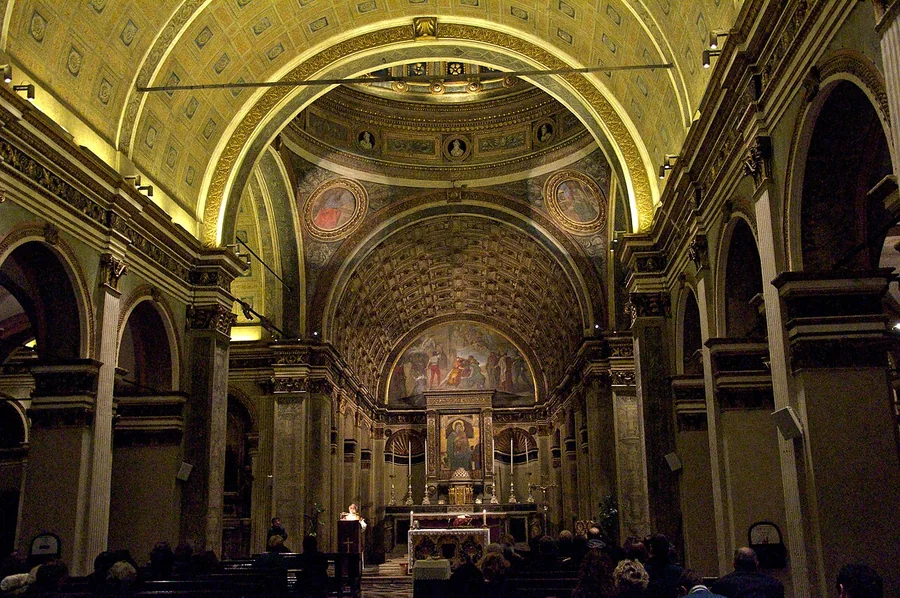
A Choir Compressed into Relief
Donato Bramante
A shallow space behind the altar appears to contain a deep, vaulted choir.
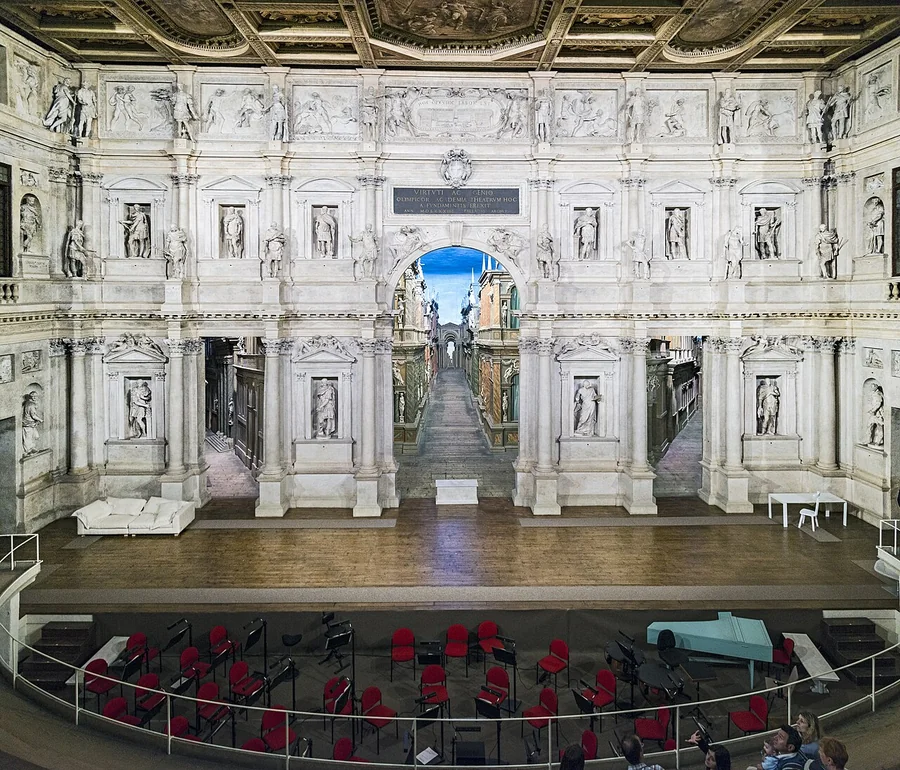
A City Hidden behind the Stage
Vincenzo Scamozzi; theatre designed by Andrea Palladio
Short stage streets appear to run deep into an ancient city.
Three Ellipses for Three Locks
Artist’s project photographs
Scattered yellow marks join into three complete rings from one viewpoint.
Dalston House
Installation photographs
A reflection makes visitors lying on the ground seem to climb a house.
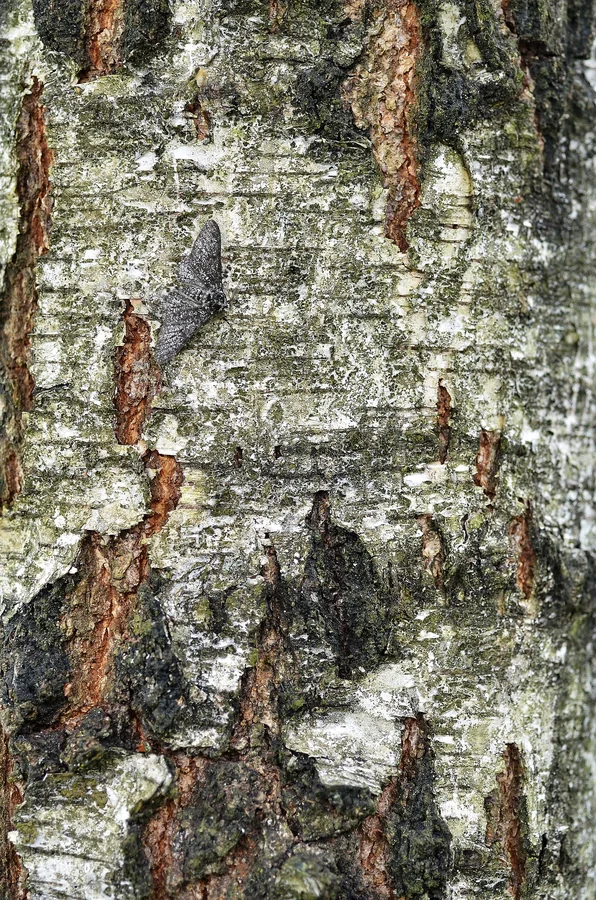
Peppered Moth — Disappearing into Bark
Biston betularia
Speckled wings repeat the tones and texture of tree bark.
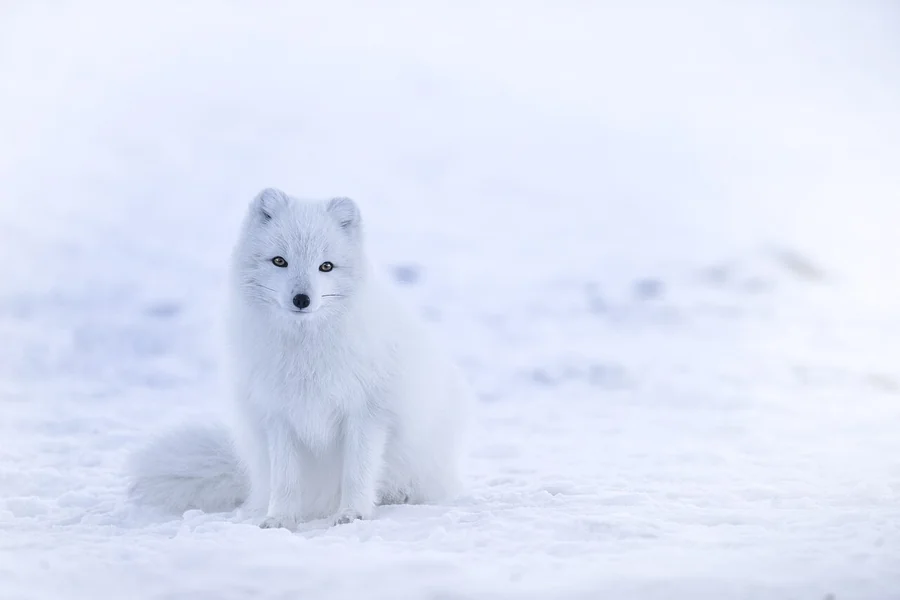
Arctic Fox — A Coat for the Season
Vulpes lagopus
A winter coat makes a white fox difficult to separate from snow.
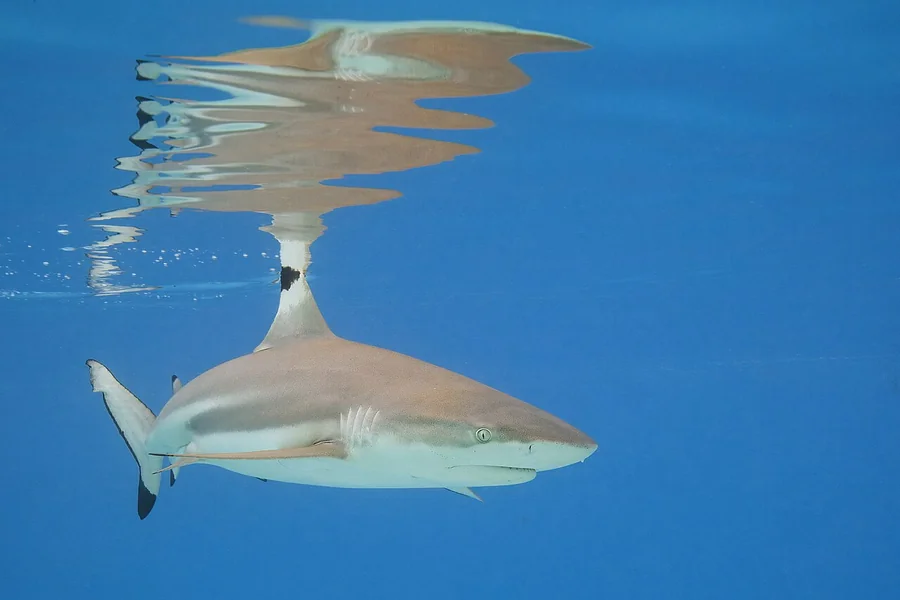
Reef Shark — Dark Above, Light Below
Carcharhinus melanopterus
The same shark presents a dark back from above and a pale belly from below.
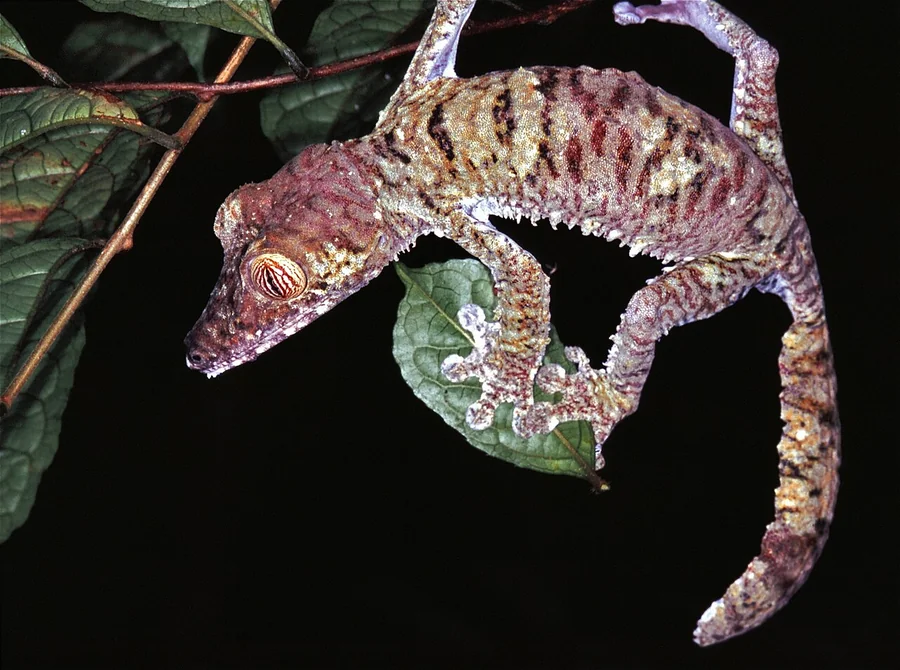
Leaf-tailed Gecko — Softening the Outline
Uroplatus fimbriatus
Mottled skin and a fringe around the body help a gecko merge with its resting surface.
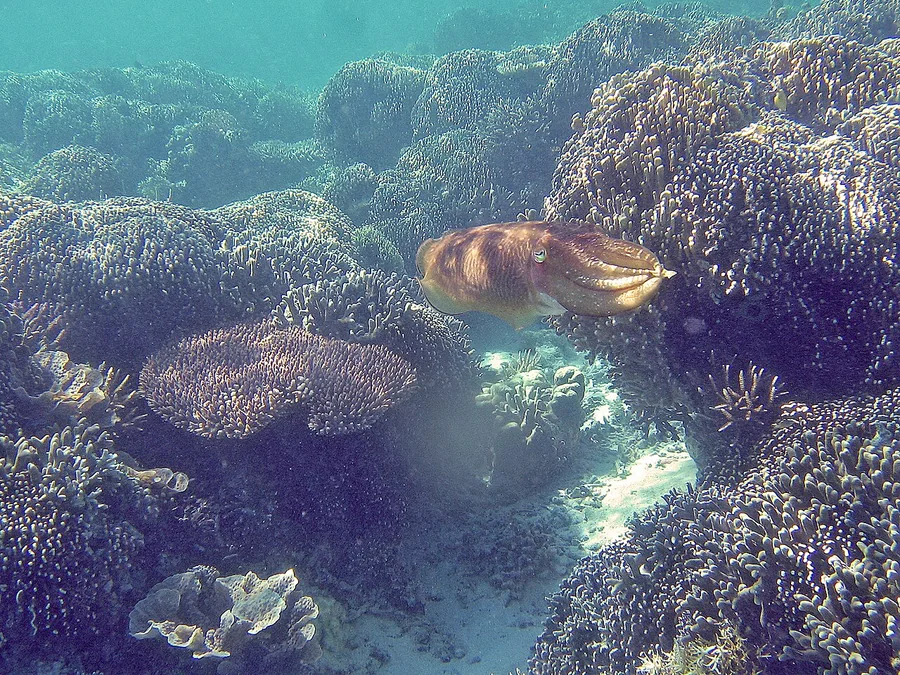
Cuttlefish — Skin That Changes the Scene
Cuttlefish · order Sepiida
A cuttlefish can change both its skin pattern and its surface texture.
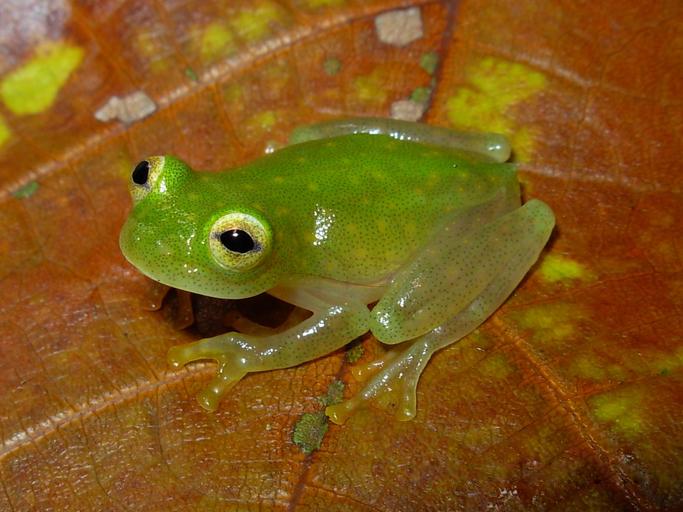
Glassfrog — Letting the Background Through
Hyalinobatrachium fleischmanni
Translucent tissues reduce the visual barrier between a small frog and its surroundings.
Frequently asked questions
What is an optical illusion?
An optical illusion is an image or scene that creates a difference between its physical features and the way it is perceived. Context, perspective, contrast and visual adaptation can all contribute to the effect.
Why do optical illusions happen?
Vision interprets light using surrounding shapes, colours, depth cues and prior experience. Illusions reveal situations in which these normally useful processes produce surprising interpretations. Different illusions involve different mechanisms.
Which optical illusions can I explore here?
Through Mirror includes size and geometry illusions, light and colour effects, ambiguous figures, impossible objects, motion illusions and hidden contours. The collection also explores illusion art, architecture, fractals, animal camouflage and other senses.
How do I view the demonstrations?
Open an entry for its viewing instructions, explanation, history and sources. Gallery images can be enlarged, reversible pictures can be rotated, and animations play when selected. Some demonstrations link to their original source.
Frequently asked questions
What is an architectural illusion?
An architectural illusion changes the apparent shape, depth or extent of a real place through painting, perspective, geometry or reflection. Its effect often depends on where the observer stands.
Does Gozo Cathedral have a real dome?
The cathedral’s famous apparent dome is a painted illusion by Antonino Emanuele, dating to 1739. The painting makes a flat ceiling appear to rise into a dome from the intended viewpoint.
How does forced perspective work in architecture?
Forced perspective changes scale and alignment to suggest a different depth or size. Borromini’s corridor at Palazzo Spada uses a compressed construction that appears longer from its intended viewing position.
Frequently asked questions
What is animal camouflage?
Animal camouflage includes colour, pattern, shape and other features that make an animal harder to detect or recognise. Its effectiveness depends on the background, lighting and the observer’s vision.
What is the difference between camouflage and mimicry?
Camouflage reduces detection or recognition. Resembling another object, such as a leaf, can help an animal be mistaken for part of its surroundings; resemblance can serve other biological functions too.
How do cuttlefish change their appearance?
Cuttlefish can change visible skin patterns and texture. Their colour changes involve pigment-containing structures and light-reflecting components, helping them alter their appearance against different backgrounds.
Frequently asked questions
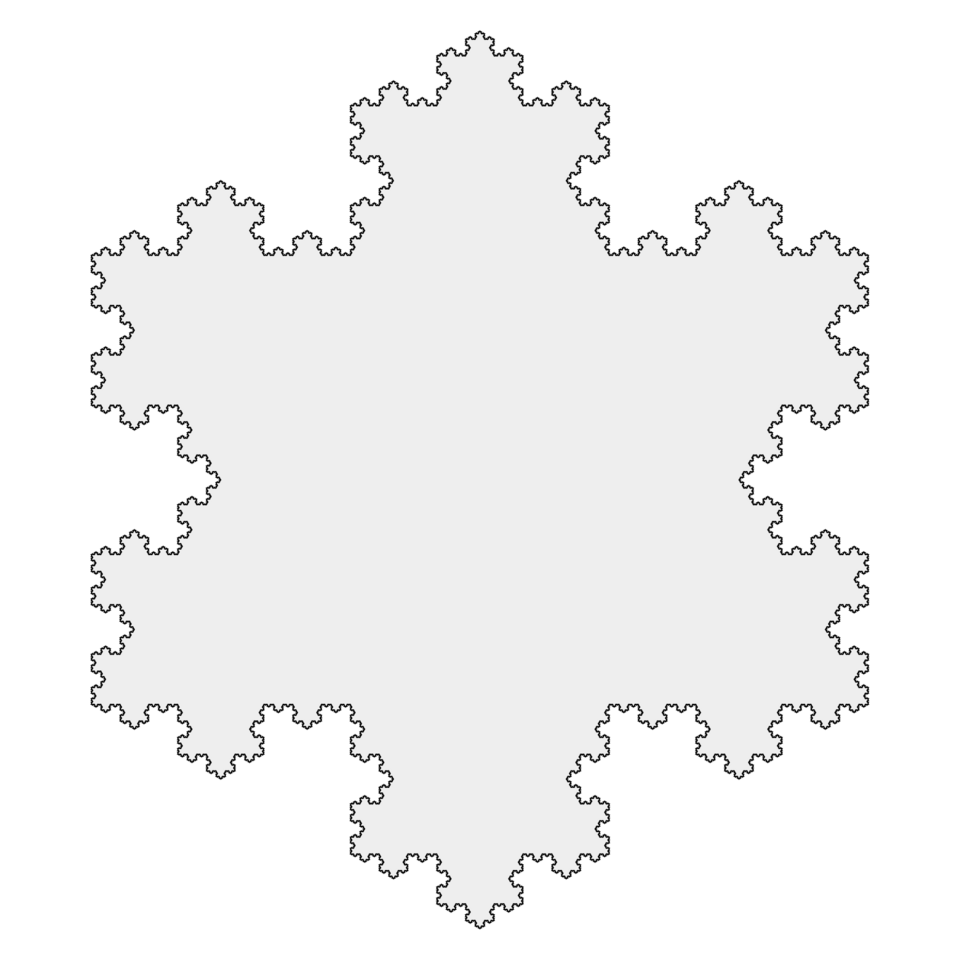
What is a fractal?
A fractal is a mathematical structure with detail or related patterns across different scales. Some fractals repeat an exact construction; others show more varied forms of self-similarity.
Are fractals optical illusions?
Not necessarily. Through Mirror includes fractals because their repetition, intricate boundaries and nested patterns challenge visual intuition. Their geometry does not have to create a perceptual error.
What is the Mandelbrot set?
The Mandelbrot set is defined by repeatedly applying a mathematical rule to complex numbers and checking whether the results remain bounded. Images show its intricate boundary and related patterns at different scales.
Frequently asked questions
What is trompe-l’œil?
Trompe-l’œil means deceiving the eye. In painting, carefully arranged perspective, shading and familiar objects can make a flat surface appear to contain real depth or objects.
What is anamorphosis in art?
Anamorphosis is a distorted image that becomes recognisable from a particular viewpoint or with an appropriate reflective surface. Holbein’s The Ambassadors includes a skull revealed by an oblique view.
How do Arcimboldo’s portraits work?
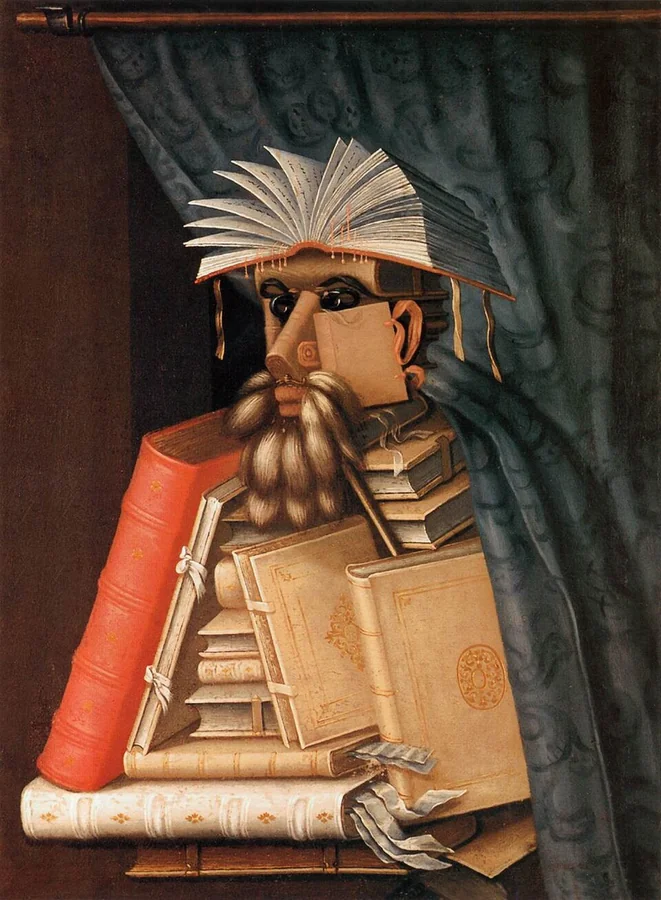
Arcimboldo arranged recognisable objects such as fruit, flowers and books into the features of a face. Some works also reveal a second interpretation when the painting is turned upside down.
Frequently asked questions
What are geometric optical illusions?
Geometric illusions change the apparent size, length, angle or alignment of shapes. Surrounding lines and perspective cues can make equal lengths look unequal or parallel lines appear tilted.
Are the lines in the Café Wall illusion parallel?
Yes. The horizontal boundaries are parallel, but the alternating arrangement of light and dark tiles makes them appear to slope.
How can I check the size of an illusion?
Follow the entry’s instructions, then compare the relevant lengths with a ruler or cover the surrounding context. This can separate the physical measurement from the visual impression.
Frequently asked questions
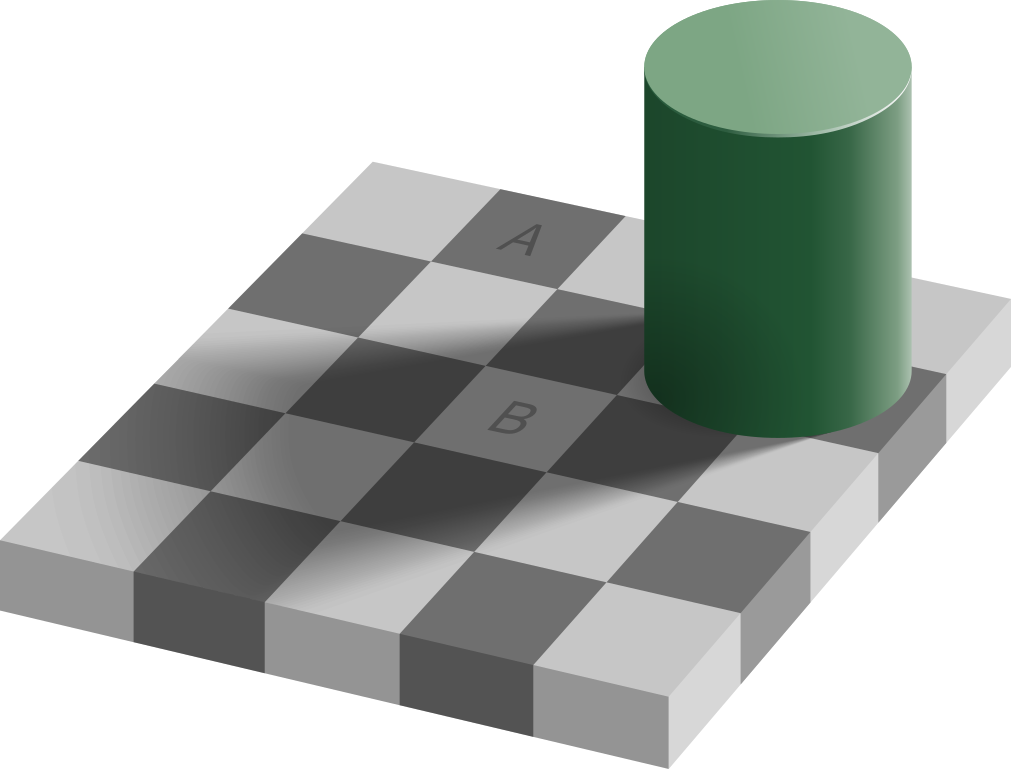
Why can identical shades look different?
The visual system judges a surface in relation to nearby contrast and apparent lighting. The same image value can look lighter or darker depending on its surroundings.
Are squares A and B in the checker shadow illusion the same shade?
Yes. The labelled squares have the same grey value. The depicted shadow and checkerboard context make them appear different; isolating the squares reveals the match.
What are Mach bands?
Mach bands are apparent light and dark strips near changes in brightness. They illustrate how the visual system responds to contrast at boundaries.
Frequently asked questions
What is a colour afterimage?
A colour afterimage is a lingering visual impression after looking away from a coloured stimulus. Adaptation in the visual system can make a different colour appear against a neutral background.
Why does a colour change when its background changes?
Colour perception depends partly on surrounding colours and contrast. An unchanged patch can look different when placed in a different visual context.
How should I view an afterimage demonstration?
Use the viewing instructions on the entry page. Look at the specified point, then shift to the suggested neutral area. You can stop whenever you wish; the effect varies between viewers.
Frequently asked questions
What is an ambiguous figure?
An ambiguous figure supports more than one interpretation of the same image. A viewer may switch between the interpretations even though the picture stays unchanged.
What does the duck-rabbit picture show?
The same outline can be read as a duck facing one direction or a rabbit facing the other. The shape that looks like a beak can also look like ears.
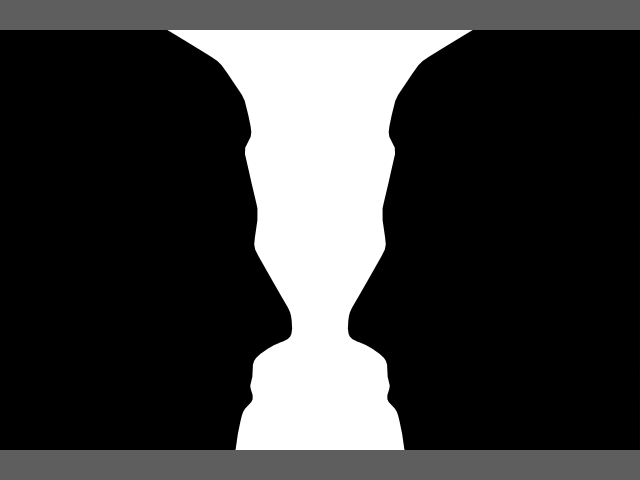
How does Rubin’s vase work?
The central region can be seen as a vase, while the surrounding regions can be seen as two facing profiles. The shared boundary changes meaning as foreground and background switch.
Frequently asked questions
What is an impossible object?
An impossible object is a drawing whose parts suggest familiar three-dimensional shapes but cannot all connect as they appear to. The contradiction becomes clearer when you trace the whole structure.
Can a Penrose triangle be built?
It cannot exist as the ordinary solid the drawing suggests. A specially arranged model can create the appearance from one viewpoint, but its actual structure differs from the pictured object.
How do the Penrose stairs work?
The drawing joins plausible stair segments into an apparent loop that continually rises or falls. In ordinary space, a closed circuit cannot gain height at every step and return to its starting level.
Frequently asked questions
Why can a still picture appear to move?
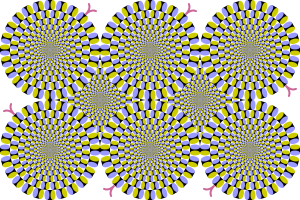
Certain arrangements of contrast and pattern can produce apparent movement, especially away from the centre of attention. A motion illusion does not always require an animated image.
Is the spinning dancer a test of personality or brain dominance?
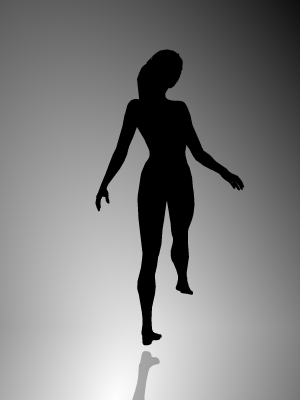
No. The silhouette has ambiguous depth cues and can be interpreted as turning in either direction. Its perceived rotation does not establish a personality type or a dominant brain hemisphere.
Do the animated illusions play automatically?
No. Through Mirror initially shows still previews. Open a demonstration and select Play animation when you want to see it move.
Frequently asked questions
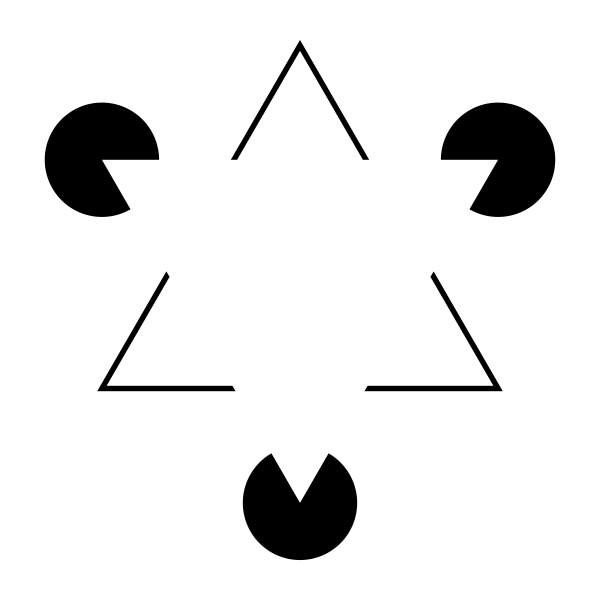
What are illusory contours?
Illusory contours are apparent edges that are not explicitly drawn. Surrounding shapes can make a viewer perceive a continuous boundary or a surface.
Is there a drawn triangle in the Kanizsa triangle?
The bright triangle appears to have clear edges, but those edges are not drawn. The surrounding cut-out shapes suggest a triangle covering parts of them.
Why does the visual system complete hidden shapes?
Vision uses the relationships between visible edges and surfaces to interpret partially hidden objects. Illusory-contour demonstrations show how a coherent shape can be perceived from incomplete cues.
Frequently asked questions
What is an auditory illusion?
An auditory illusion is a surprising perception of sound influenced by context, arrangement or interpretation. Examples include ambiguous melodies and apparent changes in pitch.
Can I hear the sound demonstrations on this site?
Entries explain the effects and link to their original demonstrations when audio is hosted elsewhere. Follow the source link and the instructions for the particular effect.
Frequently asked questions
What is a tactile illusion?
A tactile illusion is a surprising experience of touch or bodily sensation. Adaptation, neighbouring stimulation, body position and expectations can influence what is felt.
Do tactile illusions involve the eyes?
Some demonstrations explore touch alone, while others involve interactions between touch and vision. The entry’s instructions explain which senses and conditions are involved.
Frequently asked questions
What is a multisensory illusion?
A multisensory illusion involves interactions between senses. What a person sees, hears or feels can change how information from another sense is interpreted.
What is the McGurk effect?
The McGurk effect occurs when seeing speech movements influences the speech sound a listener perceives. Combining mismatched visual and auditory speech can produce a different perceived syllable.